
Reviewed · COOKING CLASSES
Half-Day Famous Georgian Supra Feast
Come hungry, leave singing Georgian songs. This four-hour evening combines an Old Tbilisi walk with a family cooking class, a generous supra feast, wine, chacha, dancing, and polyphonic music. I like the hands-on khinkali and khachapuri lesson, and I like the small maximum group size of eight, which should make the meal feel more personal. The main consideration is language: English support is offered, but one reported evening became mostly Russian, with only limited English translation.
At $150 per person, this is not a cheap dinner. Still, the price includes private transportation, food, alcoholic drinks, coffee or tea, sightseeing, cooking instruction, dancing, and live cultural entertainment. I would see it as a full evening program rather than simply a restaurant meal, with the family setting and feast rituals doing much of the work.
In This Review
- Key Points Before You Book
- Starting at the I Love Tbilisi Sign
- Meidan Bazaar and Old Tbilisi Stories
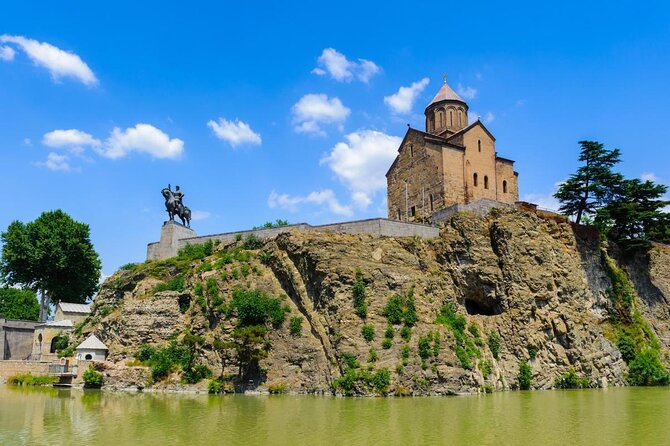
- Metekhi Cathedral and the River Views
- Rike Park and Holy Trinity Cathedral
- A Family Home and Georgian Cooking Class
- The Supra: Food Arrives in Courses and Shared Plates
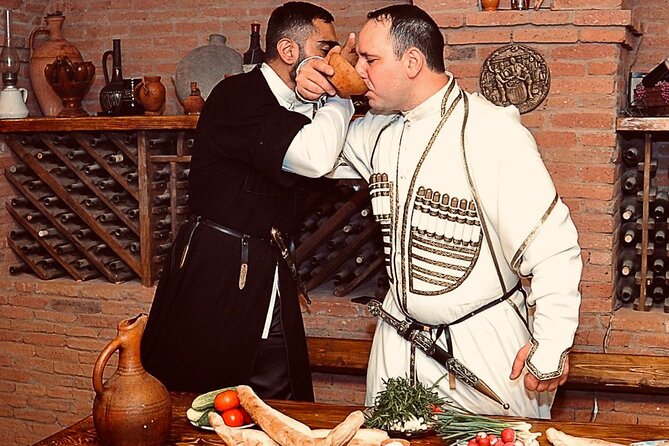
- Toasts, the Tamada, and Drinking From a Horn
- Georgian Dancing and UNESCO-Recognized Polyphony
- Language and Group Size Matter
- Is $150 a Fair Price?
- Who Should Book This Evening?
- Final Recommendation
- FAQ
- Where does the experience begin?
- What time does the experience start?
- How long does the experience last?
- Where does the experience end?
- What sights are included during the city walk?
- Is transportation included?
- What food is included?
- Are drinks included?
- Is the experience offered in English?
- How many people can join the experience?
- Can I cancel for a refund?
Key Points Before You Book
- Old Tbilisi comes first: The evening begins at the I Love Tbilisi sign and visits Meidan Bazaar, Metekhi Cathedral, Rike Park, and Holy Trinity Cathedral.
- You make Georgian classics: The cooking lesson focuses on khinkali and Adjarian khachapuri.
- The supra is the main event: Expect salads, pickles, eggplant, mtsvadi, cheese, churchkhela, wine, and chacha.
- A toastmaster guides the meal: You learn the order of Georgian toasts and how to drink from a horn.
- Music is part of dinner: Professional dancers teach basic movements, followed by Georgian polyphonic singing.
- Small groups help: The activity accepts no more than eight people, though language arrangements may vary.
Starting at the I Love Tbilisi Sign

The experience begins at 5:30 pm at the I Love Tbilisi sign in Tbilisi, listed with the location code MRQ5+WG9. That gives you a clear meeting point in the city, and the evening ends back there after about four hours.
The timing works well for a dinner-focused outing. You start with sightseeing while there is still daylight, then move toward the food and performances as the evening develops. You should plan to arrive ready for walking, since the opening section takes you through several central Tbilisi sights before the family visit.
Private transportation is included, which matters once the group leaves the central sightseeing area. You do not have to arrange a taxi between the Old Town walk and the family home, and one English-language account specifically praised the smooth transport arrangements.
More khinkali and cooking classes:
- Small-Group Khinkali and Khachapuri Cooking Class in Tbilisi
★ 4.5 · 224 reviews - Cook True Ajarian Khachapuri and Khinkali in Highlanders Style
★ 5.0 · 93 reviews - Taste of Kakheti: Wine Tour Bread Baking & Churchkhela Workshop
★ 4.5 · 46 reviews
Meidan Bazaar and Old Tbilisi Stories
Meidan Bazaar is the first listed stop. This area is a useful place to begin because it puts you in the heart of old Tbilisi, where the guide introduces Georgian history, legends, and customs during the walk.
I would treat this part as orientation rather than a full city tour. The Old Town section is designed to prepare you for the meal by giving cultural context, not to cover every museum or monument in Tbilisi. You will hear about local traditions and see several key sights before sitting down to eat.
For first-time visitors, that opening walk adds value. Georgian food customs make more sense when you have already heard something about the people and traditions behind them. If you have several days in Tbilisi, you may want to return to the Old Town later at a slower pace, since this evening has a lot to fit into four hours.
Metekhi Cathedral and the River Views
The next stop is Metekhi Cathedral, one of the most recognizable landmarks in central Tbilisi. The location is also connected with broad city views, and the tour uses the stop as part of its account of the capital.
This is one of the places where comfortable shoes help. The program combines walking, sightseeing, driving, cooking, and dinner, so it is not a sit-down food event from start to finish. The exact amount of time at each sight is not specified, so you should expect a guided visit rather than an extended architectural tour.
The cathedral also helps connect the city walk with the later family setting. Tbilisi is presented through both public landmarks and private hospitality, which is a better introduction to Georgian culture than a meal in a standard restaurant alone.
Rike Park and Holy Trinity Cathedral
Rike Park is another stop on the city portion. It offers a change of pace from the older streets and provides a modern public space within the route. The guide uses the walk to discuss Georgian traditions and the capital’s story.
The final listed sightseeing stop is Tbilisi Holy Trinity Cathedral. Its scale makes it an impressive landmark, but the important point for this tour is the sequence. You see central Tbilisi from several angles before heading to the food and cultural program.
Because the entire experience lasts about four hours, do not expect a detailed guided visit inside every location. The value is in the combination of places and the stories told along the way. If your priority is long photo stops or formal historical commentary at each monument, a dedicated city tour would give you more time.
A few more ways to spend a day out of Tbilisi
- Ancient Mtskheta and Chronicle of Georgia half day tour
★ 5.0 · 66 reviews - Half-Day Food Tour of Tbilisi Dezerter’s Bazaar
★ 5.0 · 4 reviews - Jvari monastery & Mtskheta – Half day group tour from Tbilisi
★ 5.0 · 3 reviews
A Family Home and Georgian Cooking Class
After the sightseeing, you visit a Georgian family of hereditary winemakers and cooks. The setting is meant to feel like entering a friend’s home rather than arriving at a commercial dining room. That difference is central to the experience.
While the hosts prepare the cooking lesson, you can look around the property and take photographs. The views from the location are described as especially striking, so bring your camera and allow a little time to enjoy the setting before the food begins.
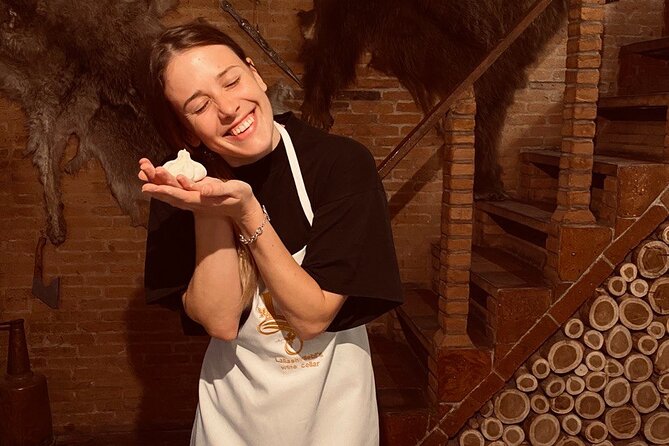
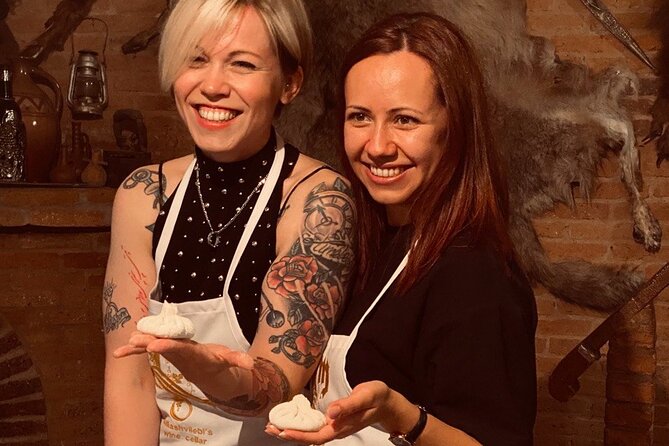
The class covers two famous Georgian dishes: khinkali and khachapuri. Khinkali are the familiar Georgian soup dumplings, prepared here with meat, mushrooms, or cheese. The lesson gives you a chance to see how they are formed rather than simply ordering them from a menu.
You also learn to prepare Adjarian khachapuri, the boat-shaped bread filled with cheese and topped with egg. It is served hot, which makes the lesson useful as well as entertaining. The combination gives you two different skills: shaping dumplings and working with Georgian cheese bread.
This is likely the most participatory part of the evening. If you enjoy food classes, it gives the meal more purpose. If you prefer to relax and eat, remember that you will need to take part before dinner is served.
The Supra: Food Arrives in Courses and Shared Plates

The Georgian supra is a feast built around hospitality, conversation, food, and toasts. Here, the meal includes a long list of traditional dishes rather than one main plate.
You begin with Georgian salad made from cucumbers, tomatoes, and herbs. Pickled cucumbers, pickled tomatoes, sauerkraut, and Colchis klekachka add sharper flavors and give you something to snack on while the meal develops.
The hot dishes are the heart of the menu. You receive khinkali with a choice of meat, mushrooms, or cheese, along with eggplant, freshly prepared Adjarian khachapuri, and Georgian shashlik called mtsvadi. The mtsvadi is meat cooked on skewers over coals, giving the feast a grilled main course alongside the dumplings and bread.
The final items are Imeretian cheese and churchkhela. Churchkhela is made from grape juice and walnuts, and it offers a sweet finish without the formality of a plated dessert.
Dinner, alcoholic drinks, coffee, and tea are included in the price. Homemade wine and chacha are part of the supra, so this is not the right choice if you want an alcohol-free evening. The information does not specify nonalcoholic alternatives, so you should ask before booking if that matters to you.
The food quantity is a strong part of the value. You are not paying $150 for one cooking demonstration and a modest tasting. You are paying for a full menu, drinks, transportation, cultural instruction, music, and dancing. The price still requires a personal judgment, but the package is broad.
Toasts, the Tamada, and Drinking From a Horn

A Georgian supra has its own rules, and the toastmaster, or tamada, explains them during the meal. You learn about the order of toasts and how to drink from a horn.
That small lesson changes the dinner from a standard group meal into a cultural event. You are not simply eating Georgian dishes. You are learning why the meal has a structure and how conversation and drinking fit into it.
One especially positive account praised the toastmaster for creating a welcoming mood and helping people connect across the group. That is important because the evening brings together people who may not know one another. With a group limit of eight, the setting should be easier for conversation than a large coach tour.
The pace may be energetic. Wine and chacha are included, and the food keeps arriving while the toasts continue. You should pace yourself and remember that participation does not require matching anyone else’s drinking.
Georgian Dancing and UNESCO-Recognized Polyphony
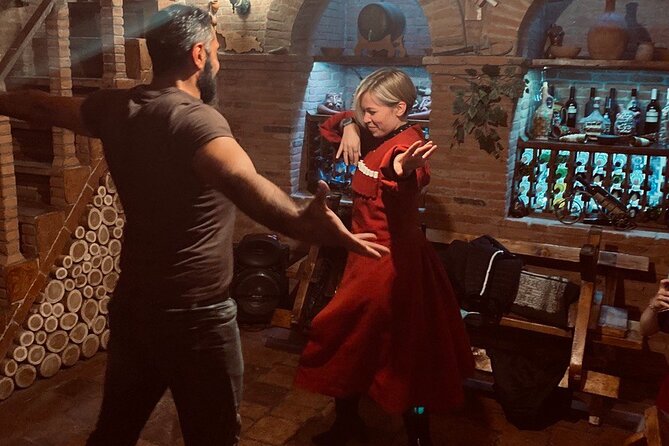
The evening ends with dancing and songs. Professional dancers teach you basic Georgian dance movements, giving you a chance to join in rather than watching a formal show from the sidelines.
After that, you hear Georgian polyphonic singing. Georgian polyphony is included on UNESCO’s list of cultural heritage, and it is one of the most distinctive elements of the program. The singing adds something you cannot get from a menu or cooking class.
You do not need to be a dancer. The stated goal is to learn basic movements, not perform a polished routine. Still, the activity may feel lively and participatory, so it suits you best if you are comfortable joining a group activity after dinner.
This combination of food, toasts, dance, and singing is the strongest reason to book this experience. A regular restaurant can serve khachapuri and wine. It cannot easily reproduce the family setting, the toast ritual, the dance lesson, and the polyphonic performance in one evening.
Language and Group Size Matter
The experience is offered in English, and one English-speaking participant had an excellent translator for the evening. The translation covered Georgian culture and history and made the program easy to follow.
There is also a caution. Another English-speaking participant found that the evening was carried out mainly in Russian because most of the group spoke Russian, with only limited English translation from the guide. That means English availability may depend on the makeup of the group and the interpreter arrangements that night.
If clear English instruction is important to you, confirm how translation will work before you go. This is especially useful during the cooking class and toast explanations, where missing a few instructions could make the experience less satisfying.
The maximum group size is eight. That is a real advantage for a family meal, since a small group makes it easier to ask questions, share food, and speak with the hosts. The smaller size does not remove the language risk, but it should keep the evening more personal.
Is $150 a Fair Price?
The price is $150 per person, which places this well above a simple Georgian dinner. You need to judge it as a four-hour package.
Included are the Old Tbilisi sightseeing walk, private transportation, the cooking class, dinner, alcoholic drinks, coffee or tea, dancing, singing, and cultural explanations. Homemade wine and chacha are also included. If you were to arrange separate transport, a cooking class, a large traditional meal, and live entertainment, the total could add up quickly.
The cost is easier to justify if you value access to a family home and want an organized cultural evening. It is harder to justify if your main goal is inexpensive local food. Tbilisi has many cheaper ways to eat khinkali and khachapuri.
The strongest value comes from the setting and the range of activities. You are paying for a social evening with a host family and performers, not just ingredients. The high rating and full recommendation rate suggest strong satisfaction, but the limited number of published ratings means I would still pay attention to the language issue before booking.
Who Should Book This Evening?
I would recommend this for a first visit to Tbilisi, especially if you want a single evening that introduces food, wine, customs, music, and major city sights. It also suits couples, small groups of friends, and solo visitors who enjoy meeting people around a shared table.
Food lovers will get the most from the khinkali and khachapuri class. Anyone curious about Georgian hospitality will appreciate the supra rules, toasts, and family setting. The program also works well for people who prefer an organized evening, since transport and the meal are arranged for you.
You may want to skip it if you dislike group participation, dancing, alcohol, or a meal with a set cultural program. You should also think twice if you need guaranteed English translation and cannot confirm the language arrangements in advance.
Free cancellation is available if you cancel at least 24 hours before the 5:30 pm start time. Changes or cancellations made within 24 hours are not accepted for a refund.
Final Recommendation
Book this Georgian supra feast if you want more than dinner. The cooking class, family setting, toastmaster, wine, dance lesson, and polyphonic singing create a memorable cultural evening, while the Old Tbilisi walk gives you useful context first.
At $150, it is a splurge. I consider it worthwhile for a small group seeking an all-in-one introduction to Georgian food and hospitality. Confirm the English translation arrangements before paying, and arrive ready to participate, eat generously, and raise a glass at the proper moment.
FAQ
Where does the experience begin?
It begins at the I Love Tbilisi sign in Tbilisi, listed at MRQ5+WG9.
What time does the experience start?
The start time is 5:30 pm.
How long does the experience last?
The experience lasts approximately four hours.
Where does the experience end?
It ends back at the meeting point.
What sights are included during the city walk?
The listed stops are Meidan Bazaar, Metekhi Cathedral, Rike Park, and Tbilisi Holy Trinity Cathedral.
Is transportation included?
Yes. Private transportation is included.
What food is included?
The menu includes Georgian salad, pickles, khinkali, eggplant, Adjarian khachapuri, mtsvadi, Imeretian cheese, and churchkhela.
Are drinks included?
Yes. Alcoholic beverages, homemade wine, chacha, coffee, and tea are included.
Is the experience offered in English?
Yes, it is offered in English. English translation arrangements may vary, so you should confirm them before booking.
How many people can join the experience?
The activity has a maximum of eight participants.
Can I cancel for a refund?
Yes. You can cancel at least 24 hours before the local start time for a full refund. Cancellations or changes made less than 24 hours before the start are not accepted for a refund.
Recently added around Tbilisi
- Northern Armenia Highlights Tour from Tbilisi★ 5.0 · 3 reviews
- Wild Georgia 4WD PACK Adventure through Kakheti and Kazbegi 2in1★ 5.0 · 3 reviews
- Kakheti wine region – Private Tour★ 5.0 · 3 reviews
- Jvari monastery & Mtskheta – Half day group tour from Tbilisi★ 5.0 · 3 reviews
- Private Full Day Trip to Kazbegi Mountains★ 5.0 · 3 reviews
- Kakheti With Top Destinations★ 5.0 · 3 reviews
- Private Effortless transfer from Tbilisi to Gudauri ski resort★ 5.0 · 3 reviews
- Borjomi – Rabati -Vardzia Private Full Day Tour from Tbilisi★ 5.0 · 3 reviews
Cooking Classes, compared.

Small-Group Khinkali and Khachapuri Cooking Class in Tbilisi
Read our review →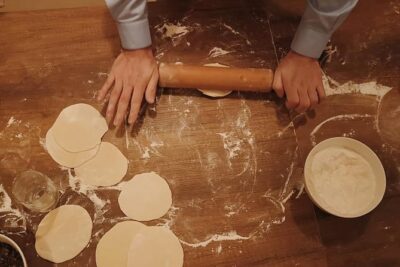
Cook True Ajarian Khachapuri and Khinkali in Highlanders Style
Read our review →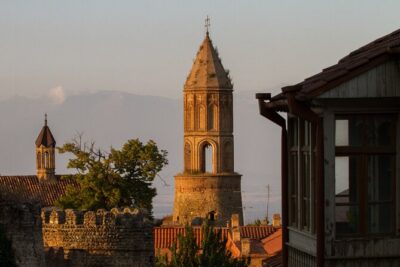
Taste of Kakheti: Wine Tour Bread Baking & Churchkhela Workshop
Read our review →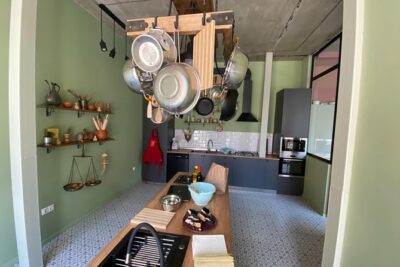
Nana’s Kitchen – traditional Georgian cooking class at real Georgian family home
Read our review →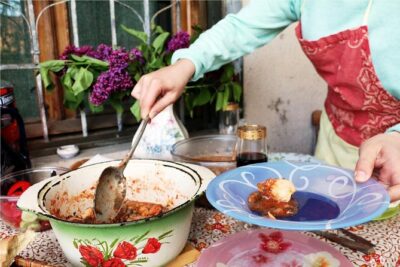
Join a Local for a Market Tour, Cooking Class and Meal in her Tbilisi Home
Read our review →
One Day Kakheti Tour with Wine Tasting and Free Churchkhela
Read our review →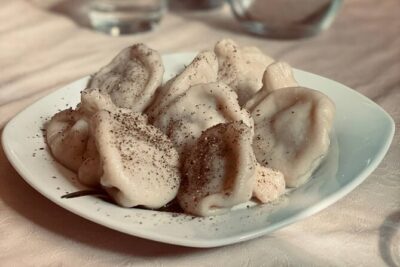
Taste of Georgia. Cooking-Class Khinkali, Khachapuri and more
Read our review →
Military Road Marvels: Ananuri, Kazbegi & Khinkali Masterclass
Read our review →Browse the lists this tour appears in