
Reviewed · FOOD & DRINK
Half-Day Food Tour of Tbilisi Dezerter’s Bazaar
Market mornings reveal a city’s true appetite. This private Tbilisi food tour pairs the city’s central Dezerter’s Bazaar with a local restaurant and a wine bar, giving you a useful introduction to Georgian food, wine, and everyday culture in about five and a half hours. I like the direct contact with vendors, and I like that the day includes both market grazing and a proper meal.
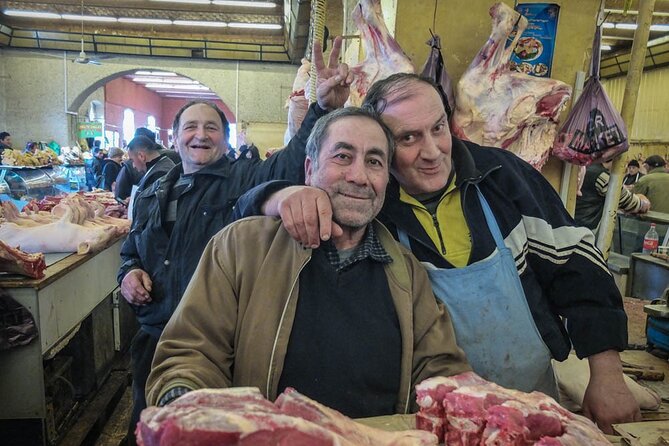
Paul, the guide, is praised for knowing Tbilisi’s people and food scene exceptionally well. He introduces you to market characters such as the Spice Girl, the honey seller, and local bakers, then adds context about Georgian customs and history. The main drawback is the price, $125 per person, and the experience is not recommended if you have a nut allergy.
In This Review
- Key points at a glance
- Why the Dezerter’s Bazaar makes a good starting point
- Meeting Paul at 10:00 a.m. near Rustaveli
- Meeting the Spice Girl, honey seller, and bakers
- What the Georgian menu tells you
- Lunch after the market
- Georgian wine at a selected wine bar
- How much value do you get for $125?
- Who should book this Tbilisi food tour?
- Should you book it?
- FAQ
- Where does the tour start?
- What time does the tour begin?
- Where does the tour finish?
- How long does the experience last?
- Is the tour private?
- Is the tour offered in English?
- Is the tour suitable for people with nut allergies?
Key points at a glance
- Dezerter’s Bazaar with personal introductions: You visit Tbilisi’s central farmer’s market with Paul, who connects you with familiar vendors rather than simply pointing out stalls.
- A full Georgian tasting menu: Expect seasonal pkhali, jonjoli, assorted cheese, cornbread, tonis lobiani, and homemade tkemali.
- Food, wine, and chacha in one morning: The tour continues from the market to a regional meal and a selected Georgian wine tasting.
- A private experience: Only your group takes part, which allows room for questions and a more flexible conversation.
- A strong cultural guide: Paul adds information about Georgian food, wine, customs, and Tbilisi’s past.
- Simple central meeting plan: Meet at the Shota Rustaveli Monument at 10:00 a.m. and return there at the end.
Why the Dezerter’s Bazaar makes a good starting point

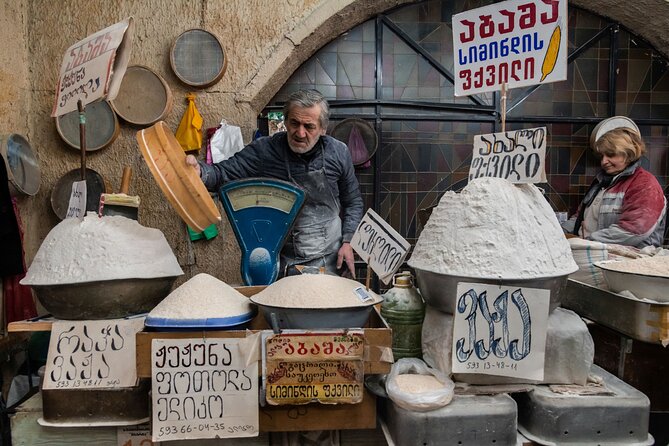
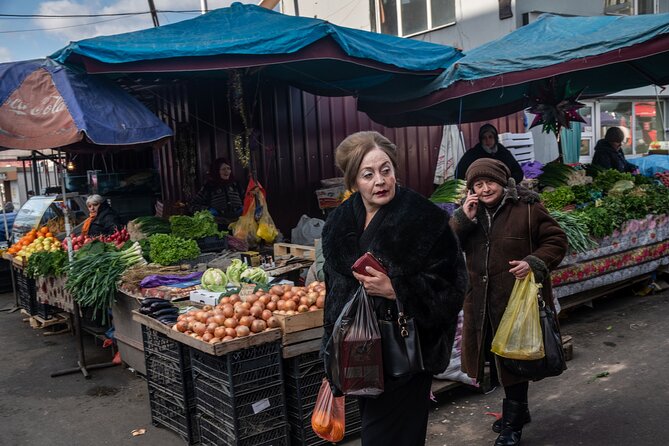
Tbilisi’s Dezerter’s Bazaar is not a polished food hall designed mainly for sightseeing. It is a working central market where people buy ingredients, talk with sellers, and shop for the day. That makes it a useful first stop if you want to understand Georgian food before sitting down to eat it.
I like the order of the morning. You begin with raw ingredients, prepared snacks, and conversations at market stalls. Later, those ideas become part of a restaurant meal and a wine tasting. The progression helps you understand how Georgian food fits together, instead of treating each dish as an isolated sample.
The tour is also more personal than a standard market walk. Paul is known for his ties to local vendors, including the person affectionately called the Spice Girl, a honey seller, and bakers. Those introductions matter because a market can feel like a maze when you are alone. With someone who knows the sellers, you have a better chance of learning what you are looking at and why it matters.
You should still expect a real market, not a quiet museum. There may be strong smells, crowded aisles, and plenty of unfamiliar products. That is part of the appeal, but people who prefer tidy, highly scripted food tours may find the setting a little rough around the edges.
A few more ways to spend a day out of Tbilisi
- Tbilisi:Mtskheta,Jvari,Bazaar,wine tasting,Chronicles of Georgia
★ 5.0 · 730 reviews - Join a Local for a Market Tour, Cooking Class and Meal in her Tbilisi Home
★ 5.0 · 15 reviews - New Year in Tbilisi: Christmas Market and Hidden Gems Tour
★ 5.0 · 3 reviews
Meeting Paul at 10:00 a.m. near Rustaveli
The tour starts at the Shota Rustaveli Monument, at 2 Mikheil Zandukeli Street. The start time is 10:00 a.m., and the activity returns to this same meeting point after the food, restaurant, and wine portions are finished.
That central arrangement is practical. You do not need to find a distant restaurant or arrange a separate ride back after the tasting. The location is near public transportation, so it should be manageable as part of a day in central Tbilisi.
Paul is the clear personality behind the experience. His role goes beyond explaining ingredients. He helps you meet people, keeps the day moving, answers questions about Georgia, and gives the meal a wider setting. The strongest praise focuses on his ability to turn shopping, eating, and drinking into one easy-flowing day.
Because this is a private activity, only your group participates. That is especially useful at a market, where you may want to stop and ask about a spice, sauce, bread, or cheese without holding up a large group. It also gives you a better chance to shape the conversation around your own interests.
Meeting the Spice Girl, honey seller, and bakers
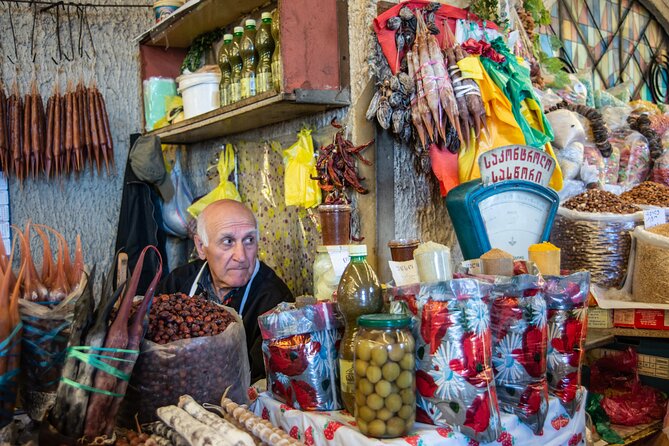
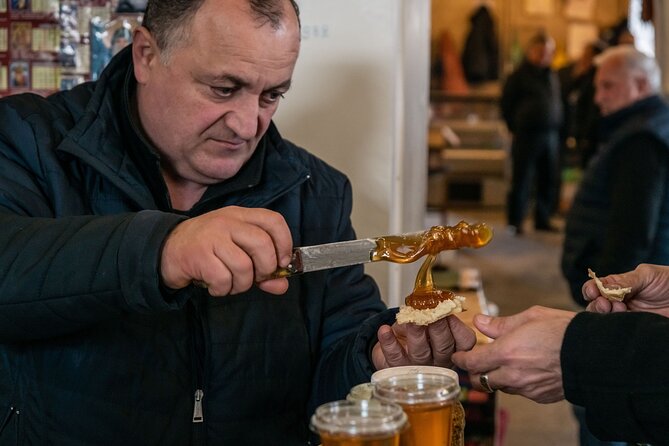
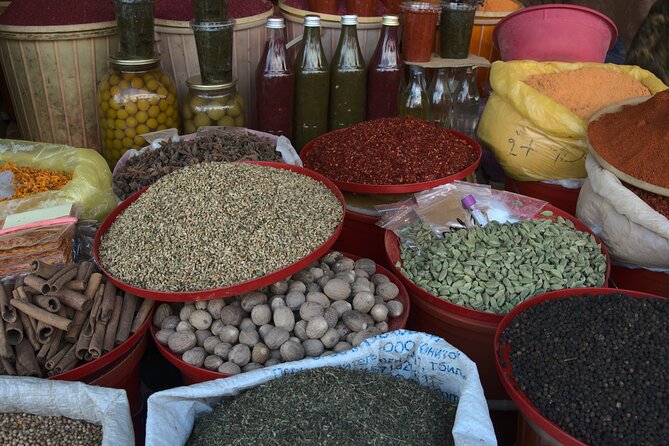
The market portion is likely to be the most distinctive part of the tour. You meet individual vendors rather than merely passing rows of produce. The named market personalities include a spice seller called the Spice Girl, a honey seller, and local bakers.
I value this kind of introduction because food markets are about people as much as products. A spice stall tells you little if you do not know how Georgian cooks use the seasonings. A honey seller becomes more interesting when you can ask about the product, its flavor, and its place in local eating habits. Bakers offer a direct look at one of the country’s most important food traditions.
You will also sample foods along the way. The exact order and quantity can vary, so do not think of the listed menu as a rigid series of restaurant courses. It is better understood as a food framework built around seasonal market items, Georgian staples, and the guide’s connections.
The market visits are not just about eating as much as possible. Paul adds information about the ingredients and the country’s food customs, helping you connect what you taste with Georgian daily life. His background in Tbilisi also lets him answer questions about the city and Georgia more broadly.
A practical tip: arrive hungry, but not starving. The market tastings lead into a substantial meal, and the day ends with wine. Pace yourself early so you can enjoy the full sequence.
What the Georgian menu tells you
The listed main course is ghobi, a large bowl of seasonal starters. It includes pkhali, jonjoli, an assortment of cheeses, and cornbread. This is a good introduction to the Georgian habit of sharing several different tastes at once rather than ordering one plain plate per person.
Pkhali is a vegetable-based dish prepared with ground walnuts and herbs, so it offers a clear warning for anyone with a nut allergy. The tour is specifically not recommended for people with nut allergies. Do not rely on simply picking nuts out of a dish, since they may be part of the preparation.
Jonjoli is another regional specialty included in the ghobi. Along with the cheese assortment and cornbread, it gives you a broad range of textures and flavors in one serving. Since the ingredients are seasonal, the exact details may change. That is a strength for freshness, though it means you should not expect an identical plate every time.
Tonis lobiani is also listed as a starter. This is bean-filled bread baked in a tone oven. The bread matters because it brings you into the world of Georgian baking, where dough and fillings make a satisfying meal rather than a minor side dish.
Tkemali, a homemade sour plum sauce, is another listed component. It adds a sharp, fruity note to savory foods. If you enjoy sauces that cut through rich bread, cheese, and beans, this should be one of the more memorable tastes of the day.
The menu is not built around familiar international restaurant standards. You may encounter ingredients or combinations you do not recognize, which is exactly where a good guide earns his fee. Paul can provide the missing context, rather than leaving you to guess at every bowl and condiment.
A completely different kind of day out of Tbilisi:
- Day Trip to Kakheti Wine Region Including 9 Wine Tastings
★ 5.0 · 2,774 reviews - Highlights of Caucasus Mountains-Jinvali,Ananuri,Gudauri,Kazbegi(Group tour)
★ 5.0 · 2,682 reviews - Day Trip to Kazbegi and Gudauri
★ 5.0 · 2,009 reviews - Day Trip to Mtskheta Gori and Uplistsikhe
★ 5.0 · 1,801 reviews
Lunch after the market
After the market, you dine on regional specialties at a notable local restaurant. The restaurant is not named in the available details, so you should not book this expecting a specific venue or a guaranteed table with a famous address.
What is clear is the role lunch plays in the day. The market offers movement, smells, short tastings, and conversation. The restaurant gives you time to sit down and take stock of what you have learned. It is a sensible pause after the activity of the bazaar.
The meal also helps you compare market ingredients with prepared Georgian food. Instead of tasting a sauce or bread on its own, you can see how regional dishes work as part of a shared table. The ghobi, lobiani, tkemali, cheese, and other seasonal foods create a broad picture of Georgian cooking without requiring you to plan several restaurants yourself.
I would not choose this tour if you want a tightly controlled fine-dining meal. The appeal is local food and cultural explanation, not formal service or a carefully staged culinary performance. The experience is strongest when you are curious, willing to try unfamiliar tastes, and happy to let the guide lead.
Georgian wine at a selected wine bar
The final food-and-drink stop is a selected tasting of artisanal Georgian wines at a renowned wine bar. This is an important addition because Georgian wine is not simply another beverage tagged onto a food tour. It is part of the country’s cultural identity and a subject that benefits from explanation.
The tasting gives you a chance to slow down after the market and lunch. You can ask about the wines, compare what is poured, and connect the drinks with the foods you have already tasted. Paul’s background in Georgian history and culture adds value here, particularly if you are new to the country’s wine traditions.
Chacha may also appear during the day. The available feedback describes celebratory toasts of wine and chacha, so you should be prepared for more than a quiet sip of table wine. The amount and exact serving plan are not specified, but anyone avoiding spirits should mention that before the tasting begins.
This stop is a reason to think about timing. The tour begins at 10:00 a.m. and lasts roughly five hours and thirty minutes. You are likely to finish in the mid-afternoon, though the exact end time can vary. Avoid scheduling a major fixed activity immediately afterward, especially if you want time to enjoy the meal and tasting without watching the clock.
How much value do you get for $125?
At $125 per person, this is not a bargain market snack walk. You are paying for a private tour, a guide with strong local connections, food samples, a restaurant meal, and a selected wine tasting. The value depends on how much you would otherwise spend arranging those parts separately.
I think the price makes the most sense for first-time visitors who want an organized introduction to Georgian food. You do not have to choose a market, decode the menu, locate a suitable restaurant, and find a wine bar on your own. You also gain Paul’s access to people and places that may be difficult to reach without local contacts.
The private format adds value for couples, families, and small groups with shared interests. You can ask more questions than you could on a large public tour, and the guide can focus on your pace and curiosity.
The price may feel high if you mainly want a quick market visit or if you already know Tbilisi’s food scene. It is also less attractive for people who do not drink wine or spirits, since the tasting is a central part of the final portion. The listed food includes nuts, so people with allergies should look elsewhere.
Who should book this Tbilisi food tour?
I would recommend it most strongly to first-time visitors, food-focused couples, and small private groups who want more than a checklist of dishes. It suits you if you like meeting local people, asking questions, and learning why a food matters.
It is also a good fit if you want a practical first lesson in Georgian cuisine before exploring restaurants on your own. By the end, you should have a better sense of breads, sauces, cheeses, seasonal starters, wine, and the social side of eating in Georgia.
You may want a different activity if you need a fully accessible, quiet, or allergy-controlled meal. The details say most people can participate, but the market environment and nut content make this a poor choice for anyone with a nut allergy. There is no separate accessibility description, so contact the provider before booking if you have specific mobility needs.
The tour is offered in English. Confirmation arrives at booking, and it is available with free cancellation if you cancel at least 24 hours before the local start time. Changes or cancellations made later are not accepted for a refund.
Should you book it?
Book this tour if you want Tbilisi explained through its food, not just photographed from the outside. The strongest reason to go is Paul’s connection with local vendors and his ability to link the Dezerter’s Bazaar, regional dishes, Georgian wine, and city history into one private morning.
The $125 cost is fair for a full five-and-a-half-hour experience with food, lunch, and wine, though it is more than a simple market tour. Skip it if you have a nut allergy, dislike shared regional foods, or want a short, inexpensive tasting walk. For everyone else, this is a strong first-day choice that can help you eat more confidently for the rest of your time in Tbilisi.
FAQ
Where does the tour start?
It starts at the Shota Rustaveli Monument, 2 Mikheil Zandukeli Street, in Tbilisi, Georgia.
What time does the tour begin?
The start time is 10:00 a.m.
Where does the tour finish?
The activity ends back at the meeting point.
How long does the experience last?
It lasts approximately five hours and thirty minutes.
Is the tour private?
Yes. Only your group participates in the activity.
Is the tour offered in English?
Yes. English is the listed tour language.
Is the tour suitable for people with nut allergies?
No. The experience is not recommended for people with nut allergies. The menu includes pkhali, which is prepared with walnuts, and other dishes may also contain nuts.
More Food
- Private 4 days Food & Wine and Sightseeing tour to Kakheti, Kazbegi, Mtskheta.
★ 5.0 · 25 reviews - Tbilisi Private Food and Wine Tour with Lunch and Tastings
★ 5.0 · 6 reviews - Private Cooking Class with a Tbilisi Food and City Expert Dinara
★ 4.0 · 5 reviews
More Food & Drink
- Old Tbilisi Tour: Private Walking Tour With Wine Tasting
★ 5.0 · 273 reviews - Private Tbilisi Food Tour: 9 Tastings Walk in Bohemian District
★ 5.0 · 227 reviews - Tbilisi Food Tour in a Local Family
★ 5.0 · 113 reviews - Private Wine Tasting in Prince Karalashvili Wine Cellar. Tbilisi
★ 5.0 · 63 reviews
Recently added around Tbilisi
- Northern Armenia Highlights Tour from Tbilisi★ 5.0 · 3 reviews
- Wild Georgia 4WD PACK Adventure through Kakheti and Kazbegi 2in1★ 5.0 · 3 reviews
- Kakheti wine region – Private Tour★ 5.0 · 3 reviews
- Private Full Day Trip to Kazbegi Mountains★ 5.0 · 3 reviews
- Kakheti With Top Destinations★ 5.0 · 3 reviews
- Jvari monastery & Mtskheta – Half day group tour from Tbilisi★ 5.0 · 3 reviews
- Borjomi – Rabati -Vardzia Private Full Day Tour from Tbilisi★ 5.0 · 3 reviews
- Private Effortless transfer from Tbilisi to Gudauri ski resort★ 5.0 · 3 reviews
Food & Drink, compared.
Mtskheta,Jvari,Bazaar,wine tasting,Chronicles of Georgia
Read our review →
Old Tbilisi Tour: Private Walking Tour With Wine Tasting
Read our review →
Private Tbilisi Food Tour: 9 Tastings Walk in Bohemian District
Read our review →
Private Wine Tasting in Prince Karalashvili Wine Cellar. Tbilisi
Read our review →
Private Tour From Tbilisi to Kakheti Sighnaghi with Wine Tasting
Read our review →
Adventure in Kakheti – Bodbe, Sighnaghi, wine tasting (Private Experience)
Read our review →
Private Kakheti Tour organic Wine Tasting with Lunch
Read our review →Browse the lists this tour appears in