
Reviewed · COOKING CLASSES
Small-Group Khinkali and Khachapuri Cooking Class in Tbilisi
Come hungry for Georgian comfort food. This two-hour class gives you a friendly introduction to two national favorites: juicy khinkali dumplings and cheese-filled Imeretian khachapuri. I like the central Tbilisi location, the modest $27.50 price, and the easygoing format with wine, salad, cheese, and the food you help prepare.
I also like that the class is conducted in English and aims to keep the group small. The main thing to consider is that the advertised maximum of six has not always held. Some sessions have had 9, 10, 13, around 14, or even more people, which can reduce your time at the table and make the class feel less personal.
In This Review
- Key things to know before you book
- What You Are Really Learning: Two Georgian Staples
- Meeting at St. Bunny31 in Central Tbilisi
- The Opening Table: Wine, Cheese, and Georgian Tomatoes
- Making Khachapuri: Dough, Cheese, and the Imeretian Style
- Folding Khinkali and Learning the Dumpling Tricks
- What Happens Behind the Restaurant Door
- The Chef Makes a Big Difference
- Timing, Group Size, and the Value of Two Hours
- Is $27.50 Good Value in Tbilisi?
- Who Should Book This Tbilisi Cooking Class?
- Final Verdict: A Fun Food Introduction With One Big Caveat
- FAQ
- Where does the cooking class meet?
- How long does the class last?
- What dishes do you make?
- Is the class held in a kitchen?
- Is food included?
- Is the class offered in English?
- How many people are in each group?
- Can I cancel for a full refund?
Key things to know before you book
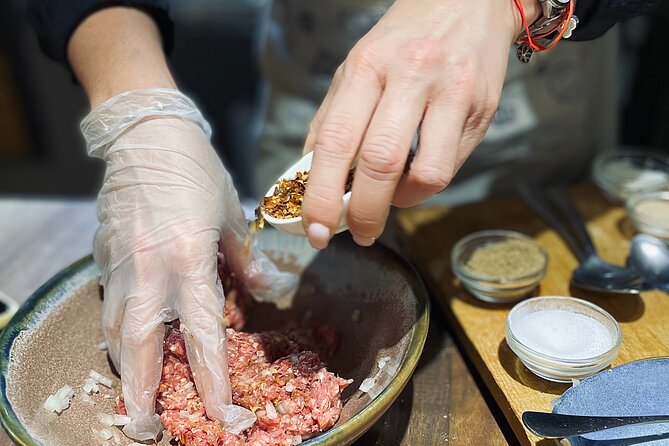
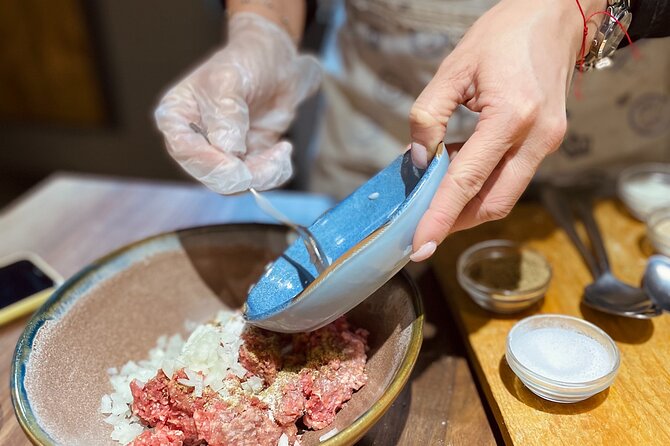
- You shape khinkali by hand: The chef demonstrates the folds and explains the small tricks behind the dumpling’s famous pleated top.
- You prepare Imeretian khachapuri: You work with the dough, filling, and cheese before the bread is finished.
- The class takes place in a restaurant hall: This is not a kitchen-based workshop, and staff handle the hot cooking steps.
- Wine and Georgian table food are included: Expect wine, a tomato and vegetable salad, farm cheeses, and the dishes prepared during class.
- The price is unusually low for a meal and activity: At $27.50, this can replace a casual lunch or dinner while adding a social experience.
- Group size can vary: Ask about the expected number of participants if hands-on time matters to you.
What You Are Really Learning: Two Georgian Staples
This class focuses on food that Georgians eat often and proudly. Khinkali are dough parcels filled with meat, cheese, or mushrooms. Their shape is simple at first glance, but the pleats and juicy center take a little practice.
Khachapuri is the other star. Here, the style is Imeretian, a round cheese bread rather than the boat-shaped Adjarian version topped with egg and butter. That distinction matters because you should not expect the familiar open boat from photographs of Batumi. You are learning a different regional style, filled with Georgian cheese and baked as a round loaf.
I like this pairing because the dishes teach two different skills. Khachapuri gives you dough, filling, and spreading. Khinkali gives you shaping and portion control. Together, they offer a useful first look at Georgian home cooking without asking you to master a long menu.
More khinkali and cooking classes:
- Cook True Ajarian Khachapuri and Khinkali in Highlanders Style
★ 5.0 · 93 reviews - Taste of Kakheti: Wine Tour Bread Baking & Churchkhela Workshop
★ 4.5 · 46 reviews - Nana’s Kitchen – traditional Georgian cooking class at real Georgian family home
★ 5.0 · 37 reviews
Meeting at St. Bunny31 in Central Tbilisi
The meeting point is St. Bunny31 on Griboedov Street, in the heart of downtown Tbilisi. The class ends at the same place, so you do not need to arrange a second pickup or find your way to a different restaurant after eating.
The central setting is handy if you are fitting the class between sightseeing stops. It is also near public transportation. Confirmation arrives at booking, and the experience is offered in English, which makes the instructions accessible even if Georgian food is new to you.
Do not arrive expecting a farmhouse kitchen or a private family home. The workshop takes place inside the restaurant hall, at a dining table. That gives the class a comfortable public setting, but it also limits how much of the cooking process you can see.
The Opening Table: Wine, Cheese, and Georgian Tomatoes
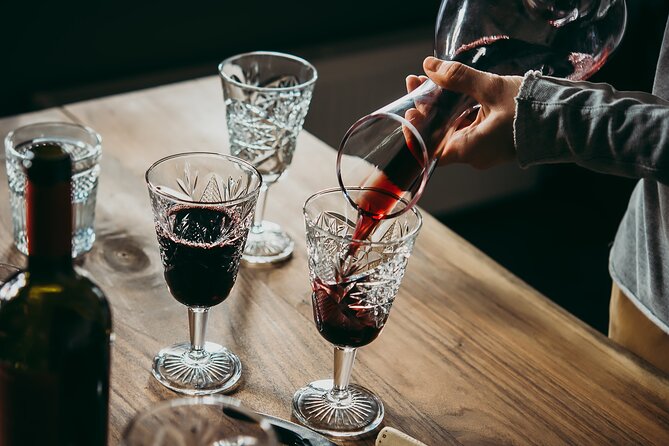
The class begins with the social side of Georgian food. Wine is served with a plate of farm cheeses and a vegetable salad built around Georgian tomatoes. This is not just decoration around the main lesson. Georgian meals are often communal, and these shared plates help turn a basic cooking demonstration into a relaxed lunch or dinner.
The wine is part of the appeal for many people, but there is one practical limitation. Several accounts describe red wine being served without a choice between red and white. If you cannot drink red wine, you should ask about the current arrangement before booking.
Portions of salad and cheese have also felt small when the group has grown. With six people, the shared starters make more sense. With a much larger table, you may find that the food is more of a taste than a proper first course.
The atmosphere is often praised for being casual and friendly. It is a good setup for solo visitors who want to meet people over a meal, and it can work well for families too. One family attended with children aged two and eight and described the session as a full meal.
Making Khachapuri: Dough, Cheese, and the Imeretian Style
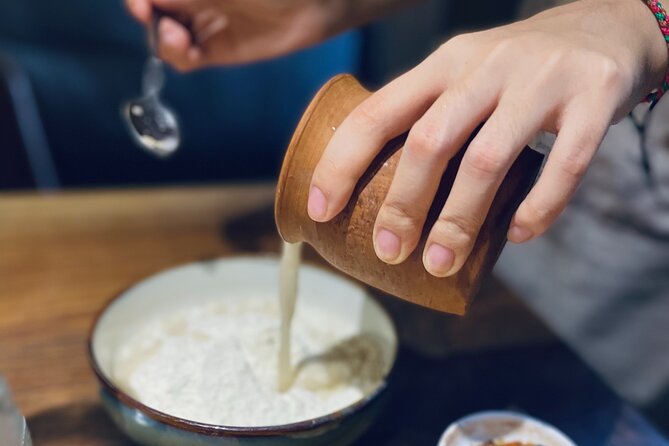
The khachapuri portion starts with the dough and filling. You prepare the dough for this cheese bread, spread the cheese, and shape it before it goes to the restaurant kitchen for the final hot stage.
The hands-on work can vary by session. In a smaller class, you may get a clear turn with the dough and cheese. In a larger group, participants may take turns, with some people preparing dough while others work on the filling. That means you might not personally complete every stage from start to finish.
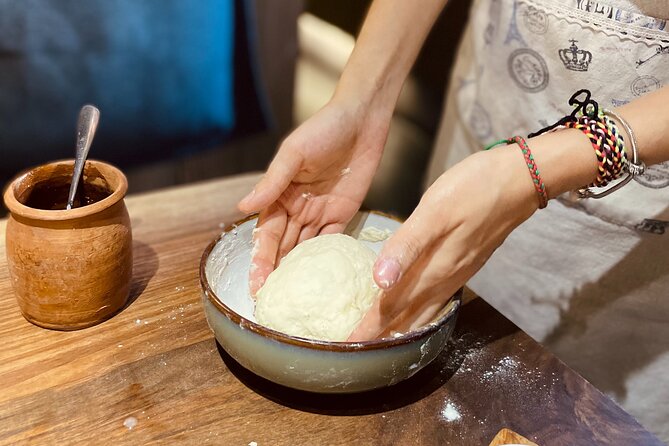
The cheese is the heart of the dish. The lesson shows you how much to use and how to enclose it in the dough. This is useful because khachapuri can look easy until the filling starts pushing through the dough or the bread loses its shape.
The finished bread is brought back from the kitchen for the table. You do not usually place it in the oven yourself. That is a fair safety and restaurant practice, but it also means this is a guided food workshop, not a full professional kitchen lesson.
A few more ways to spend a day out of Tbilisi
- Join a Local for a Market Tour, Cooking Class and Meal in her Tbilisi Home
★ 5.0 · 15 reviews - Georgian Dance Class in Tbilisi, Georgia
★ 5.0 · 10 reviews - Taste of Georgia. Cooking-Class Khinkali, Khachapuri and more
★ 5.0 · 7 reviews - 7-Day Georgian Wine and Culinary Private Tour with Cooking Class
★ 5.0 · 5 reviews
Folding Khinkali and Learning the Dumpling Tricks
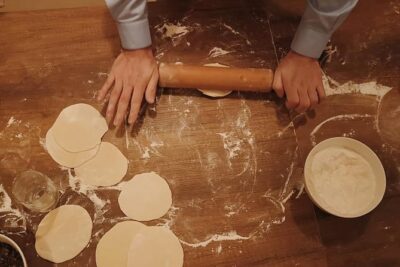
The khinkali lesson is likely the most memorable part. The chef explains the dough, discusses fillings such as veal, cheese, or mushrooms, and shows you how to form the dumpling into its traditional cinched shape.
You then practice the folds yourself. This is where patience helps. Your first dumpling may look more like a small fabric pouch than the neat, tight parcels served in Tbilisi restaurants. That is part of the fun, and the instructors are generally described as patient and clear.
The chef also talks through the details that make khinkali work: how to hold the filling, how to close the top, and how the dumpling should be handled before cooking. Stories about Tbilisi and Georgian food traditions fill the waiting time when the dumplings are being finished.
One especially appealing feature is the chance to eat what you made. Homemade food has a way of making a simple meal feel earned. You may also receive the recipes afterward, which gives the class value beyond the two hours in the restaurant.
Be aware that the dough work is not always identical from one session to the next. One account says the khinkali dough was already prepared, while the advertised format describes a demonstration of dough preparation followed by hands-on shaping. If making the dough yourself is important, confirm that point in advance.
What Happens Behind the Restaurant Door
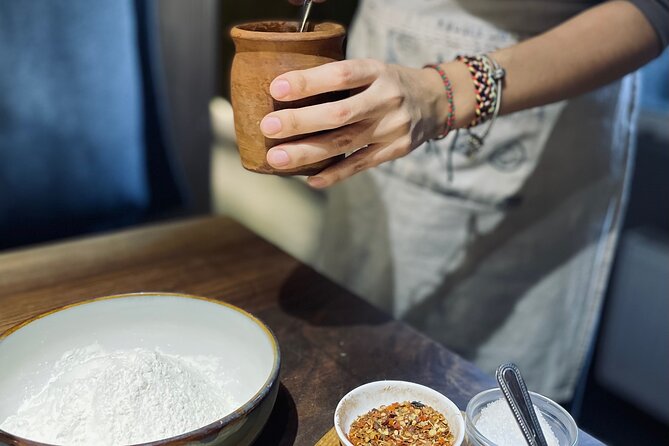
The most important expectation to set is this: the hot cooking is handled by the restaurant staff. The class is not held in the kitchen, and participants do not generally cook the khinkali or bake the khachapuri themselves.
The reason given is that restaurant kitchen access is restricted by sanitary rules. From a practical point of view, this keeps the session safer and easier to manage. It also allows the chef to focus on explaining the recipes rather than supervising six or more people around hot equipment.
Still, this is the central weakness of the experience. If you want to knead, boil, bake, and plate every part of your meal, this class may feel incomplete. Some people have described it as a partial cooking class because the group prepares much of the food but waits while the kitchen handles the final steps.
There can also be quiet gaps while staff collect ingredients, move dishes, or cook the food. In the best sessions, the chef uses that time for stories and questions. In less organized sessions, you may simply sit and wait.
The Chef Makes a Big Difference
The teaching style appears to be one of the strongest parts of the experience. Guides named Seva, Sewa, Artem, and Vladimir have each been praised for being warm, funny, patient, and easy to follow. The names may vary by date, but the pattern is clear: a good chef can make the restaurant-table format feel lively.
Seva is especially praised for explaining Georgian feasts and toast traditions while teaching the recipes. Artem is described as friendly and good at adding historical background. Vladimir is remembered for making an evening feel like a shared meal rather than a formal lesson.
That personal touch matters because the class includes waiting time. A chef who talks about the origins of the dishes, Georgian dining customs, or life in Tbilisi gives the session more depth. Without that conversation, the class becomes a sequence of instructions followed by dinner.
The English is generally sufficient for recipe directions, though the level of explanation can vary. If you want a detailed food-culture lecture, keep your expectations moderate. The main promise is learning to make two dishes, not a full course in Georgian culinary history.
Timing, Group Size, and the Value of Two Hours
The stated duration is about two hours. Some sessions have run longer, especially when the group was large or the meal service moved slowly. One account describes a class lasting three hours including the dining portion.
A small group can make the timing work well. You get more turns, ask more questions, and have a better chance of shaping several dumplings yourself. The advertised limit of six would be ideal for this format.
The trouble is that actual group sizes have not always matched that promise. Reports describe groups of 9 or 10, 13, around 14, and one much larger session. In a large group, the class may be split across tables or run alongside another session, with one chef moving between groups. That can lead to a late start, missed explanations, and less hands-on work.
One account describes a 25-minute delay and a chef leaving to teach another group. Another describes food missing from the final meal and long waits for staff to bring supplies. These are not minor details if you have a tight sightseeing schedule.
I would contact the provider before booking and ask how many people are expected at your chosen time. That one question may tell you more about the likely quality of your session than the low price does.
Is $27.50 Good Value in Tbilisi?
At $27.50 per person, the class offers solid value when it runs as intended. You receive instruction, wine, salad, cheese, khinkali, khachapuri, and a meal at the end. You also leave with recipes and a practical skill you can try again at home.
The price looks even better for solo visitors, since a restaurant meal alone may not provide the social side or the cooking lesson. Families can also get a full meal and an activity in one booking, though young children may not receive equal hands-on time in a crowded session.
The value drops if you are paying mainly for detailed instruction. A large group, delayed start, limited turns, or pre-made dough can make the class feel more like a restaurant demonstration with dinner attached.
I see it as a good-value cultural meal with cooking practice, rather than a serious culinary course. That is not a criticism. It simply helps you book the right experience.
Who Should Book This Tbilisi Cooking Class?
I would suggest it to you if you want a social, low-cost introduction to Georgian food. It suits solo visitors, couples, families, and anyone who enjoys learning through eating. Beginners are welcome, and the recipes are simple enough to follow with clear instruction.
It is also a good choice for people who want to understand dishes before ordering them elsewhere in Georgia. After learning the shape and fillings, you will have a better sense of what makes a good khinkali and why khachapuri comes in several regional forms.
You may want to skip it if you need a private class, a guaranteed six-person limit, or full access to a working kitchen. You should also look elsewhere if you dislike group dining, cannot drink the wine offered, or have only a strict two-hour window.
The free cancellation policy gives you some flexibility. You can cancel up to 24 hours before the start time for a full refund, but changes or cancellations inside that window are not accepted.
Final Verdict: A Fun Food Introduction With One Big Caveat
I would book this class if I wanted a friendly afternoon in central Tbilisi and cared more about making and eating Georgian food than mastering every cooking stage. The wine, cheese, tomato salad, patient instructors, and chance to fold your own khinkali create a pleasant introduction to local cuisine.
My advice is simple: confirm the group size before you pay. With six people, this could be a charming hands-on lesson. With 13 or more, it may become a shared restaurant meal with some cooking practice and extra waiting.
At $27.50, the risk is fairly low, especially for a first taste of Georgian cooking. Just know what you are buying: not a kitchen apprenticeship, but a relaxed table-side lesson, a generous meal when service runs well, and a chance to make two foods you will remember long after leaving Tbilisi.
FAQ
Where does the cooking class meet?
It meets at St. Bunny31 on Griboedov Street in central Tbilisi, Georgia. The activity ends back at the same meeting point.
How long does the class last?
The planned duration is about two hours. Some sessions have lasted longer, including one reported duration of three hours with dining included.
What dishes do you make?
The class focuses on khinkali and Imeretian khachapuri. Khinkali may have veal, cheese, or mushroom filling, while Imeretian khachapuri is a round Georgian cheese bread.
Is the class held in a kitchen?
No. The workshop takes place in the restaurant hall, not inside the kitchen. Participants prepare the dough, fillings, cheese, and khinkali shapes, while restaurant staff handle the hot cooking.
Is food included?
Yes. The experience includes the food you prepare, Georgian wine, a vegetable salad made with Georgian tomatoes, and a plate of farm cheeses.
Is the class offered in English?
Yes. The activity is offered in English.
How many people are in each group?
The stated maximum is six participants, but group sizes have varied in practice. Sessions have been reported with 9, 10, 13, around 14, and larger numbers.
Can I cancel for a full refund?
Yes, if you cancel at least 24 hours before the experience start time. Cancellations or changes made less than 24 hours before the start time are not accepted for a refund.
Recently added around Tbilisi
- Northern Armenia Highlights Tour from Tbilisi★ 5.0 · 3 reviews
- Wild Georgia 4WD PACK Adventure through Kakheti and Kazbegi 2in1★ 5.0 · 3 reviews
- Kakheti wine region – Private Tour★ 5.0 · 3 reviews
- Private Full Day Trip to Kazbegi Mountains★ 5.0 · 3 reviews
- Kakheti With Top Destinations★ 5.0 · 3 reviews
- Jvari monastery & Mtskheta – Half day group tour from Tbilisi★ 5.0 · 3 reviews
- Private Effortless transfer from Tbilisi to Gudauri ski resort★ 5.0 · 3 reviews
- Borjomi – Rabati -Vardzia Private Full Day Tour from Tbilisi★ 5.0 · 3 reviews
Cooking Classes, compared.
Cook True Ajarian Khachapuri and Khinkali in Highlanders Style
Read our review →
Taste of Kakheti: Wine Tour Bread Baking & Churchkhela Workshop
Read our review →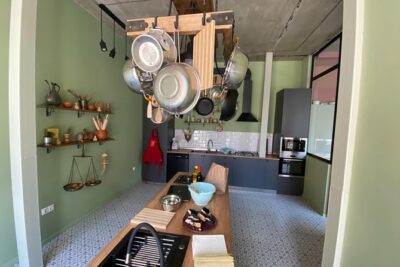
Nana’s Kitchen – traditional Georgian cooking class at real Georgian family home
Read our review →
Join a Local for a Market Tour, Cooking Class and Meal in her Tbilisi Home
Read our review →

One Day Kakheti Tour with Wine Tasting and Free Churchkhela
Read our review →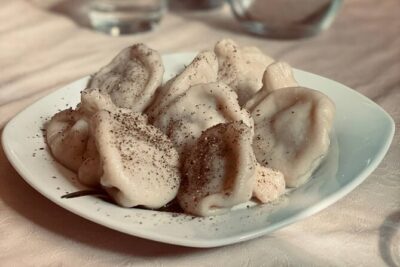
Taste of Georgia. Cooking-Class Khinkali, Khachapuri and more
Read our review →
Military Road Marvels: Ananuri, Kazbegi & Khinkali Masterclass
Read our review →Browse the lists this tour appears in