
Reviewed · WALKING TOURS
Tbilisi Explorer: Essential Walking Tour for First-Timers
Tbilisi rewards curious walkers. This private tour gives you a useful first look at Georgia’s capital, linking Freedom Square, the Old Town, the Mtkvari River, historic churches, and the hilltop Kartlis Deda statue. I like the one-on-one format and the cable car ride, which add both personal attention and a quick view over the city. The main catch is that the listed route is far longer than a typical 90-minute to two-hour outing, so you should confirm the exact pace and stops before setting off.
I also like the human touch built into the guiding. Guides such as Gio, Jonah, Koba, Aleksi, Tamar, and Sofi are praised for adjusting the walk to different needs, from a fast-moving solo visitor to a family with a toddler. One possible drawback is the physical effort: Tbilisi’s old streets and hills can be demanding, and places of worship require covered knees and shoulders.
In This Review
- Key points at a glance
- Why this works well as a first look at Tbilisi
- Freedom Square and the city’s changing names
- Anchiskhati Basilica and old religious Tbilisi
- The Bridge of Peace and Rike Park
- Exploring Old Town, Shardeni Street, and Meidan Bazaar
- The artistic side of Tbilisi
- Sioni Cathedral, the Tamada, and the story of Tbilisi
- Kartlis Deda, the mosque, and the sulfur waterfall
- Metekhi Cathedral and the final stretch
- Guides, group size, and the personal touch
- Price, timing, and practical value
- Who should book this Tbilisi walk?
- Should you book it?
- FAQ
- How long does the Tbilisi Explorer tour last?
- Where does the tour start?
- Where does the tour end?
- Is the tour private?
- Is the tour offered in English?
- Is the cable car ride included?
- Is hotel pickup included?
- What should I wear for the tour?
Key points at a glance
- Private tour from Freedom Square: Only your group takes part, making it easier to ask questions or request a slower, faster, or more focused route.
- A striking mix of old and new Tbilisi: The walk connects Anchiskhati Basilica, Sioni Cathedral, the Old Town, the Bridge of Peace, and Rike Park.
- Cable car ride included one way: The route uses Tbilisi’s aerial tramway between Rike Park and Narikala, though the stop information says the ticket is not included, so clarify this before departure.
- Unusual cultural stops: You may see the Sayat-Nova monument, the Paradzhanov monument, the Tamada sculpture, and a mosque where Shia and Sunni Muslims pray together.
- A strong first-day orientation: The route covers major landmarks and gives you useful context before you explore Tbilisi on your own.
- Good guide flexibility: The experience can suit solo visitors, families, and people with limited time, provided you are comfortable walking.
Why this works well as a first look at Tbilisi
At $41 per person, this is not the cheapest way to simply walk through central Tbilisi. It is a private experience, though, and that changes the value. You are paying for a local guide who can explain what you are seeing, answer questions, adjust the route, and help you make sense of a city where Georgian, Armenian, Persian, Russian, and modern European influences meet.
I especially like this format for a first day in town. You begin at Freedom Square and finish near the same central area, so you get a practical sense of how the city fits together. Afterward, you should know where the Old Town begins, how the river divides key sights, where the cable car runs, and which streets are useful for food or shopping.
The 90-minute to two-hour duration is appealing if you have only a short stop in Tbilisi. Yet the full sequence of stops is ambitious. The Old Town alone is allotted an hour, while many other sights receive 15 or 20 minutes. Treat the route as a menu rather than a promise that every stop will receive a long visit. A private guide can usually make sensible choices, but ask at the start what matters most to you.
More walks:
- Tbilisi Walking Tour Including Cable Car and Traditional Bakery
★ 5.0 · 1,310 reviews - Tbilisi:Evening Walking & Talking Tour with Wine & Boat Ride
★ 5.0 · 572 reviews - Old Tbilisi Highlights walking tour with wine & 10 tastings
★ 5.0 · 276 reviews
Freedom Square and the city’s changing names
The tour starts at 2 Freedom Square, a central meeting point at the eastern end of Rustaveli Avenue. This is a useful place to begin because the square has carried several names under Imperial Russian and Soviet rule, including Erivansky Square, Beria Square, and Lenin Square.
You do not need a ticket to see it. The value here is orientation and context. Your guide can use the square to explain how Tbilisi changed through imperial, Soviet, and independent Georgian periods without turning the opening into a long lecture.
From here, the route moves toward the old part of the city and the remains of the Tbilisi wall. The ruins are modest, but they help you picture the fortified city that once occupied these slopes. I would pay attention to how the old defensive line fits into the present-day streets, since Tbilisi often places ancient fragments beside ordinary shops and homes.
Anchiskhati Basilica and old religious Tbilisi
Anchiskhati Basilica of St Mary is one of the most important early stops. Dating from the sixth century, it is the oldest surviving church in Tbilisi and belongs to the Georgian Orthodox Church.
The visit is brief, listed at about 15 minutes, so expect an introduction rather than a full religious tour. The church is valuable because it gives you an early example of Georgian Christian architecture before you reach larger and more prominent religious buildings.
Dress carefully from the beginning. Knees and shoulders must be covered for men and women when entering places of worship and selected museums. Shorts and sleeveless tops can lead to refused entry, so modest clothing is the simplest way to avoid a problem.
The nearby Sayat-Nova monument adds another layer to this part of the walk. Sayat-Nova, born Harutyun Sayadian, was an Armenian poet and musician known as an ashugh. The monument sits near the northern wall of St Kevork Armenian Church, connecting Tbilisi’s streets with the city’s Armenian cultural past.
The Bridge of Peace and Rike Park
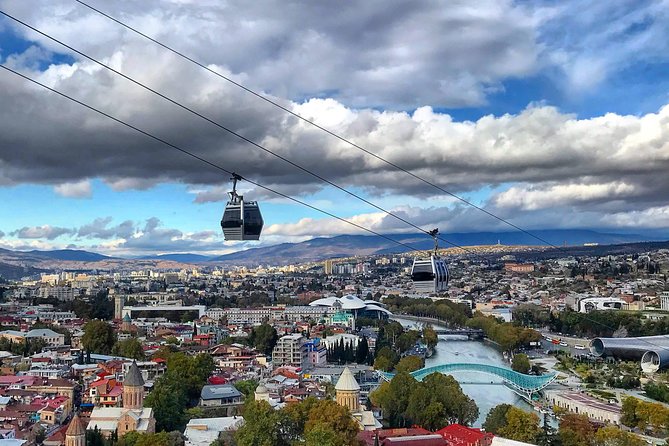
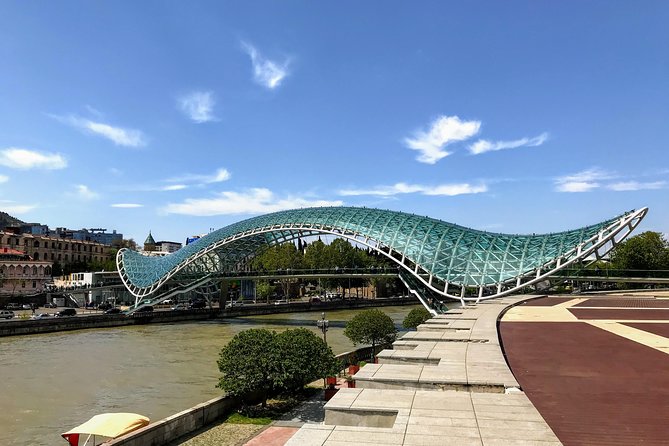
The Bridge of Peace opened in 2010 over the Mtkvari River, also called the Kura River. Its glass-and-steel form makes a sharp contrast with the older buildings and churches nearby.
I like this stop because it shows that Tbilisi is not preserved in one historical period. The city is a mixture of old walls, new public spaces, religious landmarks, and modern architecture. The bridge is also a useful crossing point, not just a photo stop.
On the other side, Rike Park offers a more open public space along the river. Families, residents, and people out for a stroll use it, and the park provides a break from the narrow lanes of the Old Town.
The aerial tramway connects Rike Park with Narikala, the fortress above the city. The cable car is one of the tour’s most practical features because it saves some uphill effort while giving you a quick view across Tbilisi. The tour information says one way is included, but the tramway stop also notes that admission is not included. I would confirm the ticket arrangement before you go.
A few more ways to spend a day out of Tbilisi
- Day Trip to Kakheti Wine Region Including 9 Wine Tastings
★ 5.0 · 2,774 reviews - Highlights of Caucasus Mountains-Jinvali,Ananuri,Gudauri,Kazbegi(Group tour)
★ 5.0 · 2,682 reviews - Day Trip to Kazbegi and Gudauri
★ 5.0 · 2,009 reviews - Day Trip to Mtskheta Gori and Uplistsikhe
★ 5.0 · 1,801 reviews
Exploring Old Town, Shardeni Street, and Meidan Bazaar
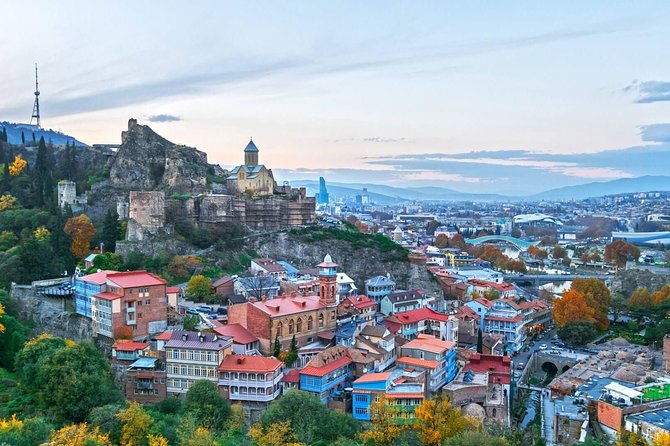
The Old Town is the heart of the walk. You are given about an hour here, which is sensible because the area contains old buildings, restaurants, small eateries, theaters, and many lanes that reward a slower pace.
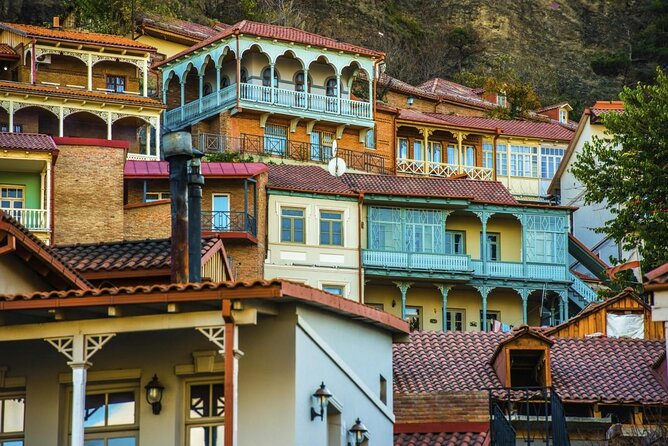
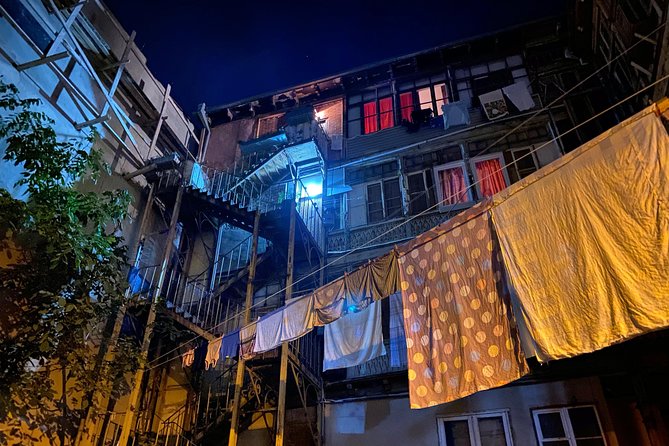
Do not expect a polished open-air museum. Part of Tbilisi’s appeal is the uneven mix of restored facades, worn balconies, local businesses, and tourist-oriented streets. Your guide can help you tell the difference between a place worth lingering at and a street that is mainly useful for passing through.
Jan Shardeni Street is one of the city’s best-known pedestrian streets. It is attractive and easy to visit, but it is also one of the more commercial parts of the Old Town. Use it for a quick look, a meal, or a drink, but do not assume it represents every part of historic Tbilisi.
Meidan Bazaar is useful if you want souvenirs but have little time. It gives you a concentrated shopping stop instead of requiring a long search through the Old Town. A guide can also be helpful here. Aleksi has been praised for helping with sellers and negotiating prices, especially when a family wanted assistance.
The artistic side of Tbilisi

The Rezo Gabriadze Marionette Theater opened in 1981 and has become a much-loved part of the city’s cultural life. The tour gives it roughly 15 minutes, so you will see the theater area rather than attend a performance.
The stop is worth keeping because it adds a creative side to the route. Tbilisi is not only churches, fortresses, and sulfur baths. Theater and handmade arts are part of its modern identity.
Nearby, the Sergey Paradzhanov monument honors the Armenian-Soviet filmmaker behind works such as Shadows of Forgotten Ancestors and The Colour of Pomegranates. Even if you do not know his films, the monument introduces an artist whose work drew on Armenian, Eastern, and European traditions.
These two stops make the walk feel less like a checklist of old stones. They show how Tbilisi’s cultural life extends into film, theater, sculpture, and public art.
Sioni Cathedral, the Tamada, and the story of Tbilisi
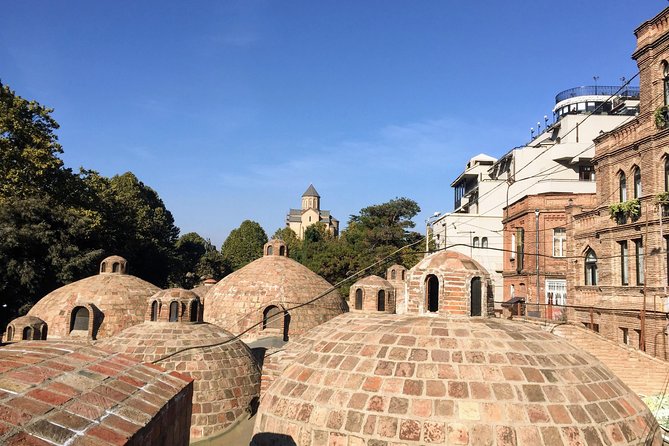
Sioni Cathedral of the Dormition is another major Georgian Orthodox church. Its name follows a Georgian tradition of naming churches after places in the Holy Land, in this case Mount Zion in Jerusalem.
The allotted 15 minutes is enough for a short explanation and exterior or interior visit if conditions allow. As with Anchiskhati Basilica, wear suitable clothing if you want to enter.
The Tamada sculpture is one of the route’s more playful sights. It shows a man holding a drinking horn and is based on an ancient Colchian statuette. Tamada means toastmaster, an important figure in Georgian dining and wine culture.
At the Monument Fountain of Falcon and Pheasant, your guide can explain the legend linked to the founding of Tbilisi in the fifth century by King Vakhtang Gorgasali. This is a quick stop, but it gives you a memorable story to connect with the city’s name and origins.
Tamar has received especially warm praise for combining local history with food and wine knowledge. If you care about Georgian cuisine, tell your guide early. A short tasting or food suggestion may be possible, but it is not guaranteed as a formal part of the tour.
Kartlis Deda, the mosque, and the sulfur waterfall
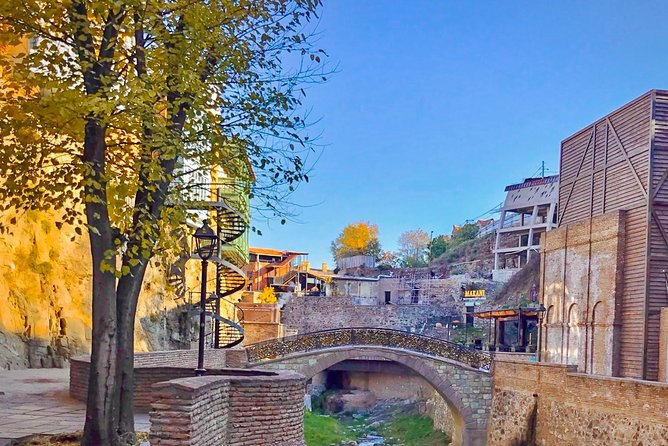
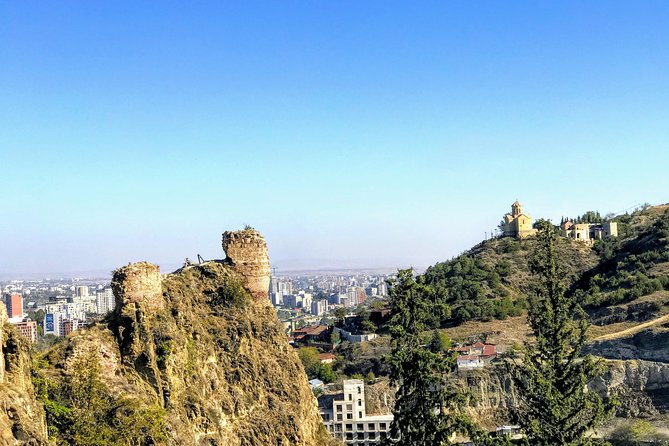
Kartlis Deda, or Mother of Georgia, is a 20-meter aluminum statue of a woman in Georgian national dress. Elguja Amashukeli designed it, and it was erected in 1958 when Tbilisi marked its 1,500th anniversary.
The statue carries strong symbolic meaning, but the real pleasure of this stop is the hilltop setting. You get a broader view of the city and a better sense of how the river, Old Town, and surrounding hills relate to each other.
The Jumah Mosque is a particularly valuable stop. It sits in the Old Town and is open to people of all religions or beliefs. Its architecture may not look immediately recognizable as a mosque, and it is unusual in that Shia and Sunni Muslims pray together there.
That detail makes the mosque more than a quick architectural photo. It shows the religious variety of Tbilisi in a direct, practical way. Again, dress modestly before the tour rather than hoping to adjust clothing at the last minute.
The Dzveli Tbilisi Sulphur Waterfall offers one of the route’s most surprising moments. It is a real waterfall in the city center, tucked into the old urban setting. The contrast is memorable: water, rock, and greenery appear among streets, buildings, and historic sites.
Metekhi Cathedral and the final stretch
Metekhi Cathedral sits close to the edge of the rocky bank of the Mtkvari River. The temple dates from the 12th century and is one of the city’s major old monuments.
This is a strong closing landmark because it brings together several themes from the tour: Georgian Christianity, dramatic hills, the river, and the compact shape of old Tbilisi. You may find the setting more impressive than the short visit itself, especially if you enjoy city views.
The route is not flat. Tbilisi’s slopes, steps, uneven paving, and walking distance make moderate physical fitness important. A toddler or slower walker can still fit the experience, but the private format matters. Aleksi was praised for keeping a family relaxed when a small child became fussy, while Gio adjusted to a fast walking pace.
Guides, group size, and the personal touch
Only your group takes part, so this is not a standard large walking tour. You can ask for more detail at a church, skip a shopping stop, slow down for a child, or focus on food, architecture, or local history.
The guides bring different strengths. Gio is praised for being personable and matching a fast pace. Jonah adjusted a family’s route and timeline. Koba created a friendly, companionable feel for a solo visitor. Tamar is especially suited to people interested in Georgian culture, food, and wine, while Sofi is happy to answer questions and help with souvenirs.
That flexibility is the strongest reason to choose this tour over a cheaper group walk. You are not just following a flag through the center. You can shape the experience, though you should state your priorities before leaving Freedom Square.
Price, timing, and practical value
The $41 price is reasonable if you value a private guide and want an efficient introduction to central Tbilisi. It is less compelling if you only want a brief stroll with no explanation, since many of the sights can be seen free of charge.
The tour is offered in English and includes a local guide. Hotel pickup is not included, and the meeting point is at Freedom Square. The experience ends back at the meeting point, according to the supplied details, so allow time to return there before making another booking.
It is commonly booked about 15 days ahead. That advance pattern matters if you need a particular guide, date, or time, especially because this is a private activity rather than a large scheduled group.
Free cancellation is available up to 24 hours before the start time for a full refund. Changes or cancellations inside that window are not accepted for a refund, and poor weather can lead to a different date or a full refund.
Who should book this Tbilisi walk?
I would choose this tour if you are visiting Tbilisi for the first time, have only a few hours, or want a guide to connect the city’s many layers. It is also a good match for solo visitors, families, and couples who prefer private attention.
You should be comfortable walking for up to two hours on streets that may include hills and uneven surfaces. If you want a slow, detailed church tour, a dedicated food tour, or a long museum visit, this route may feel too broad.
Before you start, tell the guide three things: your walking pace, your must-see sights, and whether you care most about history, food, shopping, religion, or city views. That simple conversation can turn an ambitious route into a much better personal introduction.
Should you book it?
Book it if you want a friendly, flexible orientation to Tbilisi with the Old Town, major churches, public art, the sulfur waterfall, and a cable car ride in one compact outing. The private format and adaptable guides give this experience more value than its free-entry stops might suggest.
Skip it if you dislike walking uphill, want a slow single-subject tour, or expect every one of the 19 listed stops to receive equal attention within two hours. For most first-time visitors with limited time, though, it is a sensible way to get your bearings and decide where to return on your own.
FAQ
How long does the Tbilisi Explorer tour last?
The experience lasts approximately 1 hour 30 minutes to 2 hours.
Where does the tour start?
It starts at 2 Freedom Square in Tbilisi, Georgia.
Where does the tour end?
The activity ends back at the meeting point.
Is the tour private?
Yes. Only your group participates in the activity.
Is the tour offered in English?
Yes. English is the listed tour language.
Is the cable car ride included?
One-way cable car service is listed among the inclusions. However, the Aerial Tramway stop also says admission is not included, so confirm the ticket details when booking.
Is hotel pickup included?
No. Hotel pickup is not included.
What should I wear for the tour?
You should cover your knees and shoulders when entering places of worship and selected museums. Shorts and sleeveless tops may result in refused entry for both men and women.
Recently added around Tbilisi
- A Gastronomic Private Guided Journey Through Tbilisi★ 5.0 · 8 reviews
- Kakheti Wine Tour for beginners – 3 wineries★ 5.0 · 8 reviews
- Kakheti and Sighnaghi tour with winetasting★ 5.0 · 8 reviews
- Jvari Monastery, Ananuri, Gudauri, Kazbegi Group & Private Tour★ 4.5 · 8 reviews
- Tbilisi Lakes and Sightseeing tour★ 5.0 · 8 reviews
- Kazbegi & Gudauri group tour from Tbilisi★ 5.0 · 8 reviews
- Day Tour to Mtskheta, Gori (Stalin museum) and Uplistsikhe★ 4.5 · 8 reviews
- Group Day Tour of Mtskheta,Jvari,Samtavro★ 4.0 · 8 reviews
Walking Tours, compared.
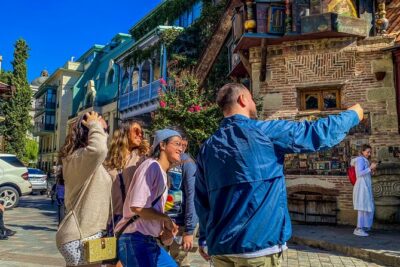
Tbilisi Walking Tour Including Cable Car and Traditional Bakery
Read our review →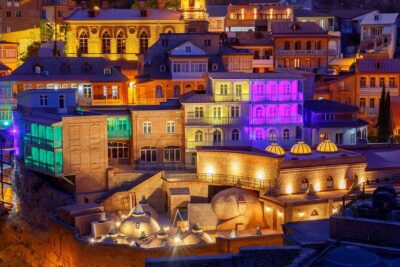
Evening Walking & Talking Tour with Wine & Boat Ride
Read our review →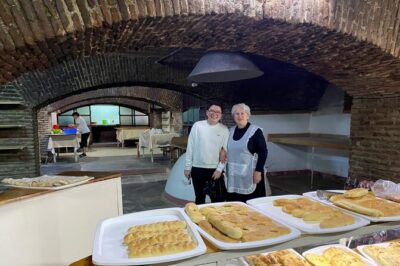
Old Tbilisi Highlights walking tour with wine & 10 tastings
Read our review →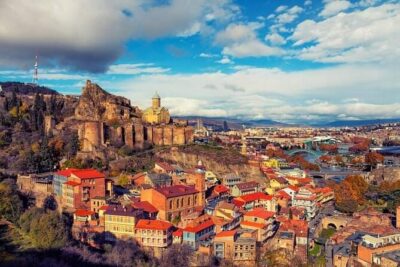
Old Tbilisi Tour: Private Walking Tour With Wine Tasting
Read our review →
Private Tbilisi Food Tour: 9 Tastings Walk in Bohemian District
Read our review →
Tbilisi Old Town Walking Tour with a Local Guide
Read our review →
Discover Tbilisi: Hidden Gems and Iconic Sights Walking Tour
Read our review →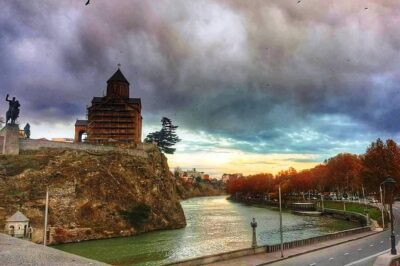
Browse the lists this tour appears in