
Reviewed · WALKING TOURS
Discover Tbilisi: Hidden Gems and Iconic Sights Walking Tour
Tbilisi rewards curious walkers. This low-cost tour links Freedom Square and the Old Town with churches, courtyards, monuments, the Bridge of Peace, and fine views from Narikala Fortress. I like the wide range of sights for just $9, and I like that local guides such as Jonah, Salomea, Nini, Oksana, Tamara, and Koba add personal stories rather than simply pointing at buildings. The main catch is pace: three hours on uneven streets, hills, and steps can feel demanding, and the cable-car fare is extra.
I also like the small-group format, with the advertised group size capped at 12, although the practical information gives a maximum of 15. That is worth checking when you book. The route covers a lot, so it works best as your first look at Tbilisi, not as a slow museum-style walk.
At $9 per person, this is unusually strong value. You get a local English-speaking guide and a broad introduction to the city, but not hotel collection, cable-car tickets, meals, or guaranteed wine tasting. Some outings have included wine tasting, yet it should be treated as a pleasant extra rather than a promised part of the tour.
In This Review
- Key points before you book
- Starting at Freedom Square
- Churches, courtyards, and the old center
- One hour in Old Tbilisi
- Up to Narikala and Kartlis Deda
- Sioni, the mosque, and the synagogue
- Meidan Bazaar, the Toaster, and Tbilisi’s legends
- What the guides add
- Price, timing, and physical effort
- Who should book this walk?
- Should you book it?
- FAQ
- How much does the Tbilisi walking tour cost?
- How long does the walking tour last?
- What language is the tour offered in?
- Where does the tour begin?
- Where does the tour finish?
- Is the aerial tramway ticket included?
- Is hotel pickup provided?
- What clothing is required?
- How large is the group?
- Can I cancel for a refund?
Key points before you book
- A full Old Town circuit: See Freedom Square, Anchiskhati Basilica, Sioni Cathedral, the Great Synagogue, Jumah Mosque, Meidan Bazaar, and more.
- Three hours of city orientation: The route is long enough to explain how Tbilisi fits together, with time for photographs and questions.
- Local guides with different strengths: Jonah is praised for storytelling, Nini for practical recommendations, Oksana for patience, and Koba for his lifelong connection to the city.
- Excellent views: The Bridge of Peace, Rike Park, Kartlis Deda, and the Narikala area provide some of the best photo stops in central Tbilisi.
- Religious and cultural variety: Georgian Orthodox, Armenian, Jewish, and Muslim sites appear on one walk.
- Bring modest clothing: Knees and shoulders must be covered for places of worship and selected museums.
Starting at Freedom Square
The walk begins at Burberry on Shalva Dadiani Street, near Freedom Square. This is a useful starting point because the square sits at the eastern end of Rustaveli Avenue, one of central Tbilisi’s main streets.
Freedom Square has carried several names over the centuries, including Erivansky Square during Imperial Russian rule and Lenin Square in the Soviet period. Today, it is marked by the tall statue of Saint George, but the square’s changing names tell you something important about Tbilisi: political power has repeatedly reshaped the city, while the older streets nearby kept their own character.
Your guide will usually use the opening section to set the scene. Guides such as Koba, who grew up in Tbilisi, and Jonah, praised for making history easy to follow, can help you place the city’s major districts before the walk turns into the older lanes.
From here, you reach the remains of the Tbilisi city wall. The ruins are not a grand fortress on their own, but they help explain why Old Tbilisi developed as a tight, defensible settlement. This is a quick stop, yet it gives the surrounding streets more meaning.
More walks:
- Tbilisi Walking Tour Including Cable Car and Traditional Bakery
★ 5.0 · 1,310 reviews - Tbilisi:Evening Walking & Talking Tour with Wine & Boat Ride
★ 5.0 · 572 reviews - Old Tbilisi Highlights walking tour with wine & 10 tastings
★ 5.0 · 276 reviews
Churches, courtyards, and the old center
Anchiskhati Basilica is one of the most important early stops. It is the oldest surviving church in Tbilisi and belongs to the Georgian Orthodox Church. The building dates from the sixth century, making it an especially useful place to begin understanding Georgia’s long Christian tradition.
The visit is brief, about 15 minutes, and entry is free. Do not expect a lengthy interior tour every time. The value is in seeing the church in its urban setting and hearing how it fits into Tbilisi’s religious past.
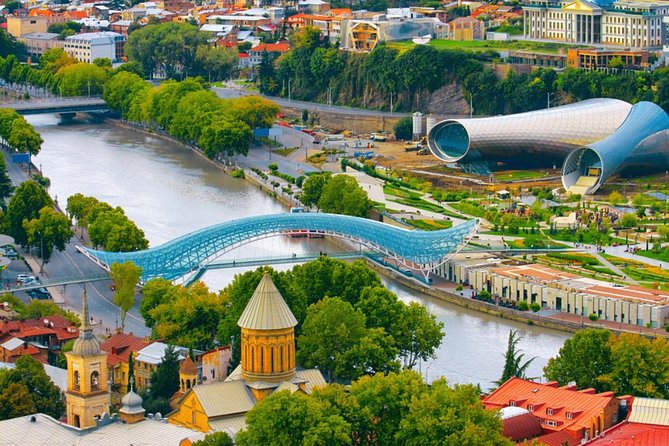
The route then reaches the Bridge of Peace, a modern glass-and-steel crossing over the Mtkvari River, also known as the Kura. Opened in 2010, it forms a sharp contrast with the older churches and battered walls nearby.
This is one of the best photography points on the walk. Look back toward the Old Town, across the river to Rike Park, and upward toward the hills. The bridge itself divides opinion, but that is part of its interest. Tbilisi does not try to hide its old and new sides from each other.
Jan Shardeni Street brings a different mood. This pedestrian lane is lined with restaurants, cafés, and places aimed at the evening crowd. The tour allows about 30 minutes here, so you have time to observe the street rather than rush through it.
I would treat Shardeni as a place to note for later, not necessarily where you must eat. Your guide may have better suggestions, and several guides are praised for recommending places serving authentic Georgian food. Gio, for example, is specifically noted for restaurant advice, including local cuisine.
One hour in Old Tbilisi
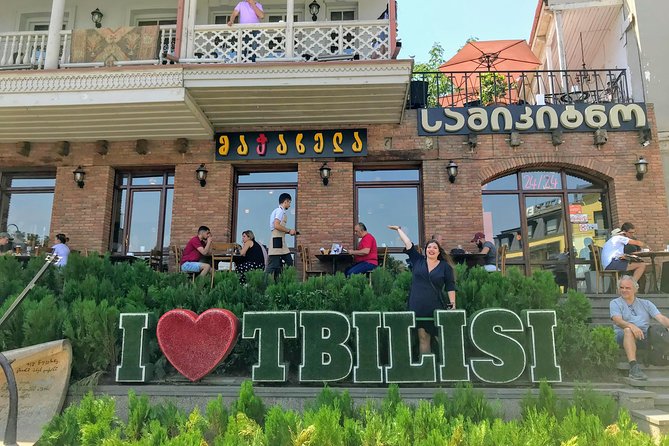
The longest part of the walk is the Old Town itself, with about an hour set aside for its streets and buildings. This is where the experience earns its title. The old center is not a single preserved monument district. It is a lived-in area of old houses, restaurants, theaters, balconies, narrow lanes, and changing facades.
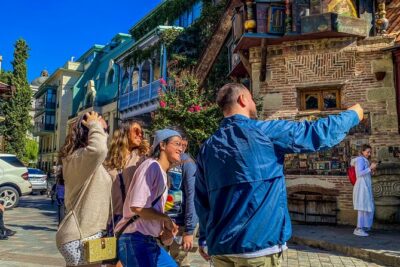
A local guide makes a real difference here. On your own, you may notice the picturesque balconies and peeling walls but miss the stories behind them. Oksana has been praised for showing courtyards and details that are easy to walk past, while Nini is known for pointing out small features and suggesting things to do later in your stay.
The pace is fairly relaxed, according to the strongest comments about the walk, but the route still covers a lot. If you walk slowly, tell the guide early. Oksana has been especially praised for accommodating people who needed more time.
Rezo Gabriadze Marionette Theater is another short stop. Opened in 1981, the theater has become a beloved part of Tbilisi’s arts scene. Even if you do not attend a performance, the building and its clock tower make a memorable photo.
The route also includes a monument to filmmaker Sergei Parajanov. His films, including The Colour of Pomegranates and Shadows of Forgotten Ancestors, are known for their dreamlike visual style. The monument adds a reminder that Tbilisi’s cultural story is not limited to churches and fortresses.
Nearby, the Sayat-Nova monument honors the Armenian poet and musician. The sculpture stands close to the northern wall of St Kevork Armenian Church. Sayat-Nova is tied closely to Tbilisi, and the site brings Armenian, Georgian, and wider Caucasian culture into the same walking route.
Up to Narikala and Kartlis Deda
The aerial tramway is the one significant paid element. It connects Rike Park, across the Mtkvari from the Old Town, with Narikala Fortress on the hill above the city. The ride takes around 30 minutes within the tour schedule, but the ticket is not included.
This matters for your budget. The tour itself costs only $9, yet you should carry extra money for the cable car. The supplied information does not give the fare, so check the current price before setting out.
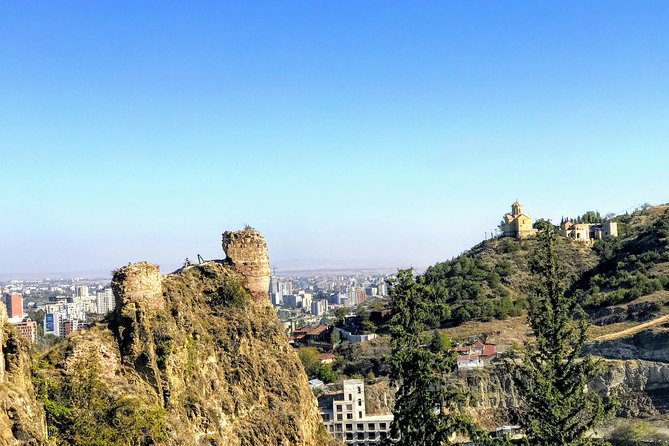
The ride is a major reason to choose this route. From above, you can see the river, Old Tbilisi, the modern bridge, and the hills that contain the city. It saves a steep climb, though the walk still involves uneven streets and some uphill movement.
Kartlis Deda, or Mother of Georgia, is a 20-meter aluminum statue of a woman in Georgian national dress. It was erected in 1958 for Tbilisi’s 1,500th anniversary. She holds a sword in one hand and a bowl of wine in the other, a familiar symbol of Georgia’s welcome to friends and defense against enemies.
The statue is one of the tour’s strongest photo stops. Several guides have taken photographs for visitors, and one account specifically praises Jonah for leaving the group with memorable pictures. Do not assume a formal photo service, but it is reasonable to ask your guide to take a few shots.
Narikala itself overlooks the city and helps you understand Tbilisi’s shape. From the hill, the old center appears compact, with the river cutting through it and newer districts spreading outward. The views are worth the extra effort, especially on a clear day.
A few more ways to spend a day out of Tbilisi
- Day Trip to Kakheti Wine Region Including 9 Wine Tastings
★ 5.0 · 2,774 reviews - Highlights of Caucasus Mountains-Jinvali,Ananuri,Gudauri,Kazbegi(Group tour)
★ 5.0 · 2,682 reviews - Day Trip to Kazbegi and Gudauri
★ 5.0 · 2,009 reviews - Day Trip to Mtskheta Gori and Uplistsikhe
★ 5.0 · 1,801 reviews
Sioni, the mosque, and the synagogue
Back among the lower streets, Sioni Cathedral offers another important Georgian Orthodox landmark. Its full name is the Sioni Cathedral of the Dormition, and its name follows a Georgian tradition of naming churches after places in the Holy Land, in this case Mount Zion in Jerusalem.
The stop lasts about 15 minutes and admission is free. As with the other religious buildings, dress rules matter. Men and women must cover their knees and shoulders, and a sleeveless top or shorts may lead to refused entry.
Jumah Mosque is one of the most interesting cultural stops. Its location in the heart of Old Tbilisi can make it easy to miss, and its exterior may not immediately look like a mosque. It is also notable because Shia and Sunni Muslims pray there together.
The mosque welcomes visitors of all religions or beliefs, but respectful clothing is essential. This stop gives the walk more depth than a simple list of viewpoints. Tbilisi’s older center has long been shaped by several faiths living close together.
The Great Synagogue of Tbilisi continues that theme. Built between 1895 and 1903, it is also called the Georgian Synagogue or the synagogue of the people of Akhaltsikhe. Georgian Jews from Akhaltsikhe built it after moving to Tbilisi in the late 19th century.
These religious sites are visited briefly, so the tour is not a substitute for a dedicated architecture or faith tour. Its strength is the comparison. Within a few blocks, you can see how Georgian Orthodox, Armenian, Muslim, and Jewish traditions have all left their mark.
Meidan Bazaar, the Toaster, and Tbilisi’s legends
Meidan Bazaar is the practical souvenir stop. If you have little time or do not want to search through shops, this covered market offers a convenient place to look for gifts.
The tour also passes the Sculpture of the Toaster, a figure holding a drinking horn. It is modeled on an ancient Colchian statuette and refers to the tamada, the toastmaster who plays an important role in Georgian feasts.
This is a small monument, but it points toward Georgian social customs. Food, wine, long toasts, and hospitality are central to the country’s public image, and the tamada gives you a useful symbol to watch for during the rest of your trip.
The Monument to Sofiko Chiaureli honors the Soviet Georgian actress. The stop is short, yet it adds another layer to the city’s cultural identity, alongside the Gabriadze Theater and Parajanov monument.
Near the end, the Monument Fountain of Falcon and Pheasant recalls the legend of how Tbilisi was founded in the fifth century by King Vakhtang Gorgasali. The city’s name is linked with its sulfur springs, and this legend is one of the stories your guide can use to connect the old center with the city’s earliest beginnings.
The Dzveli Tbilisi sulfur waterfall is a delightful surprise. It is a real waterfall in the middle of the city, near the sulfur-bath district. After so many monuments and churches, this natural feature gives the walk a welcome change of rhythm.
Pushkin Street, one of six roads radiating from Freedom Square, is also part of the route. Depending on how the guide organizes the walk, this may appear near the beginning or end. The tour finishes back at the meeting point.
What the guides add
The strongest part of this experience is its guide-led character. The route is easy to find on a map, but the city makes more sense when someone explains the connections.
Jonah is praised for clear storytelling and for helping first-time visitors see both the major sights and smaller details. Salomea and Salome receive warm marks for energy and friendly presentation. Tamara is singled out for making the walk informative and relaxed, with a few surprises saved for the end.
Nini is a useful choice for practical orientation because she offers recommendations for the rest of your stay. Koba grew up in Tbilisi and is praised for knowing the city from personal experience. Oksana is a good fit if you want patience, questions answered, and a gentler pace.
Families may appreciate Sofa, who has been especially attentive to children’s comfort. Solo visitors can also fit comfortably into the group, and one solo participant found the group friendly.
The guide may occasionally be multilingual in English and Russian at the same time. If precise English commentary matters to you, confirm the language arrangement in advance.
Price, timing, and physical effort
At $9, the price is the tour’s biggest advantage. Even after adding the cable-car ticket, you are paying little for several hours of guiding, city orientation, and views that would take effort to organize alone.
The stated duration ranges from two and a half to three and a half hours. That variation likely reflects walking speed, group size, questions, and time spent at the sights. Plan for the longer end, especially if you want photographs.
Wear comfortable shoes. You will cover old streets, pedestrian lanes, parks, and hill areas. The required fitness level is moderate, and hot weather can make the uphill sections feel harder. One account describes a very hot day made easier by an energetic guide, but weather still matters.
The meeting point allows only 10 minutes of waiting. If you arrive late or miss the group, you need to make a new booking. Free cancellation is available up to 24 hours before the start time. Poor weather or failure to reach the minimum group size can lead to a new date, another experience, or a full refund.
Who should book this walk?
I would choose this tour at the start of a Tbilisi stay. It gives you a working map of the center, points out places to return to, and supplies restaurant suggestions before you spend your evenings guessing.
It suits first-time visitors, solo visitors, families with older children, and anyone who wants a broad introduction for very little money. It is also a good fit if you enjoy stories, architecture, local customs, and frequent photo stops.
I would hesitate if you dislike group walks, cannot manage hills and uneven pavement, or want long interior visits at each religious site. You should also allow extra cash for the aerial tramway and dress properly from the start.
Should you book it?
Yes, if you want an affordable first look at Tbilisi with a human voice guiding the way. The combination of major sights, smaller monuments, religious buildings, local food advice, and hilltop views gives you more than a basic stroll.
Choose a guide whose style matches your needs when possible. Jonah or Koba may suit you if stories and city knowledge matter most, Nini if you want practical recommendations, Oksana if your group walks slowly, or Sofa if you are visiting with children. At this price, the main risk is not poor value. It is trying to absorb too much of Tbilisi in one morning.
FAQ
How much does the Tbilisi walking tour cost?
The price is $9 per person. Group discounts may be available.
How long does the walking tour last?
The expected duration is about two hours and 30 minutes to three hours and 30 minutes.
What language is the tour offered in?
The tour is offered in English. In exceptional cases, one guide may lead in English and Russian at the same time.
Where does the tour begin?
It begins at Burberry on Shalva Dadiani Street near Freedom Square in Tbilisi.
Where does the tour finish?
The activity ends back at the meeting point.
Is the aerial tramway ticket included?
No. The cable-car ticket is not included in the tour price.
Is hotel pickup provided?
No. Hotel pickup is not included.
What clothing is required?
Knees and shoulders must be covered for places of worship and selected museums. Shorts and sleeveless tops may lead to refused entry.
How large is the group?
The highlights describe a maximum of 12 people, while the additional information gives a maximum of 15. Check the group size when booking.
Can I cancel for a refund?
You can cancel at least 24 hours before the start time for a full refund. Cancellations or changes made less than 24 hours before the start time are not accepted for a refund.
Recently added around Tbilisi
- A Gastronomic Private Guided Journey Through Tbilisi★ 5.0 · 8 reviews
- Kakheti Wine Tour for beginners – 3 wineries★ 5.0 · 8 reviews
- Kakheti and Sighnaghi tour with winetasting★ 5.0 · 8 reviews
- Jvari Monastery, Ananuri, Gudauri, Kazbegi Group & Private Tour★ 4.5 · 8 reviews
- Kazbegi & Gudauri group tour from Tbilisi★ 5.0 · 8 reviews
- Tbilisi Lakes and Sightseeing tour★ 5.0 · 8 reviews
- Day Tour to Mtskheta, Gori (Stalin museum) and Uplistsikhe★ 4.5 · 8 reviews
- Group Day Tour of Mtskheta,Jvari,Samtavro★ 4.0 · 8 reviews
Walking Tours, compared.
Tbilisi Walking Tour Including Cable Car and Traditional Bakery
Read our review →
Evening Walking & Talking Tour with Wine & Boat Ride
Read our review →
Old Tbilisi Highlights walking tour with wine & 10 tastings
Read our review →
Old Tbilisi Tour: Private Walking Tour With Wine Tasting
Read our review →
Private Tbilisi Food Tour: 9 Tastings Walk in Bohemian District
Read our review →
Tbilisi Old Town Walking Tour with a Local Guide
Read our review →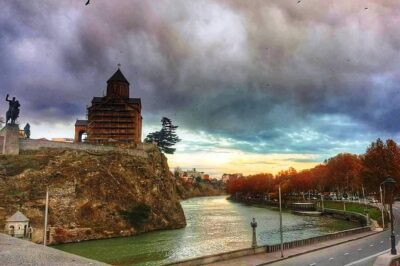
Browse the lists this tour appears in