
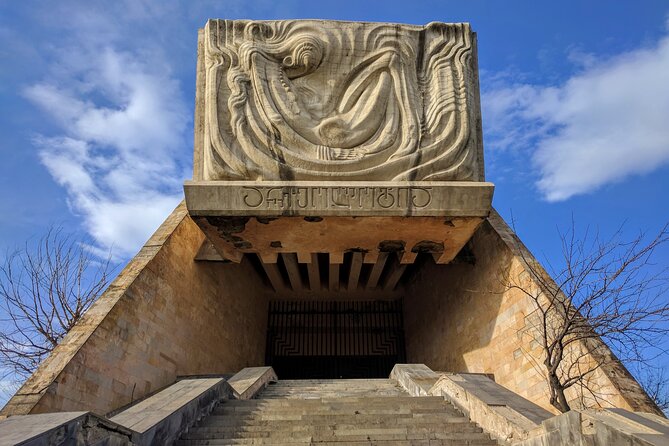
Reviewed · SOVIET-ERA TOURS
Soviet Tour – Hidden Tbilisi
Soviet Tbilisi hides in plain sight. This small-group tour takes you beyond the usual old-town circuit to striking Soviet buildings, monuments, and lesser-seen corners. I like the maximum group size of six, which should make questions and conversation easy, and I like the air-conditioned vehicle, since the sights are spread across the city.
The guide-led format adds real value. Guides including Giorgi, Georgi, Irakli, and David have been praised for explaining how architecture connects with Georgian life and politics. A possible drawback is the timing: the advertised duration is about three to four hours, while one guest described a five-hour outing, so you should leave some flexibility in your day.
In This Review
- Key points to know before booking
- Why Soviet Tbilisi deserves a closer look
- A small group and a guide who shapes the day
- The city drive and the main two-hour route
- The Bank of Georgia building and its practical design
- The Chronicles of Georgia monument above the suburbs
- Stalin’s underground printing house and the mechanics of propaganda
- What the guide adds to the architecture
- Food, flexibility, and possible extra stops
- Is $99 a fair price for this Tbilisi tour?
- Practical details that can affect your day
- Who should book this experience?
- Should you book Soviet Tour: Hidden Tbilisi?
- FAQ
- Where does the tour start and finish?
- How long does Soviet Tour: Hidden Tbilisi last?
- How many people can join the tour?
- Is the tour offered in English?
- Is transportation included?
- Are entrance tickets included?
- Can I cancel for a full refund?
Key points to know before booking
- Small groups make the history personal: With no more than six people, you have a better chance to ask about Soviet life, architecture, and Georgia’s changing identity.
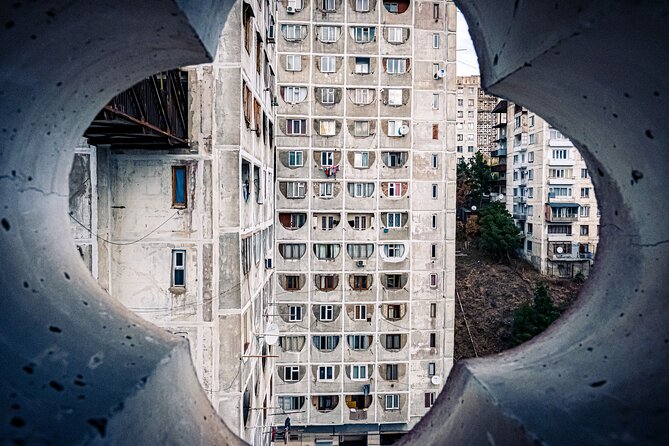
- The Bank of Georgia building is more than a strange shape: Its unusual form was designed for a practical reason, which makes it a useful example of Soviet-era problem solving.
- The Chronicles of Georgia gives you a wide city view: The large monument combines socialist monumentalism with a panorama of Tbilisi’s outer districts.
- Stalin’s underground print shop adds human scale: This museum connects political propaganda with the people who produced it.
- The tour reaches places you may skip alone: The sights are scattered, and the air-conditioned vehicle saves you the trouble of piecing them together by public transport.
- Allow extra time if you enjoy questions: The planned route may take three to four hours, but detailed explanations, extra stops, or conversations with historians can stretch the outing.
Why Soviet Tbilisi deserves a closer look
Tbilisi is often introduced through balconies, churches, courtyards, and narrow lanes. Those places matter, but they tell only part of the city’s story. Soviet rule left its mark on offices, monuments, museums, public spaces, and even the way certain buildings were used.
This tour is aimed at that less polished side of Tbilisi. You are not simply driven past concrete structures and told they are Soviet. The guide explains how design, politics, daily life, and modern Georgia connect. That context is important because many Soviet buildings look puzzling at first glance. Their shapes can seem oversized, severe, or simply odd until you learn what problem they were meant to solve.
I would choose this experience if you have already seen the central sights or if you want a different way to understand Georgia. It is also a good fit if you like architecture but do not want a formal lecture. The strongest part of the experience appears to be the guide’s ability to keep the subject lively and answer questions along the way.
The tour is offered in English and includes transport in an air-conditioned vehicle. Since the stops are spread across Tbilisi, that is not a minor convenience. It lets you focus on the buildings rather than figuring out each connection.
More Soviet-era sights:
- 1 Day Private Armenia: UNESCO, Soviet & Curated Family Lunch
★ 5.0 · 106 reviews - Tbilisi old town & soviet heritage – Private driver-guided Tour
★ 5.0 · 83 reviews - Armenia: 1 Day Soviet gems, UNESCO + Family lunch (Small group)
★ 5.0 · 68 reviews
A small group and a guide who shapes the day
The group limit is six people. That gives this outing a more personal feel than a large bus tour, especially at the underground museum and the less familiar architectural sites. You can ask why a building was designed a certain way, how Soviet ideas affected Georgia, or how a monument is viewed today.
The guides named in the experiences include Giorgi, Georgi, Irakli, and David. Their strengths seem slightly different, but the common thread is strong knowledge of Georgian and Soviet history, along with a willingness to answer questions. Irakli was praised for his command of both subjects. David was noted for linking architecture with modern and historic Georgia.
Giorgi and Georgi also received praise for giving a steady stream of information without making the outing feel stiff. One guide adjusted the end point to suit the rest of the day, and another was happy to consider a stop beyond the planned route. These details suggest a useful degree of flexibility, though you should not assume every extra request or drop-off will be possible.
One especially memorable outing included introductions to two historians who manage the sites and shared their personal views of life under Soviet rule. That kind of meeting is not listed as a guaranteed part of every departure, so treat it as a possible bonus rather than a promise. Still, it shows the sort of human detail that can make this subject more than a sequence of buildings.
The city drive and the main two-hour route
The first part is described as a roughly two-hour exploration of non-touristic Tbilisi. This is less a single attraction than a guided circuit through Soviet-era monuments and buildings spread across the city.
That arrangement works well because Soviet architecture is not confined to one tidy district. You get a sense of how the period shaped different parts of Tbilisi, not just one showcase structure. The vehicle also means you can cover more ground without spending your energy on transfers.
The tradeoff is that you will spend part of the tour moving between locations. If you prefer long stretches on foot, café stops, or time inside one museum, this may feel fast. If you want to connect several distant sites in one morning or afternoon, the driving format is efficient.
The exact total timing deserves attention. The published duration is approximately three to four hours, while the stated stops add up to more than three hours before counting travel. One experience lasted about five hours, and another included an additional Soviet car museum. I would therefore avoid scheduling a train, flight, or fixed reservation immediately afterward.
The Bank of Georgia building and its practical design
The Bank of Georgia headquarters is given about 15 minutes. That sounds brief, but the point here is to see and understand the building rather than spend hours inside it.
The structure is frequently placed among the top examples of Soviet architecture. Its unusual shape is not just an exercise in visual drama. It has a practical reason, and the guide explains how its form relates to the building’s function.
This is exactly the sort of stop that benefits from an informed guide. Without context, you might photograph the building, call it strange, and move on. With an explanation, you can look at it as a solution to a design problem shaped by Soviet planning and institutional needs.
Admission is free. The short stop also helps keep the route moving, though anyone who enjoys architectural photography may want more time. Ask your guide early if you are interested in seeing particular details or taking a careful set of photographs.
A few more ways to spend a day out of Tbilisi
- Day Trip to Kakheti Wine Region Including 9 Wine Tastings
★ 5.0 · 2,774 reviews - Highlights of Caucasus Mountains-Jinvali,Ananuri,Gudauri,Kazbegi(Group tour)
★ 5.0 · 2,682 reviews - Day Trip to Kazbegi and Gudauri
★ 5.0 · 2,009 reviews - Day Trip to Mtskheta Gori and Uplistsikhe
★ 5.0 · 1,801 reviews
The Chronicles of Georgia monument above the suburbs
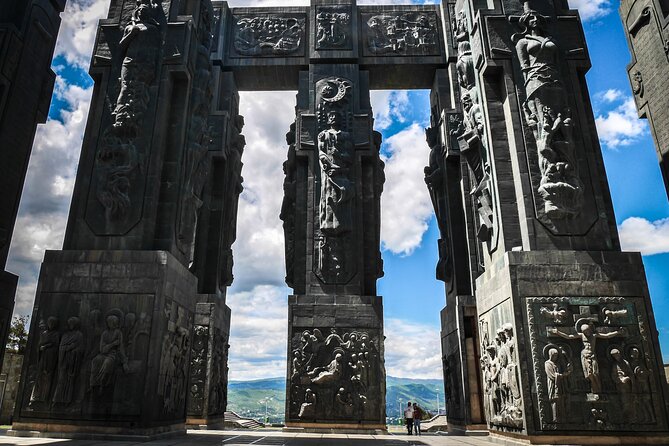
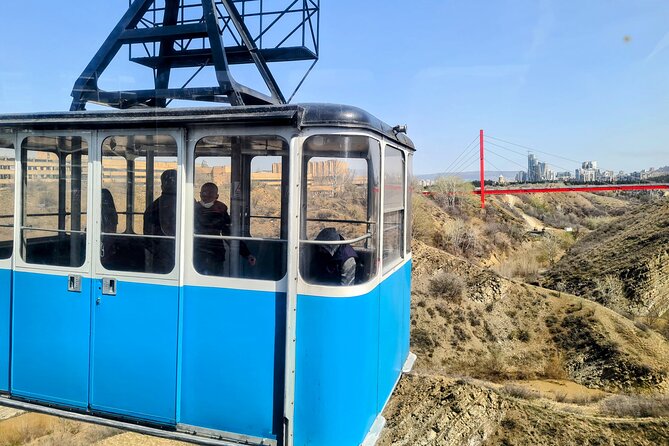
The Chronicles of Georgia receives about 30 minutes. It is often nicknamed the Stonehenge of Tbilisi because of its tall stone columns and monumental scale.
The comparison gives you a quick visual idea, but the political setting matters more. The monument is a strong example of socialist monumentalism, a style that used huge forms and public symbolism to shape how people viewed history and power.
The site also offers a panorama of Tbilisi’s suburban districts. That view broadens the tour. You are not only looking at an isolated monument, you are seeing how a grand Soviet-era structure relates to the city around it.
Half an hour should be enough for the main explanation, photographs, and a look across the suburbs. It may feel short if you want to linger, especially because the monument’s scale rewards slow viewing. The tour’s vehicle makes reaching this type of outlying site easier than arranging the trip alone.
Stalin’s underground printing house and the mechanics of propaganda
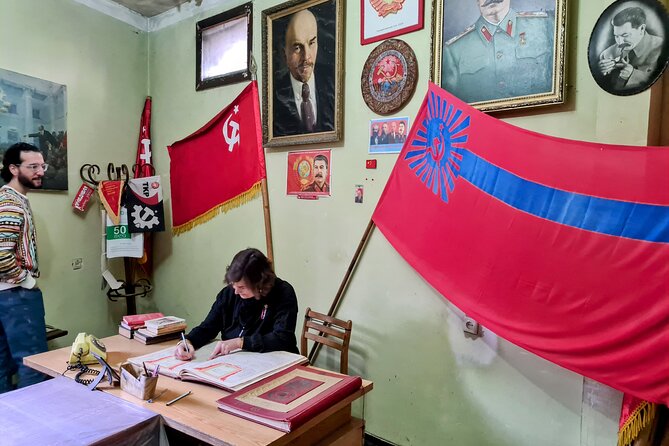
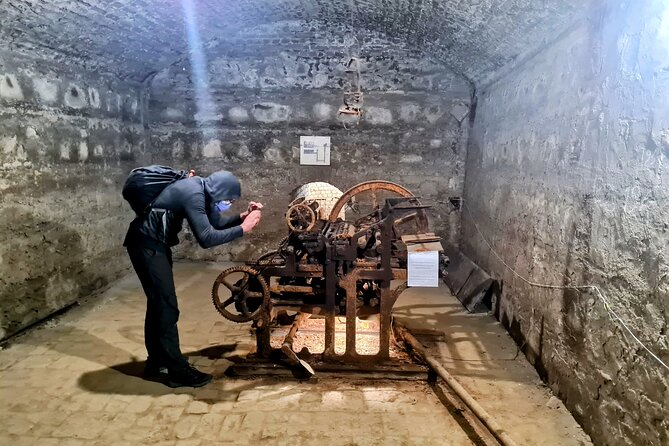
The underground printing house museum is the most intimate stop on the route. You spend about 40 minutes below ground, visiting the place where Stalin and his supporters produced plans and propaganda leaflets.
This stop changes the scale of the story. The Bank of Georgia headquarters and the Chronicles of Georgia are large public statements. The print shop shows the quieter, more secret side of political work: producing material, organizing ideas, and spreading messages away from the official public spaces.
Admission is included. The museum is also a good place to ask questions about how propaganda functioned and how political movements used printed material. The supplied information does not describe the exact physical conditions inside, so I would not promise a particular layout or level of walking. Still, the underground setting alone gives this part of the tour a different mood from the open-air monuments.
If you are mainly interested in Stalin, revolutionary activity, or political history, this may be your most important stop. If you are focused only on modern architecture, you may prefer the Bank of Georgia building and the large monument. The route works because it gives you both sides.
What the guide adds to the architecture
A good Soviet architecture tour needs more than dates and labels. The useful questions are practical and personal: Why was this building shaped that way? Who used it? What changed after the Soviet period? How do Georgians view these places now?
The strongest guide experiences here seem to focus on those connections. David was praised for explaining how architecture relates to both historic and modern Georgia. Irakli was valued for handling questions about Georgian history and Soviet times. Giorgi and Georgi were also praised for warmth and clear communication.
That matters in Georgia, where Soviet history is not simply an old chapter with one agreed meaning. A building can be an architectural achievement, a symbol of state power, a useful public institution, or an uncomfortable reminder of political control. You will get more from the tour if you ask how each site is used and understood today.
One guide also introduced a guest to two historians, adding personal accounts to the formal story. That is a particularly good feature when it happens, because firsthand views can explain the period in a way a plaque cannot.
Food, flexibility, and possible extra stops
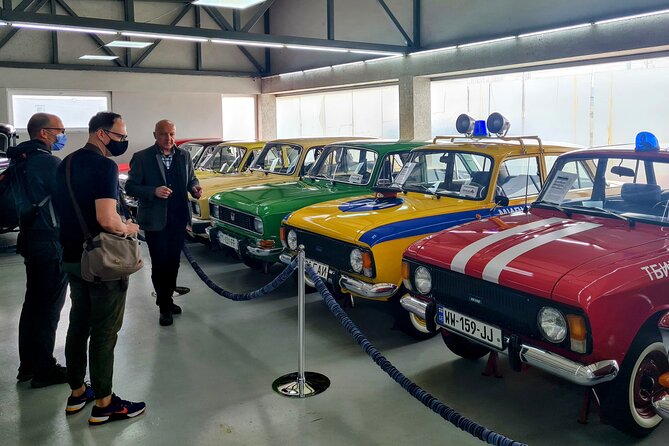
One guest received a surprise khachapuri filled with beans at the end of the day. It was described as an especially tasty gesture, but it is not listed as an included feature. Do not book this expecting food, yet appreciate it if your guide offers a local treat.
An additional stop at a Soviet car museum was also mentioned. The museum had restored cars and bikes, and it appealed strongly to someone interested in Soviet design and transport. Again, this should be treated as an optional possibility, not part of the fixed route described here.
The useful lesson is that the day can sometimes respond to your interests. Tell your guide if you care more about architecture, political history, transport, photography, or everyday Soviet life. The tour is small enough for that conversation to matter.
Is $99 a fair price for this Tbilisi tour?
At $99 per person, this is not the cheapest way to see Tbilisi. The value depends on what you would otherwise need to arrange yourself.
The price includes an air-conditioned vehicle, a professional local guide, admission to the underground printing house, and the small-group format. The major benefit is the combination of distant sites and interpretation. You would need to organize transport, find the buildings, research their background, and pay attention to opening arrangements if you visited independently.
The value is strongest for a first-time visitor who wants a guided introduction to Soviet Georgia, or for anyone with limited time who wants several unusual sites in one outing. It is less compelling if you already know Tbilisi well, can arrange private transport cheaply, and prefer to read about architecture on your own.
Admission to the Bank of Georgia building and the Chronicles of Georgia is free, so the cost is not driven by entrance fees. You are paying mainly for the guide, transport, planning, and access to a route that is not obvious from the usual city map. With no more than six people, that is a fairer comparison than measuring the price against a large sightseeing bus.
Group discounts are available. The activity is offered in English, and mobile tickets are supported.
Practical details that can affect your day
The tour begins at 2 Rose Revolution Square in Tbilisi and returns to the same meeting point. Transport to and from that starting location is not included, so plan your own way there.
The meeting point is near public transportation. Confirmation is provided when you book, and the experience is open to most people. No special participation restriction is stated in the supplied details, but the underground museum and multiple stops mean you should still consider your own comfort with moving around the city.
Free cancellation is available if you cancel at least 24 hours before the start time. Changes or cancellations made inside that window are not accepted for a refund, and the cut-off follows local Tbilisi time.
The advertised duration is about three to four hours. Since the route includes driving between scattered sites, explanations can vary, and extra stops may be possible, keep your schedule loose. I would allow at least an additional hour before your next firm plan.
Who should book this experience?
I would recommend it most strongly to you if you:
- Enjoy architecture, urban history, or political history
- Want to see parts of Tbilisi beyond the standard old-town sights
- Prefer a guide who can answer questions rather than a recorded audio tour
- Like small groups and a relaxed conversation
- Want an air-conditioned vehicle for a spread-out route
- Are curious about how Soviet rule shaped Georgia in both public and private ways
You may want to skip it if your Tbilisi visit is very short and you have not yet seen the city’s main historic sights. It may also be a poor match if you dislike driving between stops or want a long, unhurried visit at each location.
Should you book Soviet Tour: Hidden Tbilisi?
Book it if you want the parts of Tbilisi that do not appear on the standard postcard. The combination of the Bank of Georgia headquarters, the Chronicles of Georgia, and Stalin’s underground printing house gives the tour a clear arc, from monumental public design to secret political work.
The best reason to choose it is the guide. Strong explanations from Giorgi, Georgi, Irakli, or David can turn unusual buildings into useful lessons about Georgia. The small group, air-conditioned transport, and possible flexibility add practical value.
Just plan for a route that may run longer than the advertised three to four hours, and do not assume the food, historian meetings, car museum, or custom drop-off will be included every time. If you can spare the time and want a thoughtful look at Soviet Tbilisi, $99 is a reasonable price for this focused, unusual city tour.
FAQ
Where does the tour start and finish?
It starts at 2 Rose Revolution Square, Tbilisi 0108, Georgia, and ends back at the meeting point.
How long does Soviet Tour: Hidden Tbilisi last?
The advertised duration is approximately three to four hours. One described experience lasted about five hours, so you should allow extra time.
How many people can join the tour?
The maximum group size is six travelers.
Is the tour offered in English?
Yes. The experience is offered in English.
Is transportation included?
An air-conditioned vehicle is included during the tour. Transportation to and from the meeting point is not included.
Are entrance tickets included?
Admission to the underground printing house museum is included. The Bank of Georgia stop and the Chronicles of Georgia have no admission charge.
Can I cancel for a full refund?
Yes, if you cancel at least 24 hours before the experience start time. Cancellations or changes made less than 24 hours before the start time are not accepted for a refund.
Recently added around Tbilisi
- Northern Armenia Highlights Tour from Tbilisi★ 5.0 · 3 reviews
- Wild Georgia 4WD PACK Adventure through Kakheti and Kazbegi 2in1★ 5.0 · 3 reviews
- Kakheti wine region – Private Tour★ 5.0 · 3 reviews
- Private Full Day Trip to Kazbegi Mountains★ 5.0 · 3 reviews
- Kakheti With Top Destinations★ 5.0 · 3 reviews
- Jvari monastery & Mtskheta – Half day group tour from Tbilisi★ 5.0 · 3 reviews
- Private Effortless transfer from Tbilisi to Gudauri ski resort★ 5.0 · 3 reviews
- Borjomi – Rabati -Vardzia Private Full Day Tour from Tbilisi★ 5.0 · 3 reviews
Soviet-Era Tours, compared.
1 Day Private Armenia: UNESCO, Soviet & Curated Family Lunch
Read our review →
Tbilisi old town & soviet heritage – Private driver-guided Tour
Read our review →
Armenia: 1 Day Soviet gems, UNESCO + Family lunch (Small group)
Read our review →
Soviet past – Private day tour to Chiatura, Katskhi pillar and Chronicles
Read our review →
Soviet Story – Private day trip to Chiatura, Stalin’s museum and Katskhi pillar
Read our review →

2-Day Kutaisi Tour: Caves, Canyons & Soviet Sanatoriums
Read our review →Browse the lists this tour appears in