

Reviewed · SOVIET-ERA TOURS
Soviet Tbilisi Tour – Off the beaten path
Tbilisi has a stranger side. This private, five-hour tour leaves the familiar old town behind and takes you into the city’s Soviet past, from Stalin’s underground printing house to giant concrete monuments and a rusting skybridge between housing blocks. I especially like the unusual mix of political history and bold architecture, plus the included hotel pickup and drop-off, which make scattered sights easier to reach.
I also like that this is a private outing for your group, not a large bus tour. Guides such as George, David, Temo, Irakli, Zezva, and Data have been praised for clear English, personal stories, and the ability to connect buildings with Georgia’s wider history. The main drawback is that the tour is not a polished city sightseeing circuit. Some locations are decayed, stark, or rough around the edges, and the subject matter can feel heavy.
In This Review
- Key points at a glance
- Why Soviet Tbilisi is worth your afternoon
- Beneath an old house at Stalin’s printing house
- The Bank of Georgia building and Soviet architectural spectacle
- Chronicles of Georgia above Tbilisi Sea
- Nutsubidze Skybridge and concrete housing
- Other possible stops on the wider route
- Guides are a major part of the experience
- Is $49.68 a fair price?
- Timing, pickup, and practical details
- Who should book this Tbilisi tour?
- Should you book Soviet Tbilisi Tour?
- FAQ
- How long does the Soviet Tbilisi Tour last?
- How much does the tour cost?
- Is this a private tour?
- Is hotel pickup included?
- Where can the tour finish?
- What language is the tour offered in?
- What is included at Stalin’s Underground Printing House Museum?
- Is there an admission fee for the Chronicles of Georgia?
- Can I cancel for a full refund?
Key points at a glance
- Stalin’s underground printing house: Enter a basement museum beneath an old private home and see relics linked to the early communist movement.
- Chronicles of Georgia: Photograph Tsereteli’s huge unfinished monument above Tbilisi Sea and the city’s concrete apartment blocks.
- Nutsubidze Skybridge: Walk through a strange Soviet-era housing complex and its elevated passageways, built to connect steep residential areas.
- Private guide and vehicle: Your group receives the guide’s full attention, with pickup from your hotel or holiday apartment included.
- A wider view of Tbilisi: The route reaches places that are difficult to combine on foot from the old town, with possible stops such as the Bank of Georgia building and a Soviet car museum.
- Good value at $49.68: For a private five-hour tour with transport, this is a strong price if you want history and architecture rather than standard landmarks.
Why Soviet Tbilisi is worth your afternoon
Most first visits to Tbilisi focus on the old town, sulfur baths, churches, balconies, and river views. Those are worthwhile, but they show only one part of the city. This tour gives you a look at apartment districts, monumental sculpture, public engineering, and the physical remains of the Soviet period.
That matters because Soviet influence in Georgia was not limited to statues of Lenin or government offices. It shaped housing, transport, industry, public art, and daily life. Tbilisi’s hills forced architects and planners to improvise, often with concrete structures that look both practical and wonderfully odd.
The tour works best if you are curious about how a city functions beyond its postcard center. You get an overview of several eras, with the guide adding political and personal context along the way. Several guides have been praised for making the subject approachable rather than turning the afternoon into a dry lecture.
The private format helps here. You can ask why a building looks the way it does, how a site is remembered today, or what changed after the Soviet Union ended. You are not tied to the pace of a large group, and the guide can leave room for photographs.
More Soviet-era sights:
- 1 Day Private Armenia: UNESCO, Soviet & Curated Family Lunch
★ 5.0 · 106 reviews - Tbilisi old town & soviet heritage – Private driver-guided Tour
★ 5.0 · 83 reviews - Armenia: 1 Day Soviet gems, UNESCO + Family lunch (Small group)
★ 5.0 · 68 reviews
Beneath an old house at Stalin’s printing house
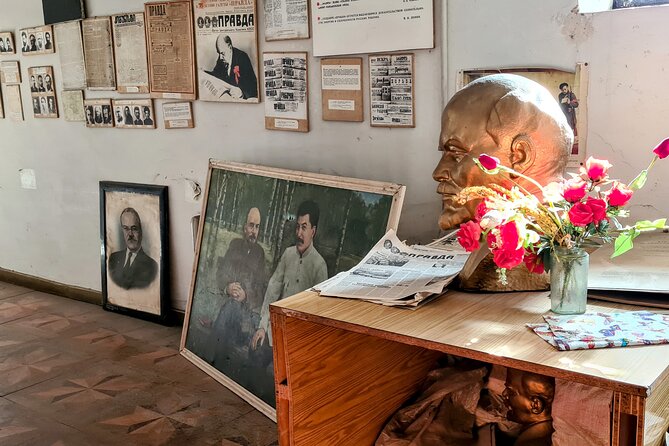
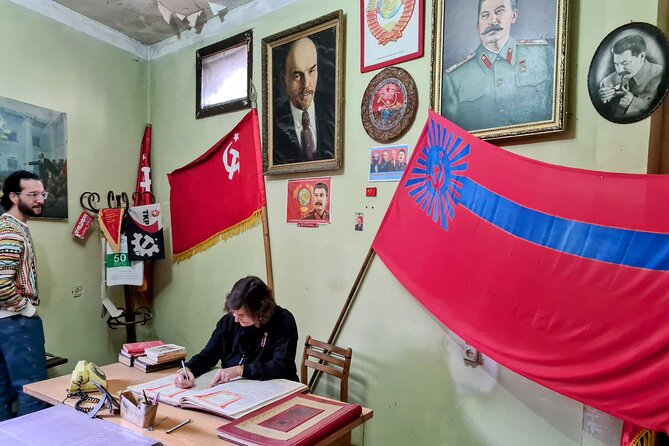
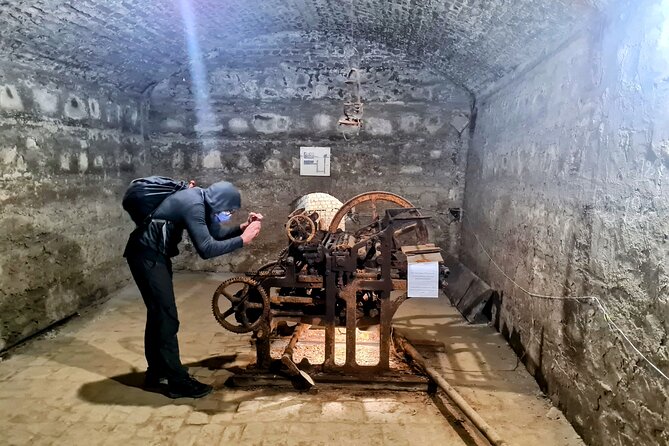
The first major stop is J. Stalin’s Underground Printing House Museum, one of the most unusual historical sites in Tbilisi. The museum is located in the basement of an old private house, which gives the visit an immediate sense of secrecy and surprise.
The site is linked to the underground production of communist material during the period when Stalin was active in revolutionary politics. You can expect Soviet-era objects and a strong focus on the printing operation itself. The museum is small, and the scheduled visit lasts about 30 minutes, so this is not a long museum session.
One distinctive feature is the museum director, described as a dedicated communist. That makes the stop more than a collection of objects behind glass. You may encounter a personal interpretation of the communist period, rather than a neutral presentation designed for international tourism.
That perspective can be fascinating, but it also means you should listen critically. The guide helps place the museum and its stories in a wider Georgian setting. I would treat this stop as a conversation starter, not the final word on Stalin, communism, or Georgia’s past.
The basement setting is part of the appeal. You are not simply looking at a photograph of an old printing press in a modern gallery. You are entering a cramped, unconventional place tied to underground political activity. If you like unusual museums, this may be the most memorable stop of the day.
The Bank of Georgia building and Soviet architectural spectacle
The exact route can include additional architectural stops beyond the three headline locations. Several accounts of the day include the Bank of Georgia building, once associated with the Ministry of Highway Construction, as well as other Soviet-era structures.
The building is famous for its stacked concrete forms, which look like giant blocks balanced above one another. It is a useful example of how Soviet architects could produce ambitious public buildings even when the materials and visual language were severe.
This kind of stop is where a local guide adds real value. You might notice only the strange shape at first. A guide can explain its former purpose and show how it fits into the city’s Soviet building tradition.
Do not expect every stop to feel like a formal museum visit. Some are best understood from outside, while others involve walking through working residential areas. That is part of the point. The tour treats Tbilisi itself as the exhibit.
The route is also practical for anyone who wants to photograph unusual structures. The afternoon has enough time for pictures, and the private setting means you are less likely to feel rushed by a large group waiting on a pavement.
Chronicles of Georgia above Tbilisi Sea
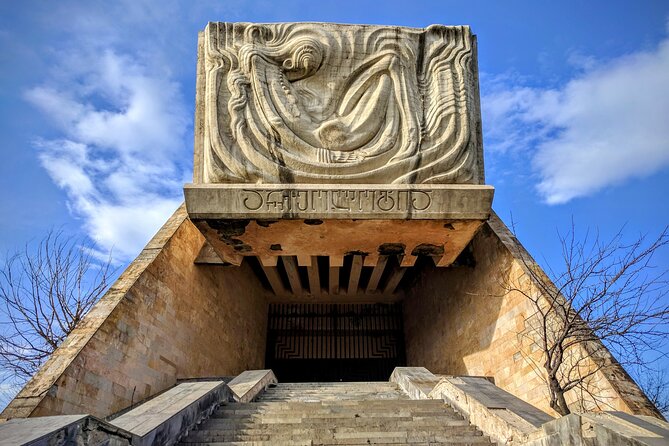
The Chronicles of Georgia is the tour’s grandest outdoor sight. Created by sculptor Zurab Tsereteli, this unfinished monument rises on a hill above the reservoir known as Tbilisi Sea.
The nickname Georgian Stonehenge gives you a rough sense of its scale, though the monument is not an ancient site. Its tall columns and carved panels create a dramatic setting, especially when viewed against the reservoir and the apartment blocks below.
This is Soviet monumental art at an enormous scale. The subject is Georgian history, and the monument reflects an attempt to express national identity through a grand public work. It is also unfinished, which adds to its strange power. The incomplete state makes the site feel less like a finished civic square and more like a huge project left suspended in time.
You receive about 30 minutes here. That is enough for a first look and photographs, but not a long study of every carved scene. Wear shoes suitable for uneven outdoor ground and be ready for an exposed hilltop setting.
The view is one of the best reasons to come. From above, you can see the contrast between the monument, the water reservoir, and the extensive concrete housing developments. The city’s shape becomes easier to understand from this height.
The stop also broadens the tour beyond Soviet politics. It raises questions about Georgian identity, public art, and the way national stories were presented during the Soviet period. That connection between architecture and politics is one of the tour’s strongest themes.
A few more ways to spend a day out of Tbilisi
- Day Trip to Kakheti Wine Region Including 9 Wine Tastings
★ 5.0 · 2,774 reviews - Highlights of Caucasus Mountains-Jinvali,Ananuri,Gudauri,Kazbegi(Group tour)
★ 5.0 · 2,682 reviews - Day Trip to Kazbegi and Gudauri
★ 5.0 · 2,009 reviews - Day Trip to Mtskheta Gori and Uplistsikhe
★ 5.0 · 1,801 reviews
Nutsubidze Skybridge and concrete housing
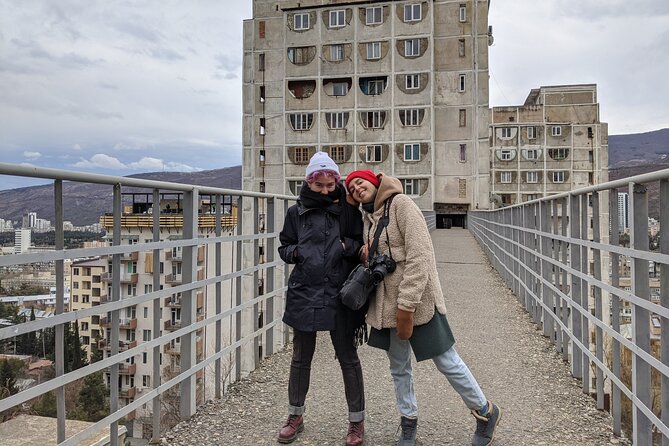
The longest part of the experience takes place around Nutsubidze Skybridge. The visit is scheduled for about two hours, giving you time to explore the residential structures and take photographs.
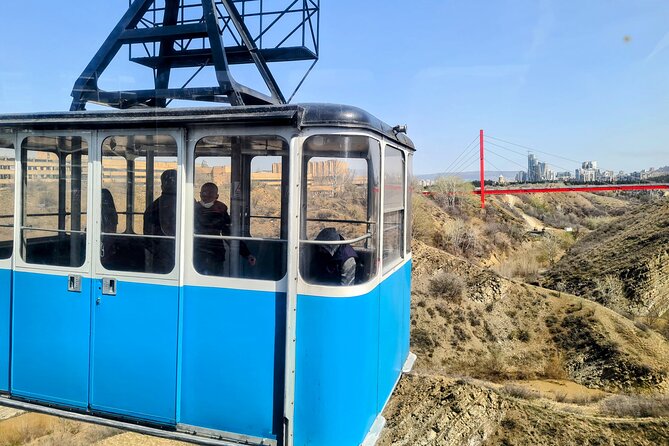
This is not a single monument in the usual sense. It is a Soviet housing complex with concrete blocks, elevated walkways, and an unusual bridge or lift structure that helps residents move through a steep part of the city.
The architecture can look like a puzzle. Housing towers, exposed concrete, walkways, and vertical connections come together in a way that may seem impractical until you understand the terrain. The result is one of Tbilisi’s most striking examples of Soviet urban planning.
The area is still connected to everyday life, so you should act respectfully. This is not an abandoned film set. You may see residents using the structures as part of their daily route, which gives the visit more meaning than a quick photo stop.
The two-hour allocation is useful because the complex takes time to understand. You can examine the design from different angles, walk through the elevated passageways, and ask the guide how the system works. You also have more freedom to compose photographs without being hurried.
The drawback is that this portion may not suit anyone who wants polished sightseeing. Concrete can be worn, rusty, or damaged. The setting may feel bleak in places. If you enjoy urban exploration and unusual engineering, that roughness is the attraction. If you prefer restored buildings and tidy paths, you may find it less comfortable.
Other possible stops on the wider route
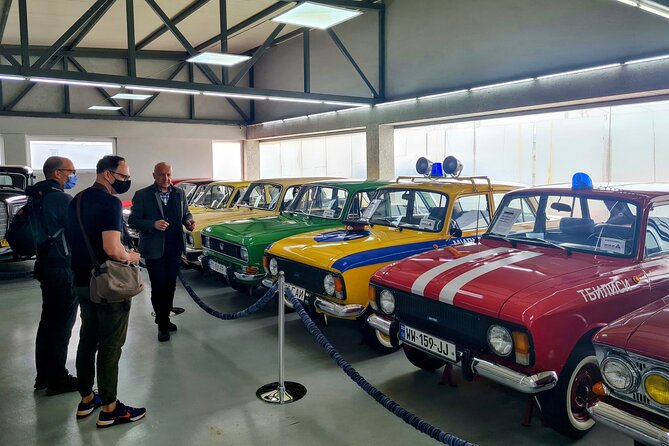
The route described by people who took the tour has included a Soviet car museum, an old archaeology museum, and other buildings outside the city center. These additions help explain why the experience can feel broader than its three main listed stops.
The Soviet car museum is especially appealing if you like well-kept historic vehicles. It adds a more personal and domestic side to the story, showing the objects connected with transport and status during the Soviet era.
The old archaeology museum provides a different contrast. Georgia’s past reaches far beyond the Soviet period, and an archaeology stop can help place the communist decades within a much longer national story.
Because these extra locations are not presented as fixed headline stops, you should confirm the day’s route with your guide. The guide’s knowledge and the interests of your group may shape how much time goes to architecture, cars, museums, or city views.
That flexibility is a benefit of a private tour. If your group is fascinated by buildings, you can ask for more detail there. If you are more interested in political history or daily life, the guide can spend more time explaining those themes.
Guides are a major part of the experience
The guide can make or break a tour about a complicated period. The strongest accounts describe guides who speak English well, explain difficult subjects clearly, and bring personal warmth to the day.
George and David are praised for their ability to connect landmarks with current affairs and Georgia’s past. Temo is described as welcoming and passionate about the country. Irakli is noted for adding personal context, while one guest particularly appreciated a guide’s academic background and the chance for deeper discussion.
You should not expect a single named guide every time. Several guides work with Real Georgia Tours, so the person leading your outing may vary. The consistent advantage is the private setup, which gives you a direct line to the guide rather than a fixed script delivered to a crowd.
Music may even form part of the atmosphere. One account singled out George’s taste in music, a small detail that suggests the ride between stops can feel personal rather than purely functional.
I would arrive with questions. Ask about the meaning of a monument, how people remember the Soviet period, or how the city changed after independence. This is the sort of tour that improves when you take part in the conversation.
Is $49.68 a fair price?
At $49.68 per person, the tour offers good value if you are traveling as a couple, family, or small private group. The price includes roughly five hours, a guide for your group, hotel or apartment pickup, and drop-off at the Dry Bridge flea market.
A private tour usually costs more than a standard group outing, but the price here is softened by the fact that transport and a full half-day are included. You are also reaching several locations that would be awkward to combine by public transport alone.
The value is strongest when you use the tour as both a history lesson and a city orientation. You see parts of Tbilisi that many people miss, then finish near the Dry Bridge flea market, where you can continue exploring on your own.
The tour is less useful if you only want famous old-town sights. It does not focus on the classic central landmarks, and the appeal depends on your interest in Soviet architecture, political history, and unusual urban spaces.
Timing, pickup, and practical details
The experience lasts approximately five hours. Hotel or holiday apartment pickup is available for the private tour, but you need to provide your accommodation details when booking.
The listed start point is by the round fountain near Avlabari metro station, while the tour can finish at the Flea Market on Zviad Gamsakhurdia Right Bank. Since pickup and drop-off are offered, confirm the exact arrangements with the operator before the day begins.
The end point is useful. Dry Bridge is a good place to continue sightseeing, browse local objects, or simply make your own way back through central Tbilisi.
The tour is offered in English and is near public transportation. Most people can participate, although the route includes hills, concrete residential areas, and outdoor monument grounds. Anyone concerned about walking conditions should ask the operator for current details.
Free cancellation is available up to 24 hours before the start time. If you cancel later, the payment is not refunded. The experience also requires a minimum number of participants, so a cancellation by the operator can result in another date or a full refund.
Who should book this Tbilisi tour?
I would recommend it to you if you enjoy:
- Soviet architecture and urban design
- Political and social history
- Photography in unusual settings
- Small museums with strong personalities
- Private tours with time for questions
- Seeing residential districts beyond the old town
It is also a good choice if you have only a few days in Tbilisi and want a broad look at the city. The route covers distant parts of town without asking you to plan several separate taxi rides.
I would think twice if your main goal is food, medieval churches, or classic Georgian culture in the old center. This tour deals with a more recent and often uncomfortable period. Some places are worn and visually stark, and the subject needs a guide who can explain more than dates and names.
Should you book Soviet Tbilisi Tour?
Book it if you want to understand Tbilisi through its concrete housing, monumental art, underground political sites, and everyday urban spaces. The private format, hotel pickup, and strong guide feedback make $49.68 a sensible price for five hours.
The best reason to choose it is access. You can reach strange, scattered places that are hard to connect on your own, while a guide such as George, David, Temo, or Irakli helps turn odd-looking structures into part of a larger story.
Skip it if you want a relaxed old-town stroll or a neatly packaged sightseeing route. Choose it if you want the less polished, more revealing side of Tbilisi. For anyone curious about Georgia’s Soviet period, this is one of the most useful half-days you can spend in the city.
FAQ
How long does the Soviet Tbilisi Tour last?
The tour lasts approximately five hours.
How much does the tour cost?
The listed price is $49.68 per person.
Is this a private tour?
Yes. Only your group participates, and the guide’s attention is reserved for your group.
Is hotel pickup included?
Yes. Pickup from your Tbilisi hotel or holiday apartment is offered for the private tour. You need to share your accommodation details when booking.
Where can the tour finish?
Drop-off can be provided at the Dry Bridge flea market on Zviad Gamsakhurdia Right Bank.
What language is the tour offered in?
The tour is offered in English.
What is included at Stalin’s Underground Printing House Museum?
Admission to the museum is included. The visit lasts about 30 minutes.
Is there an admission fee for the Chronicles of Georgia?
No admission fee is listed for the Chronicles of Georgia.
Can I cancel for a full refund?
Yes, if you cancel at least 24 hours before the experience starts. Cancellations made less than 24 hours before the start time are not refunded.
Recently added around Tbilisi
- Northern Armenia Highlights Tour from Tbilisi★ 5.0 · 3 reviews
- Wild Georgia 4WD PACK Adventure through Kakheti and Kazbegi 2in1★ 5.0 · 3 reviews
- Kakheti wine region – Private Tour★ 5.0 · 3 reviews
- Jvari monastery & Mtskheta – Half day group tour from Tbilisi★ 5.0 · 3 reviews
- Private Full Day Trip to Kazbegi Mountains★ 5.0 · 3 reviews
- Kakheti With Top Destinations★ 5.0 · 3 reviews
- Private Effortless transfer from Tbilisi to Gudauri ski resort★ 5.0 · 3 reviews
- Borjomi – Rabati -Vardzia Private Full Day Tour from Tbilisi★ 5.0 · 3 reviews
Soviet-Era Tours, compared.
1 Day Private Armenia: UNESCO, Soviet & Curated Family Lunch
Read our review →
Tbilisi old town & soviet heritage – Private driver-guided Tour
Read our review →
Armenia: 1 Day Soviet gems, UNESCO + Family lunch (Small group)
Read our review →
Soviet past – Private day tour to Chiatura, Katskhi pillar and Chronicles
Read our review →
Soviet Story – Private day trip to Chiatura, Stalin’s museum and Katskhi pillar
Read our review →

2-Day Kutaisi Tour: Caves, Canyons & Soviet Sanatoriums
Read our review →
Chiatura. Soviet Past in the present. + Katskhi pillar
Read our review →Browse the lists this tour appears in