
Reviewed · SOVIET-ERA TOURS
Tskhaltubo Old Soviet Spa Tour
Soviet grandeur is slowly being reclaimed by vines. This three-and-a-half-hour outing from Kutaisi takes you into Tskhaltubo, a once-famous mineral spa town filled with abandoned sanatoriums, monumental buildings, and stories from the Soviet era. I like the strong historical focus, and I also like that guide Akaki is praised for finding good photo angles while keeping a close eye on safety. The main concern is communication: one booking account described a changed start time and an advertised private tour becoming a group outing.
The tour costs $78.27 per person, includes a mobile ticket, and is offered in English. Pickup is available, though the stated meeting point is Free Walking Tour Kutaisi near Gelati Kutaisi, so I would confirm the exact arrangement before setting out.
In This Review
- Key points to know before you go
- Why Tskhaltubo makes such a memorable half-day
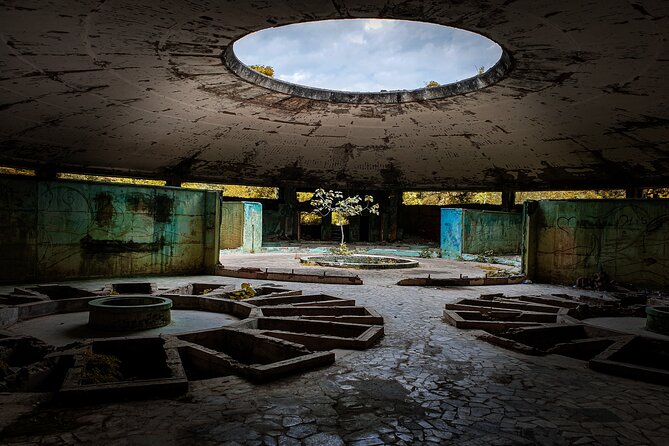
- Entering Tskhaltubo’s abandoned sanatoriums
- The mineral springs behind the empty resort
- What the guide adds to the experience
- Private-tour value at $78.27
- Timing, meeting point, and physical demands
- The atmosphere: history, decay, and photography
- Who will enjoy this tour most
- The main weakness is communication
- Should you book the Tskhaltubo Old Soviet Spa Tour?
- FAQ
- Where does the Tskhaltubo Old Soviet Spa Tour start?
- What time does the tour start?
- How long does the tour last?
- Is the tour private?
- Is the tour suitable for everyone physically?
- What happens if bad weather cancels the tour?
Key points to know before you go
- Tskhaltubo was once a major Soviet spa resort, with 18 sanatoriums and daily train service from Moscow by the 1980s.
- The mineral water reaches the baths at a comfortable natural temperature, without added heating or cooling.
- Guide Akaki receives the strongest praise for his Soviet-era history, friendly manner, safety awareness, and help with photographs.
- The buildings are abandoned and physically demanding, so a moderate level of fitness is required.
- The tour is advertised as private, but confirm group size and timing directly before the day of your visit.
- The price makes the most sense for a private history and photography outing, not for a simple town transfer.
Why Tskhaltubo makes such a memorable half-day
Tskhaltubo is not simply a collection of empty buildings. It was once one of the grand spa resorts of the Soviet Riviera, a place built around mineral water and state-sponsored health retreats.
Foreign researchers had written about the springs’ healing qualities as far back as the 18th century. In 1920, the area became state property and was given the role of a balneology resort. Balneotherapy means treating illness through bathing in mineral-rich water, and that idea shaped the town’s identity for decades.
By the Soviet period, Tskhaltubo had become an important destination for people seeking treatment. Construction of its 18 sanatoriums began in the 1920s, and by the 1980s, trains arrived each day from Moscow. That detail helps you picture the scale of the place. This was not a small local spa with a few guesthouses. It was a planned health resort built for a vast country.
I like this historical frame because it keeps the tour from becoming a simple hunt for spooky photographs. You are looking at the remains of a public medical and holiday system, as well as a particular Soviet idea of health, leisure, and state power.
More Soviet-era sights:
- Day Tour to Georgian sky venice, Soviet city Chiatura
★ 5.0 · 5 reviews - 1 Day Private Armenia: UNESCO, Soviet & Curated Family Lunch
★ 5.0 · 106 reviews - Tbilisi old town & soviet heritage – Private driver-guided Tour
★ 5.0 · 83 reviews
Entering Tskhaltubo’s abandoned sanatoriums
The main attraction is the chance to visit several former sanatorium complexes, each with a different appearance and former purpose. The exact buildings can vary, but the appeal is consistent: large Soviet architecture, faded interiors, and the uneasy feeling of walking through a place designed for crowds that no longer come.
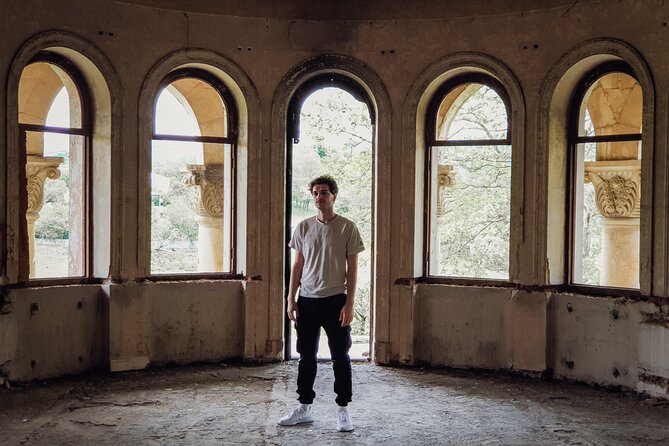
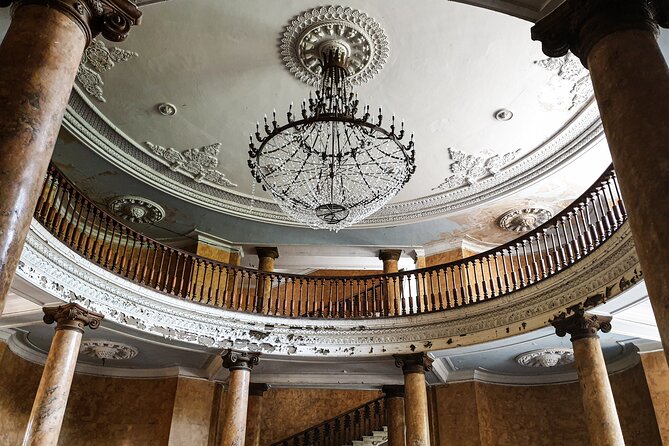
A guide adds real value here. Without local help, you might see only broken walls and empty rooms. With context, a hallway can suggest the old flow of patients, staff, and visitors. A grand entrance can be read as part of a resort system rather than just an attractive ruin.
This is also where the outing becomes more than a normal sightseeing walk. The buildings are abandoned, so you should expect uneven ground and some physical effort. The stated requirement for moderate fitness matters. Wear practical shoes, watch your footing, and listen when the guide advises you not to enter a particular area.
Akaki is singled out for being careful about safety. That is important in Tskhaltubo, where the most interesting photograph may be taken near a damaged stairway, exposed surface, or unstable-looking structure. His help with the best camera angles is an added benefit, especially if you want more than quick snapshots.
The mineral springs behind the empty resort
The springs explain why Tskhaltubo exists at all. The water is mineral-enriched and emerges at a comfortable temperature for bathing. It is transferred directly from the springs to the baths, without being cooled or heated first.
The water has traditionally been associated with treatment for problems involving the limbs, peripheral nervous system, skin, heart, and blood vessels. You should treat these claims as part of the resort’s medical history rather than as personal medical advice, but they show why the site once held such importance.
This detail gives the tour a useful contrast. The buildings may be silent and decaying, but the natural resource that made the town famous is still central to its story. Tskhaltubo’s decline is therefore not about the springs disappearing. It is about the system built around them changing.
The stated stop lasts about three hours, with the full experience taking approximately three and a half hours. That gives the guide time to explain the town, visit several structures, and pause for photographs rather than rushing through one site.
What the guide adds to the experience
A good guide is especially important in an abandoned resort. There are no polished museum signs, fixed displays, or staff members explaining what each room once meant. You need someone who can connect the architecture to the wider Soviet period.
Akaki receives the clearest praise for this part of the experience. He is described as warm, easy to talk with, and strong on Soviet history and wider Georgian context. That combination matters. You get information, but the outing does not sound like a dry lecture.
I also like the reported personal approach. Akaki helps identify strong photo positions and takes care around the buildings. If you are interested in architectural photography, that may be worth as much as the historical explanation.
The tour is offered in English, which makes the background accessible if you do not speak Georgian or Russian. Since this is a private activity in its advertised form, you should be able to ask questions at your own pace if the arrangement is honored.
Still, I would confirm that point. One serious complaint describes a booking made as private that later included four additional people. The same account describes a start-time mix-up and a late explanation from the operator. That is not a small issue when the private format is part of the reason you choose the tour.
More sulphur baths and spa days:
- Martvili Canyon Prometheus Cave And Hot Springs From Batumi
★ 5.0 · 20 reviews
Private-tour value at $78.27
At $78.27 per person, this is not the cheapest way to reach Tskhaltubo. The value depends heavily on what you want from the visit.
If you want only a quick look at old Soviet buildings, the price may feel high. The stop itself lists free admission, so you are paying mainly for transport or pickup, guiding, historical interpretation, safety awareness, and the structure of a planned visit.
For someone interested in Soviet history, abandoned architecture, or photography, the calculation looks better. Three and a half hours with a guide who knows the buildings and the best angles can save you time and help you understand what you are seeing. At roughly $22 per hour, the cost is reasonable if the experience remains private and well organized.
The private format is especially useful for a solo visitor, photographer, or writer who wants to ask detailed questions. You can focus on architecture, health resorts, Soviet planning, or local history without fitting into a fixed conversation.
The price becomes less attractive if the group changes without warning. Before the afternoon begins, confirm the start time, meeting point, pickup details, and whether anyone else will join. That simple step protects the main value of the booking.
Timing, meeting point, and physical demands
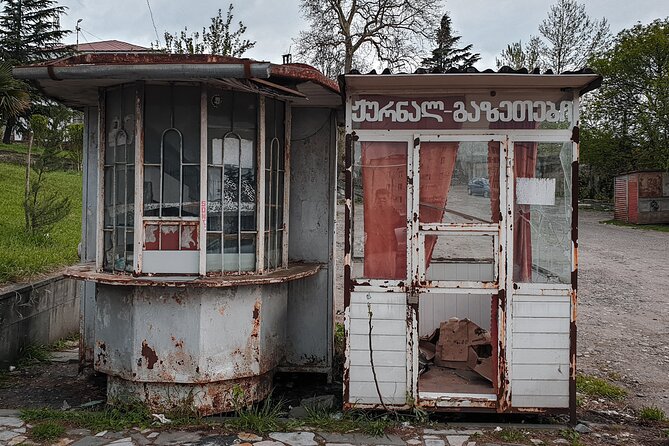
The stated start time is 2:00 pm, with the tour ending back at the meeting point. The listed start location is Free Walking Tour Kutaisi near Gelati Kutaisi in Kutaisi, and pickup is offered.
Because pickup and meeting-point information can create confusion, I would not rely on a vague assumption. Get the exact collection point and time confirmed in writing. One poor experience involved a one-hour misunderstanding over the start time, so this is the practical issue most worth checking.
The activity is near public transportation, but the supplied details do not specify a particular bus, route, or transfer time. If you are arranging your own way to the start, use the confirmed meeting point rather than guessing from the general Kutaisi location.
Plan for a moderate physical outing. You will be visiting former sanatoriums rather than walking through a restored attraction with level floors and modern facilities. The tour information specifically calls for moderate physical fitness, and the guide’s attention to safety is one of the reasons the guided format is useful.
Good footwear is sensible, though the tour details do not prescribe a dress code or equipment. I would also keep your hands free for balance and photography, and avoid treating damaged interiors as playgrounds.
The atmosphere: history, decay, and photography
The strongest visual appeal comes from the clash between grand design and abandonment. Tskhaltubo’s sanatoriums were made for organized health retreats, not quiet ruins. Their scale helps explain the confidence of the Soviet resort project.
You might find broad architectural details, empty interiors, and photo angles that feel far removed from ordinary Georgian sightseeing. The buildings can evoke the mood of post-apocalyptic film and television, which explains why the experience appeals to people who enjoy The Last of Us or The Walking Dead.
That comparison should not replace the real history. The point is not merely that the place looks dramatic. It is that these structures once served patients and holidaymakers arriving from across the Soviet Union.
I would describe the mood as thoughtful rather than cheerful. This is not a polished spa day, and it is not a standard city tour. You are examining a former public institution after its main period of use, so the experience may feel somber as well as fascinating.
Who will enjoy this tour most
I would recommend the outing to you if you like:
- Soviet-era history and architecture
- Abandoned buildings with a documented past
- Photography and unusual viewpoints
- Guided visits where local context matters
- Short excursions from Kutaisi
- Private tours with room for questions
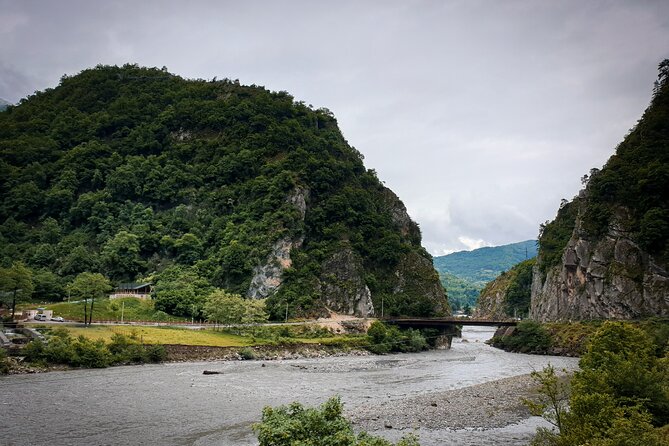
It is a particularly good match for a visitor who has already seen Kutaisi’s main central sights and wants something less conventional. The journey into Tskhaltubo adds a different side of western Georgia, built around health, state planning, and the changing fortunes of Soviet institutions.
I would be more cautious if you dislike damaged buildings, uneven surfaces, or a tour that depends on outdoor conditions. The experience requires good weather and can be canceled if the forecast is poor. In that case, you are offered another date or a full refund.
Families and older visitors should consider the moderate fitness requirement carefully. The supplied information does not give detailed accessibility guidance, so anyone with mobility concerns should ask the provider specific questions before booking.
The main weakness is communication
Most of the praise centers on the guide and the content. The main negative account focuses on the operator’s communication, not on Tskhaltubo itself.
The complaint describes a start time changing without proper notice, a delayed reply about the meeting place, and a private booking becoming a group tour. It also describes the guide objecting to the listed price. These points conflict with the stated private-tour format and are serious enough to treat as a warning.
I would not ignore that issue simply because the historical content sounds excellent. Send a short message before the tour and confirm four things: the exact start time, the pickup or meeting point, the private group size, and the final price.
There is also a practical reason to do this because the tour is commonly booked well ahead of time, with an average booking lead time of about 20 days. If you are planning a fixed Kutaisi schedule, do not leave this arrangement until the last minute.
Should you book the Tskhaltubo Old Soviet Spa Tour?
I would book it if you want a guided look at Soviet sanatoriums and care about the story behind the ruins. The combination of Tskhaltubo’s unusual past, the mineral springs, several different former sanatoriums, and Akaki’s reported skill with history and photography gives the tour real substance.
I would not book it as a casual, effortless sightseeing stop. The buildings are abandoned, the outing needs good weather, and the physical conditions call for care. Confirm the private format and timing before paying, especially if you are booking alone.
For the right visitor, this is one of Kutaisi’s more distinctive excursions. You leave the usual sightseeing route and see how a famous spa town was built, used, and left behind.
FAQ
Where does the Tskhaltubo Old Soviet Spa Tour start?
The stated meeting point is Free Walking Tour Kutaisi near Gelati Kutaisi in Kutaisi, Georgia. Pickup is also offered, so confirm the exact arrangement before the tour.
What time does the tour start?
The stated start time is 2:00 pm. Because one booking account describes confusion over the start time, confirm it directly before the day of the experience.
How long does the tour last?
The full experience lasts approximately 3 hours and 30 minutes. The Tskhaltubo stop itself is listed as about 3 hours.
Is the tour private?
The activity is described as private, with only your group participating. One booking account reports that additional people were added, so confirm the group size before setting out.
Is the tour suitable for everyone physically?
The tour requires a moderate level of physical fitness. Since it visits abandoned sanatoriums, you should be prepared for conditions that may require careful movement.
What happens if bad weather cancels the tour?
The experience requires good weather. If poor weather causes a cancellation, you will be offered another date or a full refund. Free cancellation is available when you cancel at least 24 hours before the start time.
Recently added around Kutaisi
- Private Organic Wine Tour from Kutaisi, 2 Tastings and Lunch★ 5.0 · 3 reviews
- Private Canyon&Cave Tour from Kutaisi(Martvili-Okatse-Prometheus)★ 5.0 · 3 reviews
- Kutaisi Airport to Tbilisi Private Transfer★ 5.0 · 3 reviews
- Oxygen Paradise A Day Tour to Racha Mountain★ 5.0 · 3 reviews
- KUTAISI-TBILISI Shared Transfer★ 5.0 · 4 reviews
- Small group tour to Kutaisi monasteries: Gelati, Motsameta and Bagrati.★ 5.0 · 4 reviews
- Break Bread with Kutaisi Locals★ 5.0 · 4 reviews
- Causacus mountains at Majestic SVANETI and MESTIA from Kutaisi★ 4.5 · 4 reviews
Soviet-Era Tours, compared.
1 Day Private Armenia: UNESCO, Soviet & Curated Family Lunch
Read our review →
Tbilisi old town & soviet heritage – Private driver-guided Tour
Read our review →
Armenia: 1 Day Soviet gems, UNESCO + Family lunch (Small group)
Read our review →
Soviet past – Private day tour to Chiatura, Katskhi pillar and Chronicles
Read our review →
Soviet Story – Private day trip to Chiatura, Stalin’s museum and Katskhi pillar
Read our review →
2-Day Kutaisi Tour: Caves, Canyons & Soviet Sanatoriums
Read our review →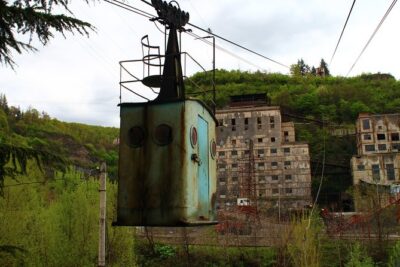
Chiatura. Soviet Past in the present. + Katskhi pillar
Read our review →Browse the lists this tour appears in