
Reviewed · WALKING TOURS
Alternative walking tour New Tiflis and backstreets
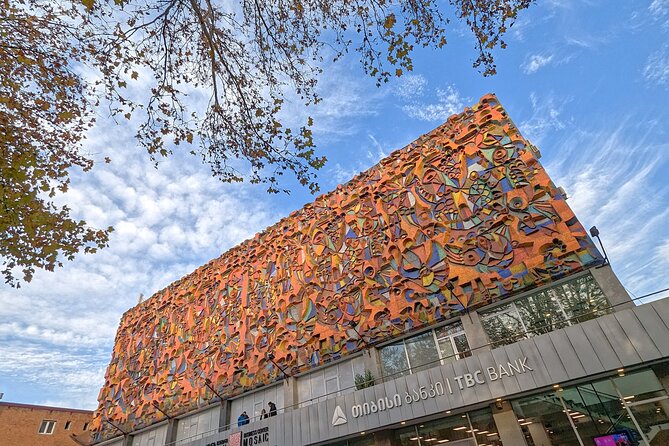
Tbilisi rewards curious walkers. This three-hour tour leaves the usual Old Town route behind and links Liberty Square with markets, rose gardens, theatres, street art, and everyday neighborhoods. I like its focus on New Tiflis and local city life, rather than another circuit of the same old churches and viewpoints.
I also like the small maximum group of 10 people and the chance to walk with guides such as Oksana, who has earned praise for clear answers, useful recommendations, and a warm manner. The main drawback is simple: this is a genuine walking tour, covering about 3 kilometers over three hours, with traffic noise, uneven urban surroundings, and little time to linger at each stop.
In This Review
- Key points to know before booking
- Why this route works for a first look at New Tiflis
- Liberty Square sets the historical frame
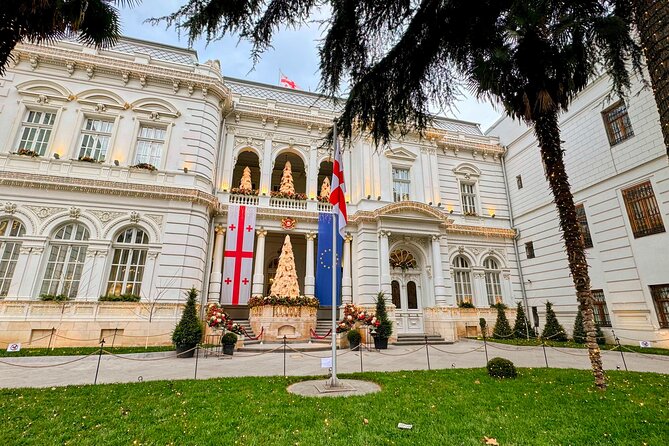
- Orbeliani Square mixes palace architecture and flowers
- Dry Bridge Market is the shopping stop
- Agmashenebeli Avenue brings in the grand facades
- Roses Park offers a quieter pause
- Fabrika shows Tbilisi’s creative side
- Two theatres and a Roman Catholic church add depth
- Marjanishvili Square is a useful ending point
- Is $30 a fair price?
- Weather, walking, and who should book
- Should you book this Tbilisi walking tour?
- FAQ
- How long does the Alternative Walking Tour of New Tiflis last?
- How far do you walk?
- Where does the tour begin?
- Where does the tour end?
- Is this an Old Town walking tour?
- What is included in the price?
- Is hotel pickup or drop-off included?
- How large is the group?
- What happens if the weather is poor?
Key points to know before booking
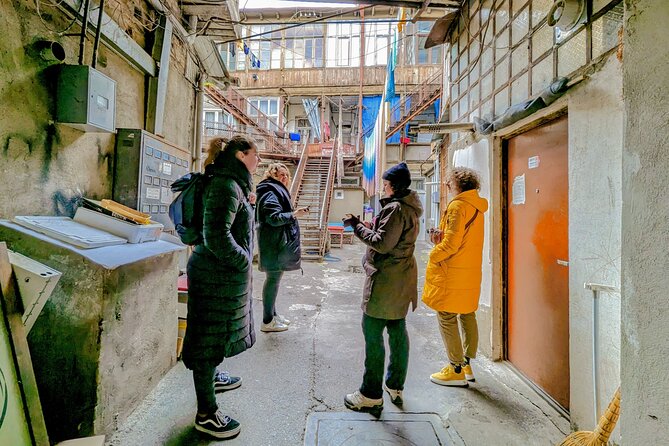
- A different side of Tbilisi: The route focuses on New Tiflis, backstreets, markets, theatres, and creative spaces instead of the Old Town.
- Dry Bridge Market: You get time to browse Soviet-era objects, antiques, handmade goods, vintage clothing, and artwork.
- Fabrika and street art: A former Soviet sewing factory now serves as a cultural and social hub.
- Strong guide feedback: Oksana is praised for her friendly style, city knowledge, and ability to discuss history, art, and daily life.
- Three kilometers on foot: Comfortable, non-slip shoes matter, especially in wet or cold weather.
- Good value at $30: The price includes the guide and a complimentary wine tasting, but not hotel transport or purchases at the market.
Why this route works for a first look at New Tiflis
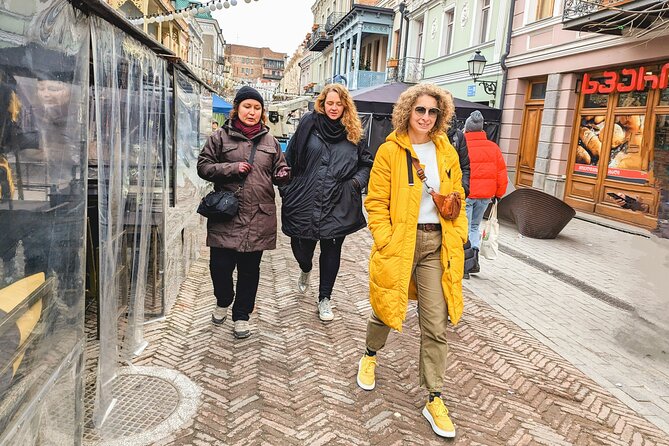
Tbilisi is often reduced to its Old Town, sulfur baths, fortress, and steep lanes. Those places deserve attention, but the city’s identity does not end there. This walk shifts your view toward the grander 19th and early 20th-century streets around Agmashenebeli Avenue, the cultural institutions near Marjanishvili, and the ordinary corners between major sights.
That change in emphasis is the tour’s main value. You are not simply ticking off famous monuments. You are seeing how old buildings, public squares, creative businesses, religious sites, and neighborhood parks fit together.
The tour begins at the entrance of the Burberry shop near Liberty Square. This is a practical meeting point, since Liberty Square has a metro station and sits in central Tbilisi. Arrive early. The guide waits for up to 10 minutes, and a late arrival can mean missing the group.
The walk ends at Marjanishvili Square, near the metro station. That makes the route useful for your first or second day in the city, since you can continue exploring after the tour rather than retracing your steps to the starting point.
More walks:
- Tbilisi Walking Tour Including Cable Car and Traditional Bakery
★ 5.0 · 1,310 reviews - Tbilisi:Evening Walking & Talking Tour with Wine & Boat Ride
★ 5.0 · 572 reviews - Old Tbilisi Highlights walking tour with wine & 10 tastings
★ 5.0 · 276 reviews
Liberty Square sets the historical frame
Liberty Square, called Tavisuplebis Moedani in Georgian, is more than a convenient meeting place. It is one of Tbilisi’s main public spaces, used for celebrations, demonstrations, and national events.
At the center, a golden statue of St. George defeats the dragon. The image connects with Georgia’s long struggle for freedom and independence, and it gives the square a clear symbolic focus.
The surrounding buildings include Tbilisi City Hall and the Georgian National Museum. You will not spend a long time here, only about 10 minutes, so think of this stop as an introduction rather than a full museum or architecture visit.
That short timing is sensible. Liberty Square is a crossroads, not a quiet place for slow contemplation. It can also be busy with traffic and city activity, which gives you an early taste of Tbilisi’s energetic urban character.
Orbeliani Square mixes palace architecture and flowers
The walk continues to Orbeliani Square, where the Orbeliani Palace provides a grand architectural focal point. The palace is the official residence of the President of Georgia, although the tour does not go inside.
The building dates to the 18th century and has housed Georgian nobles and officials. The guide can help place its ornate details within the wider story of Tbilisi’s political and architectural development.
The square itself is less formal than the palace suggests. Cafes and restaurants line the area, and a flower market adds color, scent, and movement. The market sells flowers and fragrant herbs, making this one of the more sensory stops on the route.
You have about 25 minutes here. That is enough to look closely, take pictures, and understand the square’s role as a public meeting place. It is not enough for a leisurely meal, so save that for after the tour.
Dry Bridge Market is the shopping stop
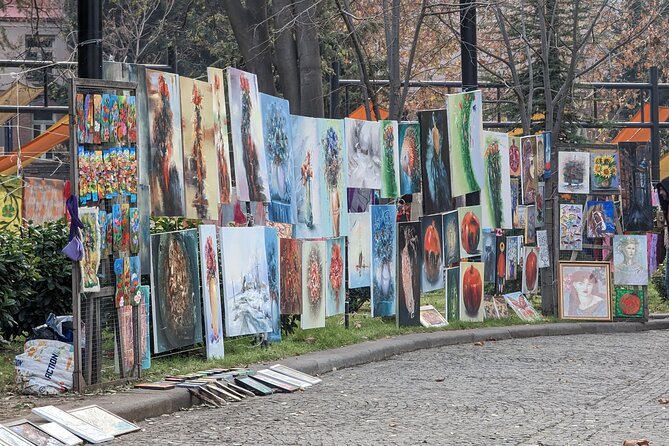
Dry Bridge Market is probably the most useful stop if you like objects with a story. Stalls offer antiques, vintage clothing, jewelry, furniture, Soviet-era memorabilia, and handmade work.
The market is not a polished museum display. Its appeal lies in the mix of goods and sellers. You might find an old household object, a piece of art, or a small souvenir that feels more connected to Georgia than a standard shop purchase.
Many sellers are artists and craftspeople, so the market has a creative side as well as a secondhand one. The guide can explain the background of objects and help you understand what you are looking at, though the 30-minute stop is fairly brief.
If you plan to buy something, keep your expectations realistic. The tour price does not include purchases, and you should decide for yourself how much bargaining or browsing you want to do. The market can easily absorb an hour or more, but this experience gives you a compact introduction before moving on.
For many people, this is the point where comfortable shoes and a flexible attitude pay off. You are walking, stopping, looking, and changing pace rather than following a smooth sightseeing path.
A few more ways to spend a day out of Tbilisi
- Day Trip to Kakheti Wine Region Including 9 Wine Tastings
★ 5.0 · 2,774 reviews - Highlights of Caucasus Mountains-Jinvali,Ananuri,Gudauri,Kazbegi(Group tour)
★ 5.0 · 2,682 reviews - Day Trip to Kazbegi and Gudauri
★ 5.0 · 2,009 reviews - Day Trip to Mtskheta Gori and Uplistsikhe
★ 5.0 · 1,801 reviews
Agmashenebeli Avenue brings in the grand facades
Agmashenebeli Avenue supplies the architectural center of the walk. Buildings from the late 19th and early 20th centuries show Art Nouveau and Neo-Renaissance influences, with decorated facades and careful details above the shopfronts.
Look up as you walk. The most interesting features are often around windows, balconies, arches, and upper floors. The avenue gives you a useful contrast with the rougher backstreets and market stalls seen earlier.
The Marjanishvili Theatre is one of the main cultural landmarks along the route. The Tbilisi Opera and Ballet Theatre is at the northern end of the avenue, adding another reminder that this part of the city remains tied to performance and the arts.
You spend about 25 minutes here, so the focus is on seeing and interpreting the street rather than attending a performance. If you want to visit a theatre from the inside, you would need to arrange that separately.
Roses Park offers a quieter pause

Roses Park is a small change of pace. Tucked into the backstreets, it gives you a look at a calmer side of Tbilisi and a chance to observe ordinary neighborhood life.
The rose garden contains more than 200 varieties. In summer, the plants are in bloom and the air carries their scent. This is one of the few points on the route where the experience becomes less about buildings and more about color, plants, and a slower walk.
You have 20 minutes here. That should be enough for a pleasant stroll and photographs, especially during the flowering season. In colder months, the garden may not offer the same display, so your expectations should match the season.
The park also helps break up the urban route. After streets, market stalls, and architecture, a green pause makes the remaining walk toward Fabrika feel more varied.
Fabrika shows Tbilisi’s creative side
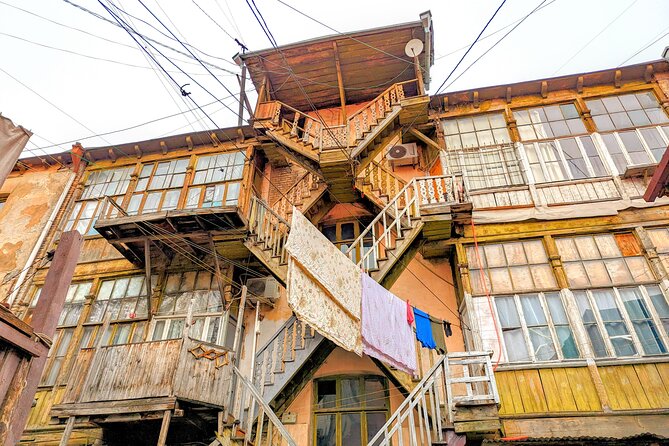
Fabrika is housed in a former Soviet sewing factory, now converted into a multi-use space for culture, art, and entertainment. The building is an example of urban renewal, taking an old industrial site and giving it a new public purpose.
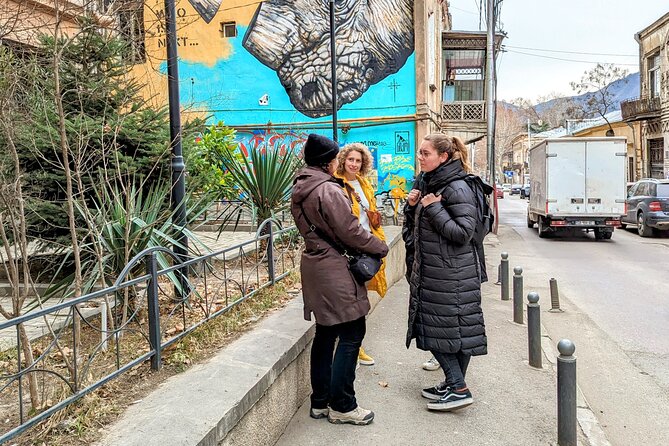
The most immediate attraction is the street art. Murals cover parts of the building and nearby walls, reflecting Tbilisi’s strong connection with contemporary art. The guide can point out details and explain how this kind of work has become part of the city’s present-day identity.
You get around 25 minutes here. That allows time to walk through the area, view the murals, and take in the atmosphere. It is not a long workshop or a full cultural program, so the value comes from the guide’s explanation and the chance to see the space in context.
I particularly like the way Fabrika follows the older market and historic avenue. It prevents the tour from becoming a parade of old buildings. You see a city using its past, but not being trapped by it.
Two theatres and a Roman Catholic church add depth
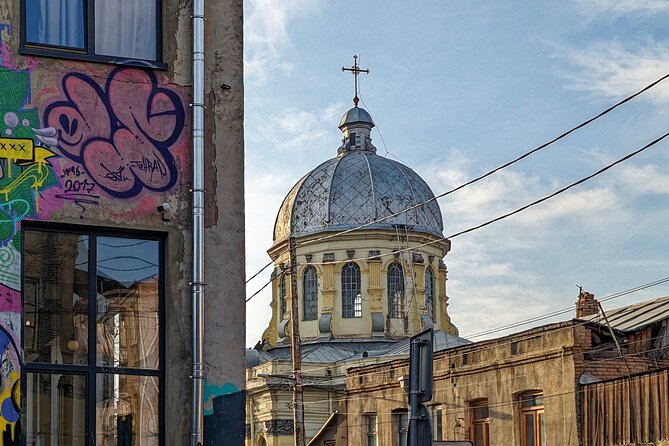
The St. Peter and St. Paul Roman Catholic Church is a surprising stop on a route centered on New Tiflis. Built between 1870 and 1877, it was commissioned through Georgia’s Catholic community and designed by Albert Zaltsman.
Its baroque appearance is easy to spot. The yellow facade is divided by pilasters and arches, with stronger yellow accents around the architectural details. Above the wooden front door is a rose window decorated with floral designs and a dove.
The church also has a connection to Pope John Paul II, who celebrated Mass here during his visit to Georgia in October 1999. You spend about 15 minutes at the church, so this is a quick architectural and religious history stop rather than a full visit.
The Kote Marjanishvili State Drama Theatre comes next. Founded by Kote Marjanishvili in Kutaisi in 1928, it moved to Tbilisi in 1930 and remains one of Georgia’s important theatre institutions.
The art nouveau building was renovated and reopened in 2006 with a production of Bertolt Brecht’s The Threepenny Opera. The theatre presents plays, musicals, and operas, giving you a practical reason to check the schedule if you have another evening free.
These two stops show the range of Tbilisi’s cultural life. One is a Catholic church with baroque details, the other a theatre tied to Georgian performance. Neither is entered as part of the walk, but both make the streets more meaningful.
Marjanishvili Square is a useful ending point
The tour finishes at Marjanishvili Square, a lively junction surrounded by restaurants, cafes, and shops. It is a useful place to end because you have choices: stop for food, continue exploring, or take the metro.
The nearby Marjanishvili station opened in 1966. Inside, look for the high-relief bust of Kote Marjanishvili, the theatre director for whom the station and square are named.
This is not a dramatic viewpoint or a ceremonial final monument. It is a practical city ending, and that suits the tour. You finish among places where people eat, shop, commute, and meet.
If you want dinner after the walk, this area gives you an easy starting point. The tour does not include hotel drop-off, so the metro is especially useful for getting back to your accommodation.
Is $30 a fair price?
At $30 per person, the tour offers solid value if you want a guide-led introduction to a less familiar part of Tbilisi. The price includes the guide and a complimentary wine tasting, while all listed sightseeing stops have no separate admission charge.
You are paying mainly for the route and the interpretation. Anyone can walk down Agmashenebeli Avenue or visit Dry Bridge Market alone, but a good guide helps connect the architecture, Soviet past, religious communities, theatre culture, street art, and daily life.
The small group cap of 10 improves that value. A guide can answer questions more easily, and the walk should feel less like following a large flag through the city.
Still, the tour is not designed for deep visits inside museums, theatres, or churches. If you prefer long stops, extensive shopping, or a very relaxed pace, you may find the schedule too tight.
Weather, walking, and who should book
This tour works best for people who enjoy walking at a relaxed but steady pace. You cover about 3 kilometers, and the route includes busy streets and urban traffic noise.
Wear non-slip shoes. Tbilisi weather can be cold, windy, and rainy in winter, while summer midday conditions can be hot. Bring warm layers in winter, sun protection in summer, and water when temperatures rise.
The tour is not recommended if you have major mobility limits, a recent injury, or difficulty walking long distances. Service animals are allowed, and the route is near public transport.
I would recommend this tour to first-time visitors who have already seen some of the Old Town, repeat visitors looking for a different angle, and anyone interested in architecture, public spaces, art, markets, or local culture.
The guide can make a big difference. Oksana has received especially strong praise for her friendly approach and her ability to discuss Tbilisi’s history, art, daily life, and practical recommendations. That combination is useful because you leave with both context and ideas for the rest of your stay.
Free cancellation is available up to 24 hours before the start time. The experience requires good weather and a minimum number of participants, so poor conditions or low enrollment can lead to a new date or full refund.
Should you book this Tbilisi walking tour?
Book it if you want New Tiflis rather than another Old Town circuit. The route gives you a well-shaped introduction to markets, 19th-century architecture, public gardens, Soviet redevelopment, theatre culture, and street art in three hours.
Skip it if you dislike walking, busy city streets, or short visits at each stop. Also skip it if your main goal is interior sightseeing, since the churches, theatres, and palace are viewed from outside.
For most active visitors, $30 is a fair price, especially with a group limited to 10 and wine tasting included. I would schedule it early in your Tbilisi stay, then return to Marjanishvili, Fabrika, or Dry Bridge Market later if one of those places deserves more time.
FAQ
How long does the Alternative Walking Tour of New Tiflis last?
The tour lasts approximately three hours.
How far do you walk?
The route covers about 3 kilometers at a relaxed pace.
Where does the tour begin?
The meeting point is at the entrance of the Burberry shop near Liberty Square, also called Freedom Square, in Tbilisi.
Where does the tour end?
The tour ends at Marjanishvili Square, near Marjanishvili metro station.
Is this an Old Town walking tour?
No. The route focuses on New Tiflis, backstreets, and less touristy neighborhoods rather than the Old Town.
What is included in the price?
The price includes guide service and a complimentary wine tasting.
Is hotel pickup or drop-off included?
No. Hotel pickup and drop-off are not included.
How large is the group?
The activity has a maximum of 10 participants.
What happens if the weather is poor?
The experience requires good weather. If it is canceled because of poor weather, you can receive a different date or a full refund.
Recently added around Tbilisi
- A Gastronomic Private Guided Journey Through Tbilisi★ 5.0 · 8 reviews
- Kakheti Wine Tour for beginners – 3 wineries★ 5.0 · 8 reviews
- Kakheti and Sighnaghi tour with winetasting★ 5.0 · 8 reviews
- Jvari Monastery, Ananuri, Gudauri, Kazbegi Group & Private Tour★ 4.5 · 8 reviews
- Kazbegi & Gudauri group tour from Tbilisi★ 5.0 · 8 reviews
- Tbilisi Lakes and Sightseeing tour★ 5.0 · 8 reviews
- Day Tour to Mtskheta, Gori (Stalin museum) and Uplistsikhe★ 4.5 · 8 reviews
- Group Day Tour of Mtskheta,Jvari,Samtavro★ 4.0 · 8 reviews
Walking Tours, compared.
Tbilisi Walking Tour Including Cable Car and Traditional Bakery
Read our review →
Evening Walking & Talking Tour with Wine & Boat Ride
Read our review →
Old Tbilisi Highlights walking tour with wine & 10 tastings
Read our review →
Old Tbilisi Tour: Private Walking Tour With Wine Tasting
Read our review →
Private Tbilisi Food Tour: 9 Tastings Walk in Bohemian District
Read our review →
Tbilisi Old Town Walking Tour with a Local Guide
Read our review →
Discover Tbilisi: Hidden Gems and Iconic Sights Walking Tour
Read our review →
Browse the lists this tour appears in