

Reviewed · WALKING TOURS
3-Hour Private Guided Walking Tour in Tbilisi
Tbilisi reveals itself one street at a time. This private walking tour gives you a useful first look at the Georgian capital, linking old churches, modern architecture, hilltop views, sulfur baths, and local symbols in one route. For $25 per person, you get a private guide, an English-language tour, and a cable-car ride included in the price.
I especially like the private format, since your group can ask questions and request extra attention rather than follow a fixed crowd. I also like the route itself: the mix of Anchiskhati Basilica, the Bridge of Peace, Metekhi Cathedral, Abanotubani, and Sioni Cathedral shows several sides of Tbilisi in a short time.
The main point to watch is the timing. The experience is described as about three hours and 30 minutes, yet the detailed information also says the full route may take around four hours, including roughly one hour of walking between the starting and ending points. The total walking distance is about 4 kilometers, so comfortable shoes and a reasonable level of fitness matter.
In This Review
- Key things to know before booking
- Starting at Freedom Square
- Rezo Gabriadze Theater and the Clocktower
- Anchiskhati Basilica, Tbilisi’s oldest surviving church
- Crossing the Bridge of Peace through Rike Park
- Metekhi Cathedral and the best old-town views
- Taking the cable car toward Narikala
- Mother of Kartli above the city
- Abanotubani and the beginning of Tbilisi
- The Tamada statue and Georgian table culture
- Tbilisi’s Jewish quarter and multicultural past
- Sioni Cathedral and the finish on Sioni Street
- Is $25 per person good value?
- Who should book this Tbilisi walk?
- Practical details for a smoother morning
- Should you book it?
- FAQ
- How long does the tour take?
- How far do you walk?
- Where does the tour begin?
- Where does the tour end?
- Is the tour private?
- Is the cable-car ride included?
- Can you visit Narikala Fortress?
- What should you wear to the churches?
- Is the tour offered in English?
Key things to know before booking
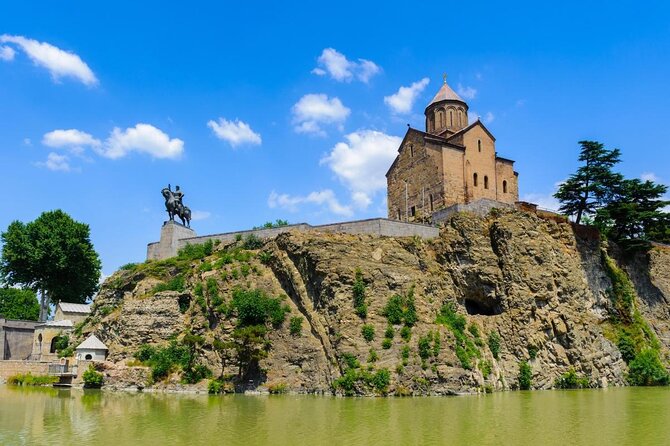
- The route crosses Tbilisi’s old town from Freedom Square to Sioni Cathedral, with several important stops along the way.
- The tour is private, so only your own group takes part.
- A cable-car ride to the Narikala area is included, although Narikala Fortress is currently closed for reconstruction.
- The guide Luka received especially warm praise for his explanations of history, culture, and architecture, and for accommodating requests.
- Church visits require respectful clothing: no shorts, and women should bring a scarf or hat to cover the head.
- The $25 price is strongest for small groups, particularly if you want a personal introduction rather than a large shared walk.
Starting at Freedom Square
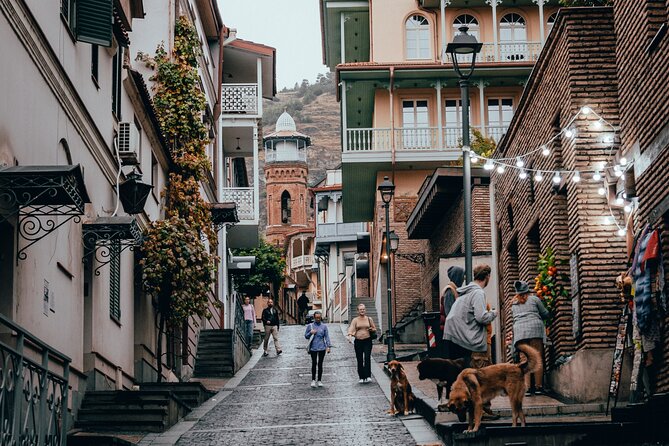
The tour begins at Freedom Square, a handy central meeting point in Tbilisi. From here, you move toward the old town on foot, with the guide setting the pace and adding context as the streets narrow and the architecture becomes older.
This is a good beginning for a first visit because you quickly move from a broad city square into the character of historic Tbilisi. I would use the first part of the walk to ask practical questions about the city, including where to eat, which baths are worth considering, and how to reach other sights after the tour.
The route is not only a checklist of monuments. The guide’s job is to connect the places, explain why they matter, and help you read the city as you walk. One highly praised guide, Luka, was described as especially good at discussing history, culture, and architecture while adapting to requests. That personal attention is one of the clearest reasons to choose a private tour.
More walks:
- Tbilisi Walking Tour Including Cable Car and Traditional Bakery
★ 5.0 · 1,310 reviews - Tbilisi:Evening Walking & Talking Tour with Wine & Boat Ride
★ 5.0 · 572 reviews - Old Tbilisi Highlights walking tour with wine & 10 tastings
★ 5.0 · 276 reviews
Rezo Gabriadze Theater and the Clocktower
The first named stop is the Rezo Gabriadze Marionette Theater and its famous Clocktower. The stop is listed as only five minutes, so you should expect a quick look and an explanation rather than time for a performance.
The building is popular because of its unusual design and artistic character. It does not look like a standard historic monument, which makes it a useful reminder that Tbilisi’s old center is not frozen in one period. Georgian creativity appears here in a playful, theatrical form.
If you enjoy architecture and small visual details, this stop will likely appeal to you. The drawback is simple: five minutes is brief. You will probably have enough time to see the exterior and take photographs, but not enough to linger or explore the theater in depth.
Anchiskhati Basilica, Tbilisi’s oldest surviving church
Next comes Anchiskhati Basilica, traditionally dated to the sixth century. It is described as the oldest church still standing in Tbilisi, and it remains one of the most important religious and historical buildings in the old town.
The planned stop lasts about 15 minutes. That gives you time to look at the church, enter if permitted, and hear why this place matters. I find this kind of stop more rewarding when the guide explains the building’s place in the city rather than simply giving its name and date.
The basilica also sets the tone for the church visits later in the route. Tbilisi has endured invasions and destruction, and its surviving religious buildings carry that story in a direct, physical way. You do not need a long lecture to appreciate the setting, but a good explanation makes the brief visit more meaningful.
Remember the dress rules. Shorts are not appropriate for church visits, and women should bring a scarf or hat to cover the head. It is best to dress for the whole tour accordingly, since changing clothes halfway through a walking route is not practical.
Crossing the Bridge of Peace through Rike Park
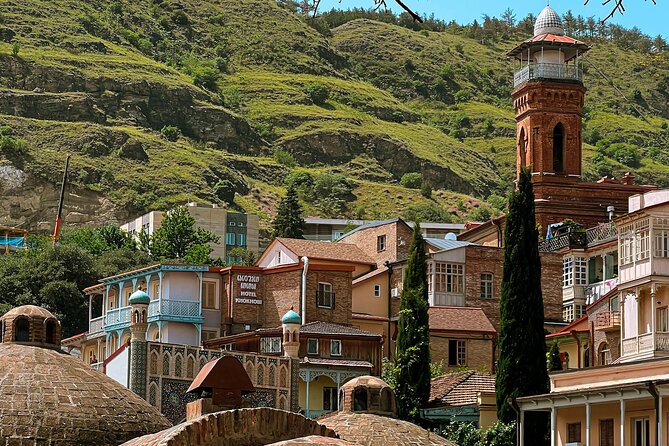
The Bridge of Peace opened in 2010 and looks sharply different from the older buildings around it. Its modern design produced mixed reactions in Tbilisi, but it has become one of the city’s most recognizable sights.
The bridge stop lasts about 10 minutes. That is enough to cross, look back toward the old town, and take in the contrast between traditional stone and contemporary steel and glass. I like this part of the route because it shows that Tbilisi is not simply an old city preserved for visitors. It is also a modern capital making new architectural choices.
After crossing, the route continues through Rike Park toward Metekhi Church. This portion is part of the walking connection between major stops, so the guide can point out changing views as you move rather than stopping only at formal monuments.
The bridge may not appeal to everyone. If you prefer older architecture, it can feel out of place. That contrast is precisely why it belongs on a first city tour, though. You get a quick lesson in how Tbilisi mixes its past and present.
A completely different kind of day out of Tbilisi:
- Day Trip to Kakheti Wine Region Including 9 Wine Tastings
★ 5.0 · 2,774 reviews - Highlights of Caucasus Mountains-Jinvali,Ananuri,Gudauri,Kazbegi(Group tour)
★ 5.0 · 2,682 reviews - Day Trip to Kazbegi and Gudauri
★ 5.0 · 2,009 reviews - Day Trip to Mtskheta Gori and Uplistsikhe
★ 5.0 · 1,801 reviews
Metekhi Cathedral and the best old-town views
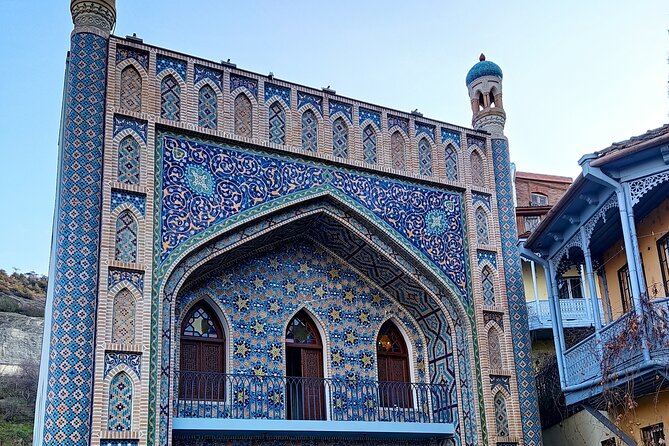
Metekhi Cathedral is one of the strongest stops on the route. The church yard offers excellent views across the old town, and it contains a statue of Vakhtang Gorgasali, the legendary Georgian king associated with the founding of Tbilisi.
The scheduled visit is about 30 minutes, making it one of the longer stops. I would treat this as a place to pause, listen, and take photographs rather than rush through. The elevated position gives you a useful sense of how the city is arranged around the river and hills.
The statue adds a national story to the view. Instead of seeing only rooftops and church domes, you connect the city with the figure credited with founding it. A guide can make that connection clear in a way a sign or quick photograph cannot.
The walk to this point also helps explain the tour’s unusual timing. The sightseeing stops take a few hours, while the walking between the start and finish adds more time. The advertised total is sometimes described as about three hours and 30 minutes and elsewhere as about four hours. Plan your morning or afternoon with the longer estimate in mind.
Taking the cable car toward Narikala
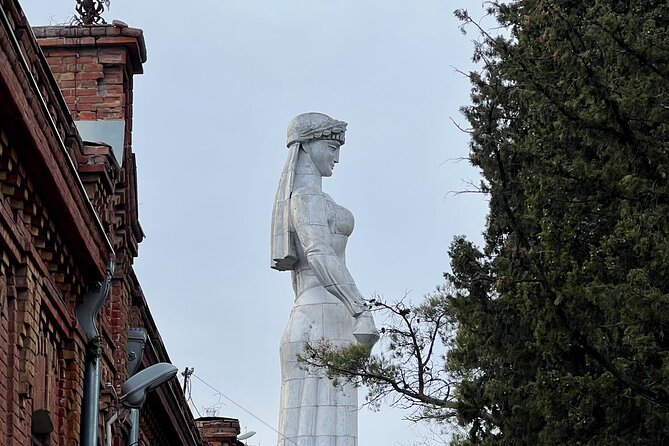
From the lower station at Rike, you take the cable car toward the Narikala area. The cable-car ride is included, which is important because it breaks up the walking and provides a different view of Tbilisi.
The stop is listed as about 10 minutes, but the ride and movement around the station may affect the exact pace. The plan is to reach the Narikala area, enjoy panoramic city views, and visit the Mother of Kartli monument. Narikala Fortress itself is closed because of reconstruction, so you should not book this expecting a full fortress visit.
This closure is the largest itinerary limitation. The cable car remains useful for the views, but the fortress experience is reduced. If Narikala is your main reason for booking, check its current status before committing. If you mainly want an easy way to gain height and see Tbilisi from above, this part still adds real value.
The cable car also gives your legs a short rest. Four kilometers on foot is manageable for many people, but a route through Tbilisi’s older streets can include uneven surfaces and changes in elevation. A short ride makes the half-day outing less tiring.
Mother of Kartli above the city
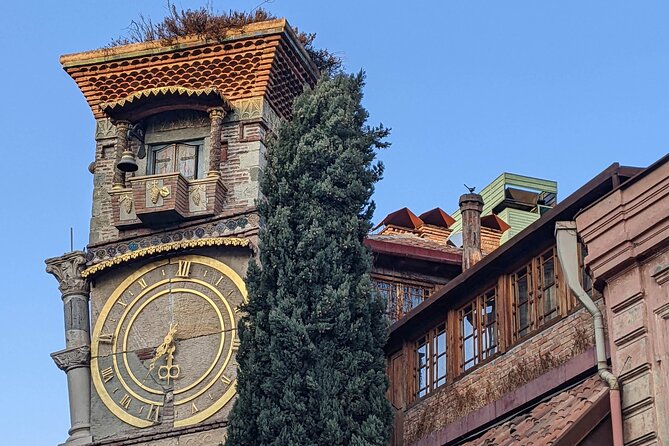
The Mother of Kartli monument receives about 15 minutes. The statue is often read as a symbol of Georgian character, combining hospitality with the ability to defend the country. The supplied description also calls it full of Soviet spirit, which is a useful clue to its visual and political context.
From this high point, you get one of the clearest broad views of the city included in the tour. The monument itself is large and unmistakable, but the setting matters just as much. You can look across Tbilisi and understand the city’s hills, river corridor, and dense old center more easily than from street level.
I would bring a phone or camera with room for photographs here. The stop is not long, so listen first, then take pictures. Since the fortress is closed for reconstruction, this monument and the view become the main reason to make the uphill section.
Abanotubani and the beginning of Tbilisi
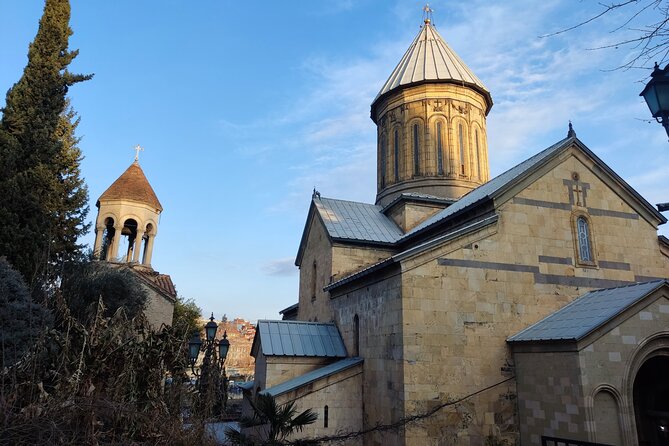
The tour then descends to Abanotubani, Tbilisi’s sulfur-bath district. The name is closely tied to the city’s origin story, and this is where the route shifts from hilltop views to one of the old town’s most distinctive neighborhoods.
The planned stop lasts about 20 minutes. You can expect an explanation of the baths, the legend connected with the founding of Tbilisi, and time to look at the district’s architecture. Even if you do not plan to use a bath, the area is worth seeing because it remains central to the city’s identity.
This is also a good moment to ask the guide about how the baths work and what a visit involves, though the tour does not include a bath session. Keep your expectations clear: this is a walking stop and introduction, not a spa booking.
The district can be visually striking, but the streets and surfaces may not always be perfectly even. Good footwear matters more here than appearance. You are walking through an active part of the old town, not a polished museum setting.
The Tamada statue and Georgian table culture
The five-minute stop at the Tamada statue is short but memorable. Tamada means toastmaster, the person who leads traditional Georgian toasts and helps shape the rhythm of a large meal.
The monument’s original version was found near Vani in western Georgia and dates to the seventh century BC. That detail gives the statue more weight than a quick photo stop might suggest. It links modern Georgian dining customs with an ancient artistic tradition.
I like this inclusion because it brings everyday culture into the route. Churches, bridges, and hilltop monuments tell only part of the story. Food and formal toasting are also important ways Georgians express friendship and respect.
Since the stop is brief, ask your guide to explain the role of the tamada while you are there. This is the sort of small cultural detail that can improve your later meals in Georgia. It gives you a better sense of why a toast may be treated as more than a casual raised glass.
Tbilisi’s Jewish quarter and multicultural past
Between the Tamada statue and Sioni Cathedral, the route touches on Tbilisi’s Jewish community and the city’s long multicultural character. Before 1991, around 50,000 Jews lived in Tbilisi. The community is now much smaller, while the friendship between Georgian and Israeli people remains strong.
This part of the walk is valuable because it widens the story beyond Georgian religious and royal history. Tbilisi has long been shaped by different communities living near one another, and that fact is easy to miss if you only photograph the most famous buildings.
There is no formal stop duration given for this section, so treat it as a walking explanation rather than a separate attraction. The guide’s storytelling matters here. A private format gives you room to ask about how the city changed after 1991 and how different communities fit into Tbilisi’s past and present.
Sioni Cathedral and the finish on Sioni Street
The tour ends at Sioni Cathedral of the Dormition on Sioni Street. Once the main cathedral of the city, Sioni remains one of the old town’s central religious buildings.
The planned visit lasts about 30 minutes. The cathedral has survived invasions and destruction, and it preserves an important religious relic for Georgians, the cross of St. Nino. That makes this more than a final photo stop. It is the point where many of the tour’s themes come together: faith, survival, national identity, and the old city’s layered past.
Ending at Sioni is practical. You finish in the heart of the old town rather than returning to Freedom Square, so you can continue exploring on foot. The stated ending point is clear, which is useful if you have another booking or plan to find lunch nearby.
Is $25 per person good value?
At $25 per person, this tour is reasonably priced for a private experience lasting roughly four hours, especially because the cable-car ride is included. The value improves for a small group, and group discounts may make the total cost more attractive when several people book together.
You are paying for more than transportation between sights. The main benefit is the guide’s interpretation of the city, particularly at places such as Anchiskhati Basilica, Metekhi Cathedral, Abanotubani, and Sioni Cathedral. A private guide can also adjust the pace and respond to your interests.
The tour does not include a meal, bath experience, or entry into Narikala Fortress. Since most listed attractions are free, the price rests mainly on the guiding and route planning. That is fair if you want a strong introduction and help understanding what you see.
I would compare the price with your own priorities. If you are comfortable finding the old town on your own and prefer to read about monuments independently, you may not need a private tour. If you have only one morning or afternoon in Tbilisi, the organized route and cultural context make the fee easier to justify.
Who should book this Tbilisi walk?
I would recommend it most strongly to first-time visitors who want to get their bearings quickly. It works well for couples, families, and small groups who prefer a flexible private outing over a large shared group.
It also suits anyone interested in architecture and religious buildings. You see old churches, a modern bridge, a hilltop monument, a Soviet-era symbol, a sulfur-bath district, and a statue tied to Georgian dining customs in one continuous route.
You should think twice if you dislike walking, have trouble with hills or uneven streets, or want a slow tour with long visits inside each monument. The total distance is around 4 kilometers, and the time between stops is part of the experience.
The cable-car section is attractive, but Narikala Fortress is closed for reconstruction. If the fortress is essential to your plans, confirm the current situation before booking. The tour still offers city views and Mother of Kartli, but the fortress portion is limited.
Practical details for a smoother morning
The start point is Freedom Square in Tbilisi, and the finish is Sioni Cathedral, 3 Sioni Street. Because you do not return to the start, plan your next activity from the old town side of the route.
The experience is offered in English and uses a mobile ticket. Confirmation is provided at booking. Service animals are allowed, and the meeting area is near public transportation.
Wear shoes suitable for about 4 kilometers of city walking. For church visits, avoid shorts and bring a scarf or hat if you are a woman. Men also need to avoid shorts inside the churches.
The cancellation terms are generous if your plans may change: you can receive a full refund by canceling at least 24 hours before the start time. Changes or cancellations inside that 24-hour window are not accepted for a refund. The experience also requires a minimum number of participants, and if that minimum is not met, you are offered another date or experience, or a full refund.
Should you book it?
Book this tour if you want a well-rounded first look at Tbilisi with a private English-speaking guide and a manageable route through the old town. Luka’s praised ability to explain culture, architecture, and history, while accommodating requests, is exactly the kind of personal service that gives this experience its value.
I would book it early in a short Tbilisi visit, then use the final stop at Sioni Cathedral as a springboard for more old-town exploring. Just allow four hours, dress properly for the churches, wear comfortable shoes, and remember that Narikala Fortress is closed for reconstruction.
FAQ
How long does the tour take?
The experience is described as about three hours and 30 minutes, while the additional details say the total may be around four hours. This includes sightseeing and walking between the starting and ending points.
How far do you walk?
The total walking distance is around 4 kilometers.
Where does the tour begin?
The tour begins at Freedom Square in Tbilisi, Georgia.
Where does the tour end?
The tour ends at Sioni Cathedral of the Dormition, at 3 Sioni Street in Tbilisi.
Is the tour private?
Yes. Only your own group participates in the activity.
Is the cable-car ride included?
Yes. The cable-car ride from the Rike-Narikala lower station is included in the tour price.
Can you visit Narikala Fortress?
Narikala Fortress is currently closed because of reconstruction. The route still includes the cable-car ride, panoramic views, and the Mother of Kartli monument.
What should you wear to the churches?
Shorts are not appropriate for women or men. Women should also bring a scarf or hat to cover their head.
Is the tour offered in English?
Yes. The tour is offered in English.
Recently added around Tbilisi
- Northern Armenia Highlights Tour from Tbilisi★ 5.0 · 3 reviews
- Wild Georgia 4WD PACK Adventure through Kakheti and Kazbegi 2in1★ 5.0 · 3 reviews
- Kakheti wine region – Private Tour★ 5.0 · 3 reviews
- Jvari monastery & Mtskheta – Half day group tour from Tbilisi★ 5.0 · 3 reviews
- Private Full Day Trip to Kazbegi Mountains★ 5.0 · 3 reviews
- Kakheti With Top Destinations★ 5.0 · 3 reviews
- Private Effortless transfer from Tbilisi to Gudauri ski resort★ 5.0 · 3 reviews
- Borjomi – Rabati -Vardzia Private Full Day Tour from Tbilisi★ 5.0 · 3 reviews
Walking Tours, compared.
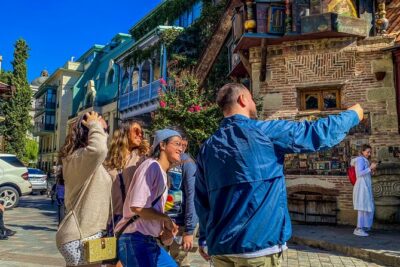
Tbilisi Walking Tour Including Cable Car and Traditional Bakery
Read our review →
Evening Walking & Talking Tour with Wine & Boat Ride
Read our review →
Old Tbilisi Highlights walking tour with wine & 10 tastings
Read our review →
Old Tbilisi Tour: Private Walking Tour With Wine Tasting
Read our review →
Private Tbilisi Food Tour: 9 Tastings Walk in Bohemian District
Read our review →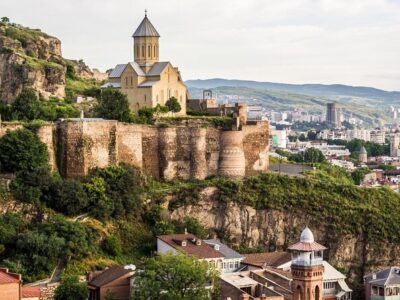
Tbilisi Old Town Walking Tour with a Local Guide
Read our review →
Discover Tbilisi: Hidden Gems and Iconic Sights Walking Tour
Read our review →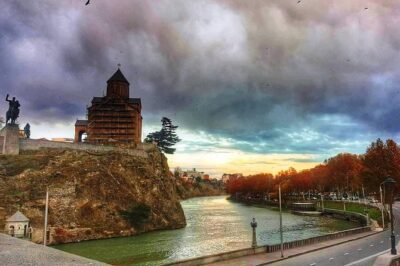
Browse the lists this tour appears in