
Reviewed · MTSKHETA & JVARI TOURS
Sacred Sites and Ancient Wonders: Jvari, Mtskheta and Uplistsikhe
Georgia packs centuries into a short drive. This private day tour links hilltop Jvari, royal Mtskheta, Stalin-era Gori, and the rock-cut town of Uplistsikhe in about seven hours. I like the excellent variety, moving from Georgian Orthodox sites to Soviet history and pre-Christian archaeology. I also like the private vehicle, hotel pickup, and guide, since this route is far easier with someone handling the driving.
The main drawback is the pace. You get only about an hour at the major stops, and the tour covers several sites in one day. The Stalin Museum and Uplistsikhe also cost extra, so the $100 per-person price is not the complete cost.
In This Review
- Key points at a glance
- Why this seven-hour route works from Tbilisi
- Jvari Monastery and the meeting of two rivers
- Mtskheta and the solemn Svetitskhoveli Cathedral
- Gori and the complicated story of Stalin
- Uplistsikhe, the rock-cut city on the old Silk Road
- The guide can make the difference
- What the $100 price really includes
- Who should book this day trip?
- Practical details before you reserve
- Should you book it?
- FAQ
- How long does the tour last?
- What time does the tour begin?
- Is transportation included?
- Is this a private tour?
- Are entrance tickets included?
- Are lunch, food, and drinks included?
- Can I cancel for a full refund?
Key points at a glance
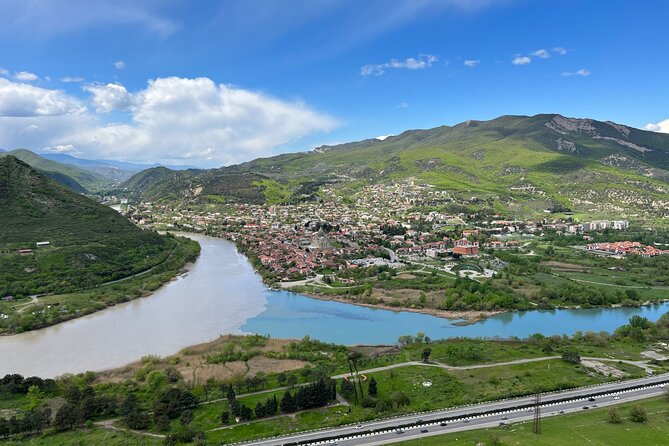
- Jvari gives you the big opening view: The sixth-century monastery looks over Mtskheta and the meeting point of the Aragvi and Mtkvari rivers.
- Mtskheta connects Georgia’s royal and religious past: Svetitskhoveli Cathedral is a UNESCO World Heritage site and one of the country’s most important churches.
- Gori adds a difficult modern chapter: The Stalin Museum presents the life of the Soviet leader in the city where he was born and raised.
- Uplistsikhe is the most unusual stop: This old Silk Road center is carved directly into rock, with streets, chambers, and public spaces cut from the stone.
- Private transport improves the day: Hotel pickup, hotel drop-off, fuel, a driver-guide, and a private vehicle are included.
- Budget for 30 GEL in entrance fees: The Stalin Museum costs 15 GEL and Uplistsikhe costs another 15 GEL per person.
Why this seven-hour route works from Tbilisi
This is a useful day outside the capital when you want several major sights without arranging transport yourself. The route has a clear rhythm: a short scenic stop at Jvari, a longer visit in Mtskheta, a historical hour in Gori, and a final hour at Uplistsikhe.
The starting time is 10:00 a.m., which gives you a relaxed morning departure. Hotel pickup and drop-off are included, and the day ends back at the meeting point in Tbilisi. You do not need to piece together separate taxis, buses, or intercity connections.
The tour is private, so only your group participates. That matters here. You can ask the guide to explain a church detail, pause over a view, or clarify the complicated story surrounding Stalin. The experience is not built around a large group being hurried from one photo stop to another.
The itinerary is still full. Four substantial stops in seven hours leave limited room for long meals or unplanned wandering. Food and drinks are not included, and lunch is also excluded, so plan your expectations accordingly. This works best if you see the day as a focused history-and-sights outing rather than a slow countryside excursion.
More Gori and Uplistsikhe trips:
- Day Trip to Mtskheta Gori and Uplistsikhe
★ 5.0 · 1,801 reviews - Mtskheta-Gori-Uplistsikhe
★ 5.0 · 112 reviews - Mtskheta, Jvari, gori, uflistsikhe, history and panorama (group tours)
★ 4.5 · 107 reviews
Jvari Monastery and the meeting of two rivers
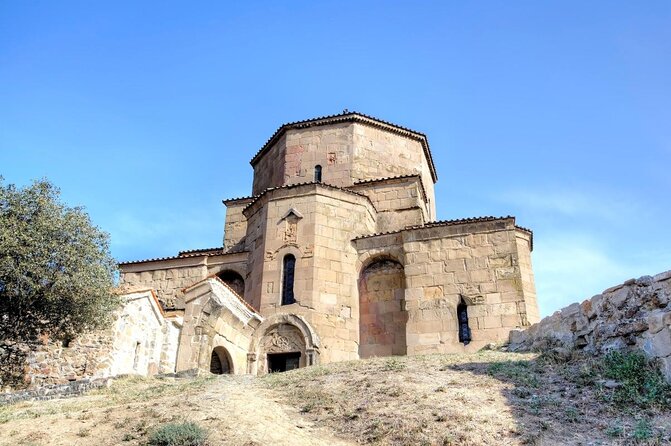
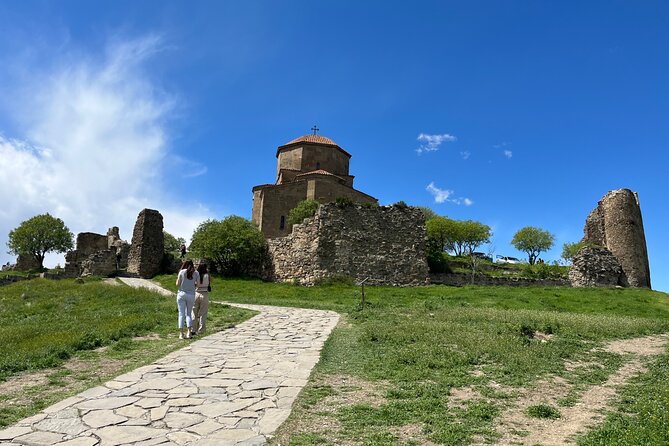
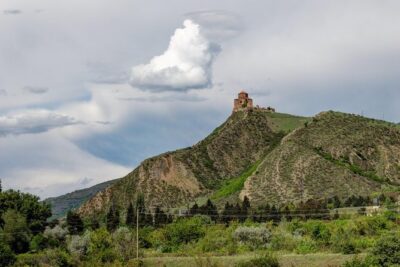
Jvari Monastery is the first stop, with about 30 minutes set aside. The church dates from the sixth century and sits above Mtskheta, giving you a wide view over the old capital and the meeting of the Aragvi and Mtkvari rivers.
The setting does much of the work. From the hill, you can understand why Mtskheta became such an important center. The rivers helped define the area, while the elevated monastery provided a commanding place for worship and a clear view across the surrounding country.
Jvari is a Georgian Orthodox monastery, so respectful clothing and quiet behavior are sensible. The tour information does not list an entrance charge for this stop. With only half an hour, you will have time to see the church, take in the view, and hear the main story, but not linger over every stone.
I would pay attention to the contrast between the simple, sturdy church and the broad view outside. Jvari is not a museum packed with objects. Its appeal comes from its age, setting, and role in Georgia’s religious story.
The short visit also makes this a good first stop. You begin with a strong visual impression before moving down to Mtskheta itself. If you prefer slow photography or extended quiet time at religious sites, you may wish the schedule allowed longer here.
Mtskheta and the solemn Svetitskhoveli Cathedral
The next stop lasts about an hour in Mtskheta, a town founded in the fifth century BC. It served as the capital of the early Georgian Kingdom of Iberia from the third century BC until the fifth century AD, when the capital moved to Tbilisi.
Mtskheta remained important after that political shift. Georgian kings were crowned and buried here, which helps explain why the town still carries such weight in the national story. You are not simply visiting an old settlement. You are visiting a former royal center that remained a religious heart.
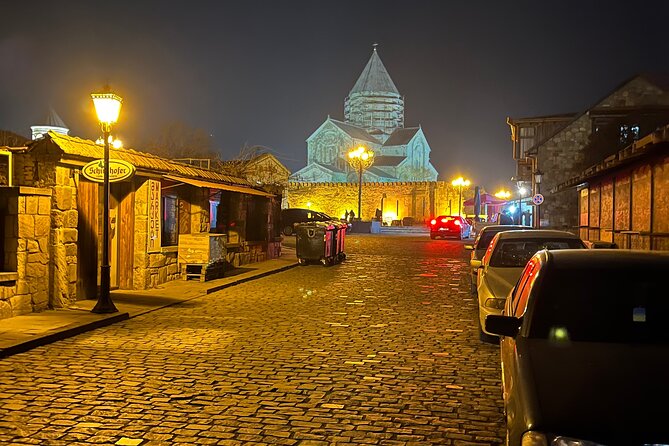
The focus is Svetitskhoveli Cathedral, an Early Medieval masterpiece recognized by UNESCO as a World Heritage site. A Georgian tradition holds that Christ’s robe lies beneath the cathedral. That belief gives the church unusual spiritual importance, even for people who are mainly interested in architecture or history.
An hour should give you enough time to enter the cathedral, look at the structure, and walk around the central part of Mtskheta. Your guide can help connect the building to the town’s earlier role as a capital and burial place.
This is also a place where the tone matters. Svetitskhoveli is an active Georgian Orthodox church, not merely an old monument. Services or local religious activity may shape your visit, and you should be prepared to keep your voice low and dress respectfully.
I like the balance between Jvari and Mtskheta. Jvari shows the town from above, while Svetitskhoveli brings you into its religious center. Together, the stops make more sense than either one alone.
Gori and the complicated story of Stalin
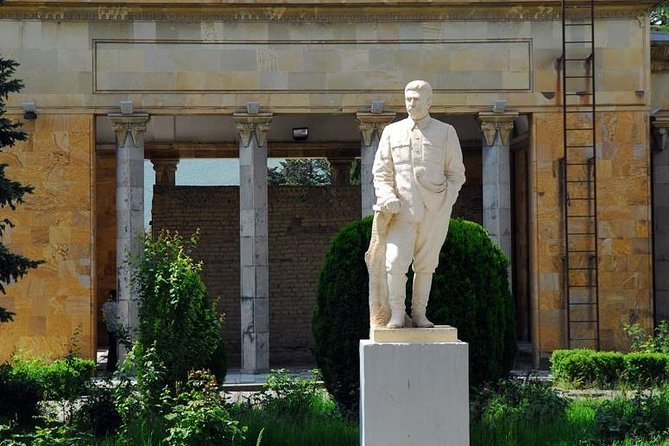
The route then continues to Gori, where the Stalin Museum receives about an hour. Gori is known as the birthplace of Joseph Stalin, the leader of the Soviet Union, and the museum occupies the house where he was born and grew up.
The museum also displays Stalin’s armored train. That unusual object gives the visit a physical connection to the scale and security of his political life. The small birthplace and the armored train create a striking contrast: one is tied to his early years, while the other reflects the power he later held.
The museum is not a neutral sightseeing stop in the same way as Jvari or Svetitskhoveli. Stalin’s legacy is politically and morally difficult, and the way his story is presented matters. I would recommend going in with questions rather than expecting a simple heroic account.
A guide can be especially useful here. The supplied tour feedback specifically praises guides Irakli and Davit for clear conversation, extra stories, and for pointing out places the visitors might otherwise have missed. One account also describes good handling of a change in plans, suggesting some flexibility when the day does not unfold exactly as expected.
The museum ticket is not included. Admission is listed as 15 GEL per person. You should also remember that the general tour price does not cover food, drinks, lunch, or any other extra admission.
An hour is enough for a purposeful visit, but perhaps not enough if you want to read every display closely. If Stalin is your main reason for booking, you may find the schedule tight. If he is one part of a wider Georgian history day, the stop gives you an effective introduction without taking over the entire outing.
More Mtskheta and Jvari trips:
- Tbilisi:Mtskheta,Jvari,Bazaar,wine tasting,Chronicles of Georgia
★ 5.0 · 730 reviews - Mtskheta-Jvari-Uplistsike-Chronicle of Georgia, PRIVATE Trip
★ 5.0 · 105 reviews - Tbilisi – Mtskheta – Jvari. Full City Tour on Hop On Hop Off Bus
★ 4.5 · 91 reviews - Ancient Georgia Group Tour: Mtskheta,Jvari, Gori, Uplistsikhe
★ 4.5 · 73 reviews
Uplistsikhe, the rock-cut city on the old Silk Road
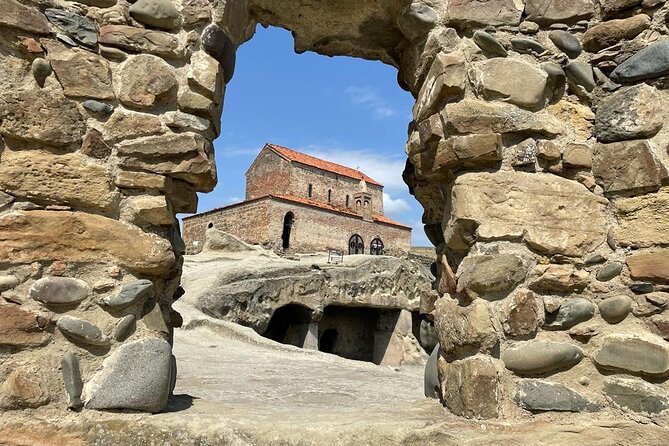
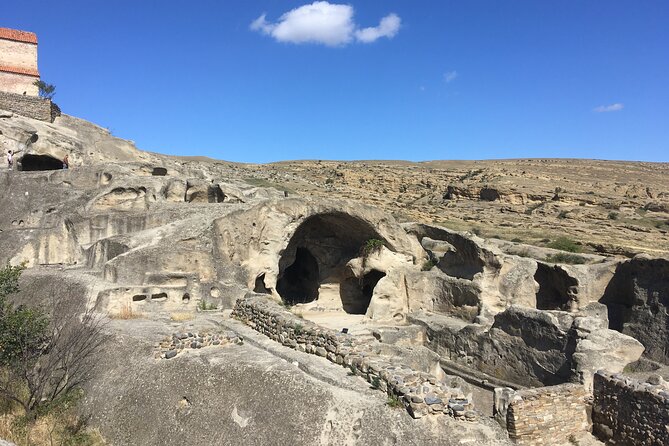
Uplistsikhe is the final major stop, with about an hour to explore. Its name means Fortress of the Lord, and the site is an ancient town cut into rock. It sat on the route of the old Silk Road and served as a strategic and commercial center.
At its height, Uplistsikhe is said to have had a population of 20,000. That figure helps you picture the place as more than a few caves. It was a functioning settlement with spaces for trade, worship, living, and public life, all shaped from the rock.
The appeal is physical. You walk through a site where the walls, rooms, and paths are part of the hillside itself. The stone makes the town feel exposed and practical, quite different from the formal religious architecture in Mtskheta.
The site is also likely to be the most demanding part of the day. The tour information does not give detailed terrain or accessibility notes, so you should be ready for an outdoor archaeological visit rather than a flat indoor museum. Comfortable shoes are a sensible choice, even though the exact walking conditions are not specified.
Admission costs 15 GEL per person and is paid separately. The one-hour visit lets you see the main character of the site, but anyone fascinated by ancient settlements may want more time. The schedule favors a broad first look over a detailed archaeological study.
Uplistsikhe is a strong final stop because it changes the scale of the story again. You move from Georgian Christianity and royal tradition to Soviet-era politics, then finish with a settlement shaped by trade and rock. That range is the chief strength of this tour.
The guide can make the difference
The itinerary is good on paper, but the guide will shape how much you take from it. The strongest comments about this experience focus on personal communication, storytelling, and a willingness to adjust when plans change.
Irakli is specifically praised for pleasant conversation and for sharing stories throughout the day. Davit is also singled out for showing additional sites that were not expected at first. Those details suggest that the guide is not there only to drive between checkpoints.
Because the tour is private, you have a better chance of getting answers suited to your interests. You can ask for more context at Mtskheta, a clearer explanation of Stalin’s place in Georgian history, or a practical orientation at Uplistsikhe.
Still, the exact guide is not guaranteed in the information provided. Treat the named guides as examples of the service guests have received, not as a promise that one of them will lead your outing.
What the $100 price really includes
At $100 per person, this is not the cheapest way to see the region. But the price includes a private vehicle, fuel surcharge, driver-guide, hotel pickup, and hotel drop-off. Those inclusions matter when four stops are spread across a broad route outside Tbilisi.
The private format is the main value. If you are traveling with friends or family, the cost buys door-to-door transport and a guide focused only on your group. Group discounts are also offered, although no discount amount is provided, so ask for the final group price before booking.
You need to add 30 GEL per person for the two listed admission tickets:
- Stalin Museum: 15 GEL
- Uplistsikhe: 15 GEL
Lunch, drinks, and any other ticket are extra. Since the day lasts about seven hours, the lack of an included meal is manageable, but you should not assume food is part of the arrangement.
I see the tour as good value for people who want convenience and context in one day. It is less compelling if you already have a car, prefer to spend several hours at one archaeological site, or want a food-focused experience.
Who should book this day trip?
This outing suits you if you are staying in Tbilisi and want a compact introduction to several major sites. It is especially useful for first-time visitors who want religious history, royal Georgia, Soviet history, and archaeology in one outing.
It also works well for small groups. A private vehicle means you do not share the day with strangers, and the guide can focus on your group’s questions. The experience is listed as suitable for most people and is near public transportation, though the tour itself includes hotel pickup and drop-off.
Families with older children may appreciate the variety. A cathedral alone can feel abstract to younger visitors, but the armored train and rock-cut city provide more physical points of interest. The tour does require attention and a fairly active day across several sites.
You may want another plan if you prefer a slow religious tour, a long museum visit, or a full day devoted to Gori. The schedule offers breadth, not depth. It gives you a clear taste of each place, then returns you to Tbilisi.
Practical details before you reserve
Your start time is 10:00 a.m., and the activity ends back at the meeting point in Tbilisi. Confirmation is provided at booking, and mobile tickets are available.
The experience offers free cancellation if you cancel at least 24 hours before the local start time. Cancellations made less than 24 hours before departure are not refundable, and changes inside that period are not accepted.
Wear respectful clothing for the churches and practical shoes for Uplistsikhe. Since lunch and drinks are not included, plan for your own food arrangements. The supplied information does not specify a meal stop, so do not count on one being built into the schedule.
Most of all, keep the timing in mind. Thirty minutes at Jvari and one hour at each of the other principal stops creates a brisk but sensible outline. Ask your guide early in the day how the timing is likely to work, especially if one site matters more to you than the others.
Should you book it?
I would book this tour if you want maximum variety with minimum transport planning. Jvari and Mtskheta give you Georgia’s religious and royal center, Gori adds a challenging modern figure, and Uplistsikhe supplies the day’s most unusual ruins.
I would skip it only if you need long, unhurried visits or if Stalin Museum is your sole priority. For most people with one free day in Tbilisi, the private vehicle, hotel service, guide, and four very different sites make the $100 price reasonable, provided you add the 30 GEL admission cost and bring money for food.
FAQ
How long does the tour last?
The tour lasts approximately seven hours.
What time does the tour begin?
The start time is 10:00 a.m.
Is transportation included?
Yes. The tour includes a private vehicle, fuel surcharge, driver-guide, hotel pickup, and hotel drop-off.
Is this a private tour?
Yes. Only your group participates in the activity.
Are entrance tickets included?
No. The Stalin Museum costs 15 GEL per person, and Uplistsikhe costs 15 GEL per person. These tickets are paid separately.
Are lunch, food, and drinks included?
No. Food, drinks, and lunch are not included.
Can I cancel for a full refund?
Yes, if you cancel at least 24 hours before the experience start time. Cancellations made less than 24 hours before the start time are not refunded.
Recently added around Tbilisi
- Northern Armenia Highlights Tour from Tbilisi★ 5.0 · 3 reviews
- Wild Georgia 4WD PACK Adventure through Kakheti and Kazbegi 2in1★ 5.0 · 3 reviews
- Kakheti wine region – Private Tour★ 5.0 · 3 reviews
- Private Full Day Trip to Kazbegi Mountains★ 5.0 · 3 reviews
- Kakheti With Top Destinations★ 5.0 · 3 reviews
- Jvari monastery & Mtskheta – Half day group tour from Tbilisi★ 5.0 · 3 reviews
- Borjomi – Rabati -Vardzia Private Full Day Tour from Tbilisi★ 5.0 · 3 reviews
- Private Effortless transfer from Tbilisi to Gudauri ski resort★ 5.0 · 3 reviews
Mtskheta & Jvari Tours, compared.
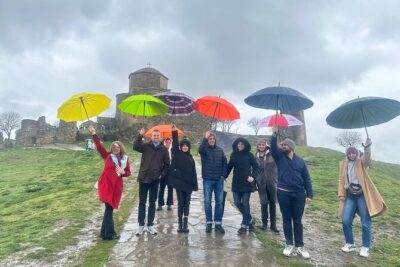
Mtskheta,Jvari,Bazaar,wine tasting,Chronicles of Georgia
Read our review →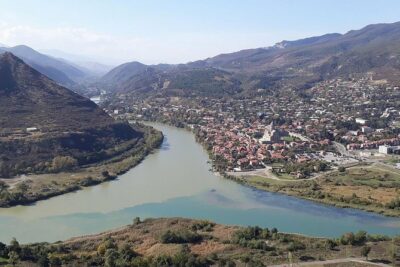
Mtskheta, Jvari, gori, uflistsikhe, history and panorama (group tours)
Read our review →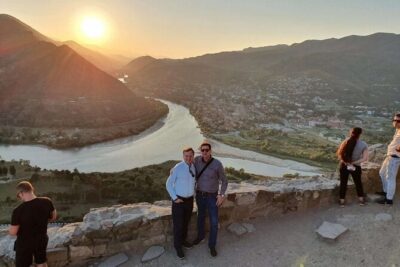
Jvari-Uplistsike-Chronicle of Georgia, PRIVATE Trip
Read our review →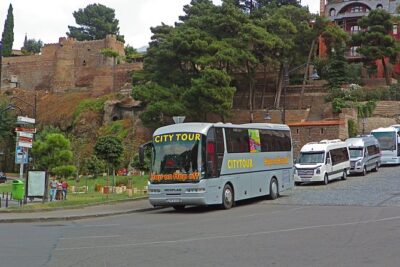
Mtskheta – Jvari. Full City Tour on Hop On Hop Off Bus
Read our review →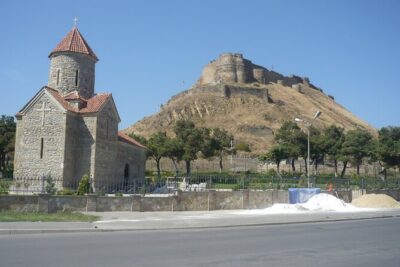
Ancient Georgia Group Tour: Mtskheta,Jvari, Gori, Uplistsikhe
Read our review →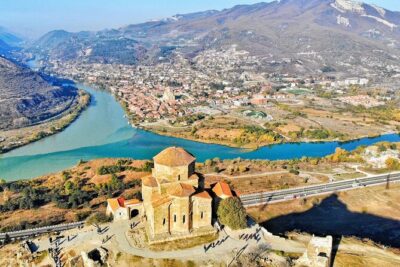
Ancient Mtskheta and Chronicle of Georgia half day tour
Read our review →Browse the lists this tour appears in