
Reviewed · MTSKHETA & JVARI TOURS
Mtskheta, Jvari, gori, uflistsikhe, history and panorama (group tours)
Ancient Georgia fits into one long day. This outing links Jvari and Mtskheta, two of the country’s most important Christian sites, with the cave city of Uplistsikhe and an optional stop at Gori. I like the variety: you move from hilltop views to cathedral art, then into carved stone rooms and old pagan sanctuaries. I also like the small group size, capped at 15 people, and the chance to travel with guides such as Luka, Paata, Tornike, Emilia, or George. The main concern is uneven guiding, especially in English, with some departures reportedly giving Russian explanations much more time.
You leave Tbilisi at 9 a.m. and return to the same meeting point after roughly nine hours. At $19, the base price is remarkably low for a full day with transport and a guide, but you need extra cash for Uplistsikhe, the Stalin Museum if you choose it, and lunch. Bring sturdy shoes, water, and patience for a packed schedule.
In This Review
- Key points to know before you book
- Why this Tbilisi day trip covers so much ground
- Jvari Monastery and the meeting of two rivers
- Svetitskhoveli Cathedral in Mtskheta
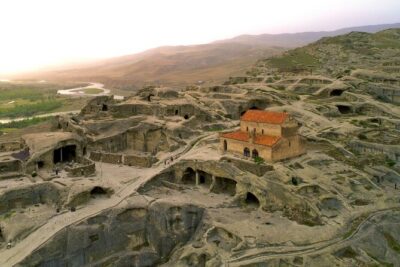
- Uplistsikhe, Georgia’s carved stone city
- Lunch and the local restaurant stop
- Gori and the optional Stalin Museum
- Guide quality and language balance
- What the $19 price really buys you
- Who should book this Georgian history day?
- Should you book it?
- FAQ
- How long does the tour last?
- Where does the tour start?
- Is the tour offered in English?
- Are entrance tickets included?
- Is the Stalin Museum visit guaranteed?
- Can I cancel for a full refund?
Key points to know before you book
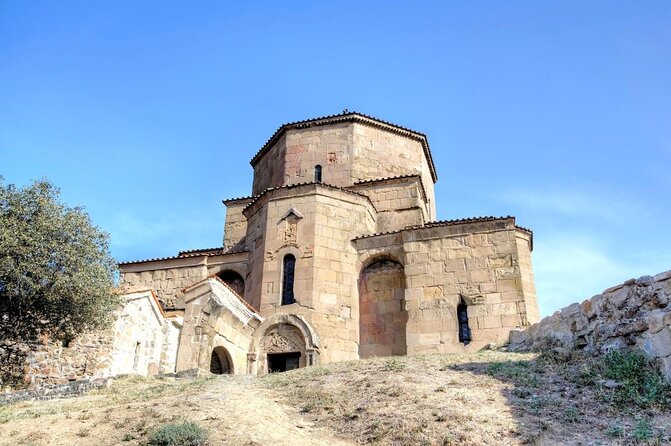
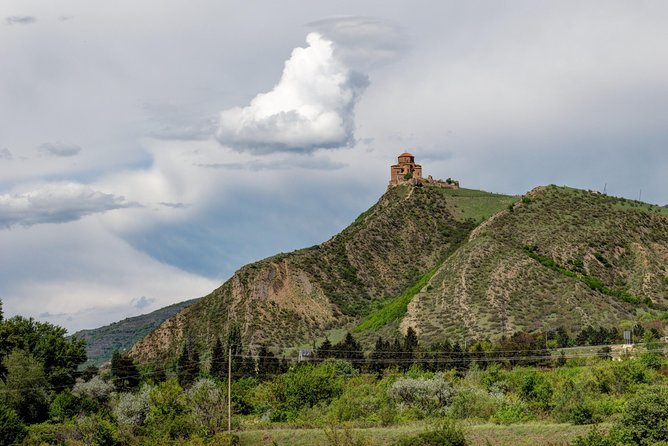
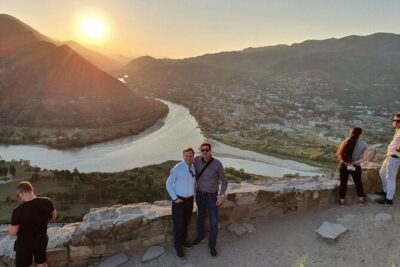
- Jvari gives you the day’s finest panorama: Look down on Mtskheta and the meeting point of the Aragvi and Kura rivers.
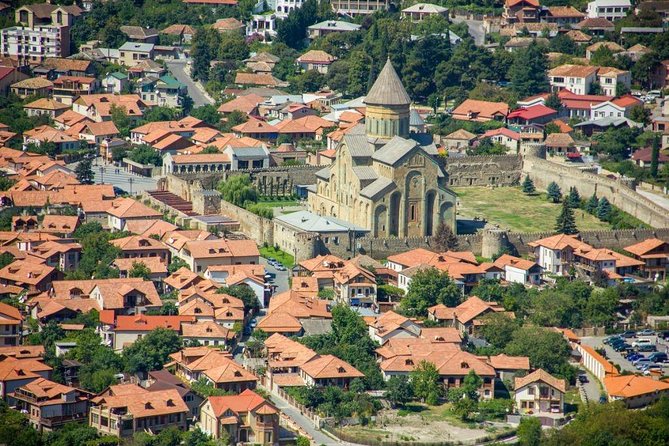
- Svetitskhoveli is the spiritual heart of the route: This patriarchal cathedral is the highlight for many people, even if churches are not normally your first choice.
- Uplistsikhe requires walking and attention: The ancient cave city has stone corridors, rooms, ritual spaces, and wide views over the Kura Valley.
- Gori is an optional group decision: The Stalin Museum is not guaranteed as part of every departure, and its admission costs extra.
- English service may vary: Several guides are praised by name, but some English-speaking customers received short explanations while Russian commentary took priority.
- The $19 price is only the starting point: Add 17 GEL for Uplistsikhe and 17 GEL for the Stalin Museum according to the current tour details, plus your meal.
Why this Tbilisi day trip covers so much ground
I like this route because it gives you several different versions of Georgia in one day. You see the country’s Christian center, its medieval religious architecture, its pre-Christian past, and the twentieth-century legacy of Joseph Stalin.
That variety is also the tour’s weakness. You are not getting a slow, reflective visit to one place. You are making a broad circuit by minibus, with several stops and a long ride back to Tbilisi. If you want time for every inscription, side path, and museum display, this schedule may feel tight.
The group is limited to 15 people, which is better than a large coach. Still, the quality of the day depends heavily on the assigned guide. Luka received especially warm praise for explaining the history clearly and making the stops feel more meaningful. Paata was also praised for his easy manner and strong explanations, while Tornike was noted for presenting information in simple English and helping with practical matters.
That personal element matters here. Jvari and Uplistsikhe are more rewarding when someone explains what you are looking at, rather than simply dropping you at a stone complex with ten minutes of free time.
More Gori and Uplistsikhe trips:
- Day Trip to Mtskheta Gori and Uplistsikhe
★ 5.0 · 1,801 reviews - Mtskheta-Gori-Uplistsikhe
★ 5.0 · 112 reviews - Day tour to Chronicles of Georgia, Gori city, Uplistsikhe cave
★ 5.0 · 86 reviews
Jvari Monastery and the meeting of two rivers
Jvari is the first major stop, with about an hour set aside. The sixth-century monastery sits high above Mtskheta, and the reward is immediate: a broad view toward the old Georgian capital and the joining of the Aragvi and Kura rivers.
The setting has literary as well as religious importance. The route connects with the places associated with Mikhail Lermontov’s poem Mtsyri, and the river junction inspired famous descriptions of the area. You do not need to know the poem to enjoy the view, but the guide’s explanation can add a useful layer to what otherwise might be a quick photo stop.
The walk and approach can involve uneven ground, so comfortable shoes are not optional advice. The monastery itself is a working religious site, not only a sightseeing attraction. Dress respectfully and expect a quiet atmosphere around the church.
I would place Jvari among the strongest parts of the day because it delivers both scenery and context. The drawback is that the visit lasts about an hour, so you may need to keep moving rather than linger over the view.
Svetitskhoveli Cathedral in Mtskheta
The next major church visit is Svetitskhoveli Cathedral, usually with about an hour to explore. Mtskheta was an important center of Georgian Christianity, and this cathedral remains the patriarchal cathedral of the Georgian Orthodox Church.
Inside, the guide is expected to explain the cathedral’s role in Georgia’s religious story and its connection with Christian relics. The site is associated with the tunic of Jesus Christ, the mantle of the prophet Elijah, and relics of Saint Andrew the First-Called. These claims are part of the religious tradition surrounding the cathedral, and they help explain why the building matters far beyond its architecture.
For me, this is likely the most rewarding church visit on the route. One customer called it the best stop of the day and praised its beauty, a judgment that makes sense even if you are not religious. The scale, age, and ceremonial importance give Svetitskhoveli more weight than a quick roadside church visit.
You should keep your expectations practical. An hour is enough to see the cathedral and hear the main story, but not enough for a detailed study of every architectural feature. The tour may also include a look around Mtskheta itself, though the supplied schedule gives the clearest time allocation to the cathedral.
Uplistsikhe, Georgia’s carved stone city
Uplistsikhe is the longest stop, with about two hours and 20 minutes listed for the visit and meal. This is the part of the tour that requires the most physical effort and curiosity.
The complex dates from the end of the second millennium to the beginning of the first millennium BC. Its rooms and passageways were carved into rock, creating a settlement of living quarters, work areas, storage spaces, and places connected with pagan worship.
You move through stone corridors and open sections of the site while looking out over the Kura Valley. The remains are not presented as a polished museum. You are walking through an exposed archaeological complex, so the appeal comes from imagining how people used the rooms rather than from intact furniture or perfect walls.
The guide’s explanation is particularly useful here. The site’s links with ancient states such as Urartu and Media, along with its later growth and decline, give shape to the bare stone. Without that background, Uplistsikhe can become a maze of similar-looking chambers.
Allow for heat, sun, uneven footing, and a fair amount of walking. One especially important tip comes from the mixed feedback about timing: some people felt their visit to the cave city was rushed and that they saw too little. Stay aware of the meeting time, but do not be afraid to ask the guide how much time you have for the upper paths and church.
There is a church at the top of the complex that several people found especially appealing. The views from the higher sections also help break up the stone corridors.
The listed entrance fee is 17 GEL in the tour details, although another part of the information mentions 15 GEL. That discrepancy is worth checking before departure. In either case, the admission is not covered by the $19 base price.
More Mtskheta and Jvari trips:
- Tbilisi:Mtskheta,Jvari,Bazaar,wine tasting,Chronicles of Georgia
★ 5.0 · 730 reviews - Mtskheta-Jvari-Uplistsike-Chronicle of Georgia, PRIVATE Trip
★ 5.0 · 105 reviews - Tbilisi – Mtskheta – Jvari. Full City Tour on Hop On Hop Off Bus
★ 4.5 · 91 reviews - Ancient Georgia Group Tour: Mtskheta,Jvari, Gori, Uplistsikhe
★ 4.5 · 73 reviews
Lunch and the local restaurant stop
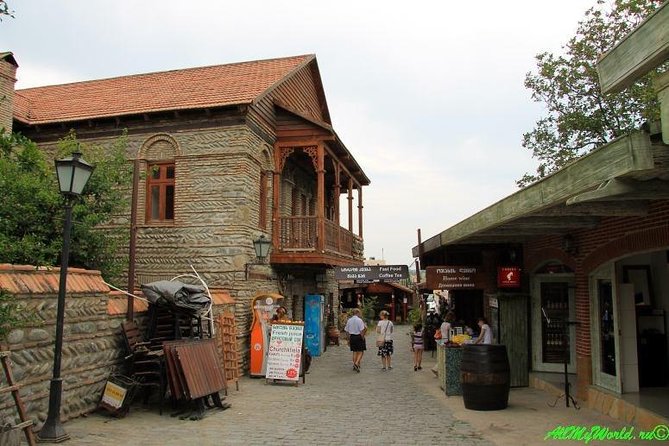
The schedule includes a stop at a local restaurant where you can taste Georgian products. Lunch is not included, and the restaurant is paid separately.
This can be a welcome pause after walking around Uplistsikhe. It gives you a chance to sit down, eat something local, and reset before the final part of the day. The stop is also practical because the route is long and the next major visit, if selected, is in Gori.
Food quality may be uneven. One account described the meal as oily and the service attitude as less than welcoming. I would treat the restaurant as a convenient group stop rather than a destination meal. If you have dietary needs, ask what is available before ordering, and keep a snack with you in case the meal does not suit you.
The best version of this stop is simple: eat enough, use the break wisely, and save your attention for the sites rather than expecting a carefully planned food tour.
Gori and the optional Stalin Museum
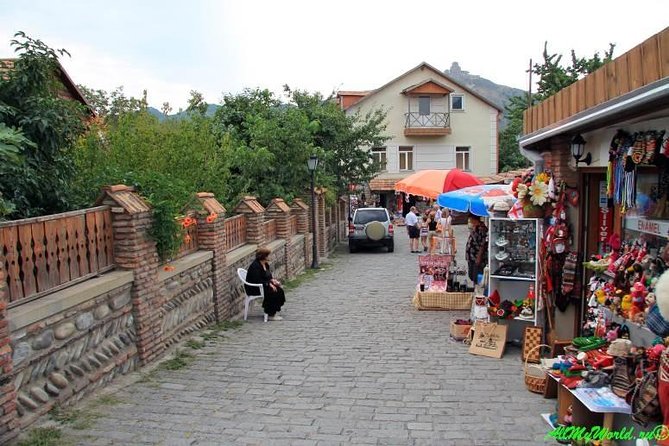
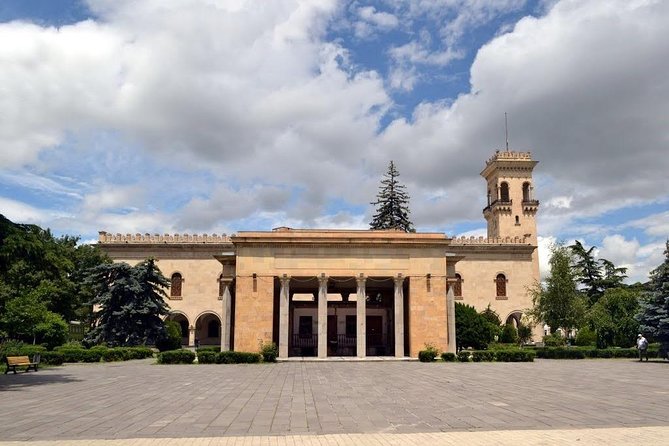
The second part of the trip may include Gori and its Stalin Museum, depending on the group’s wishes. Gori is Stalin’s birthplace, and the museum presents his personal items, furniture, and a preserved sculpture, with a museum guide leading the visit.
This is a complicated stop. The museum is not a neutral celebration of a harmless historical figure. Stalin was a Georgian-born Soviet dictator whose rule caused enormous suffering and death. The attraction has value for understanding how his Georgian origins are presented, but you should expect a site shaped by politics, memory, and selective storytelling.
Some people will find the museum important. Others will find it uncomfortable or unhelpful, especially if they prefer to spend more time at Uplistsikhe or Mtskheta. Since the stop is described as being chosen by the group, ask at the beginning of the day whether Gori is planned and how long it will receive.
The admission price is listed as 17 GEL, though another section gives 15 GEL. Again, confirm the exact amount locally. The fee is not part of the base price.
One practical issue deserves attention: the published information is not fully consistent about the route and duration. The main description presents about nine hours, while a response to a complaint refers to a four to five hour program. The detailed sequence and return to Tbilisi suggest you should plan for a full day, not a short half-day outing.
Guide quality and language balance
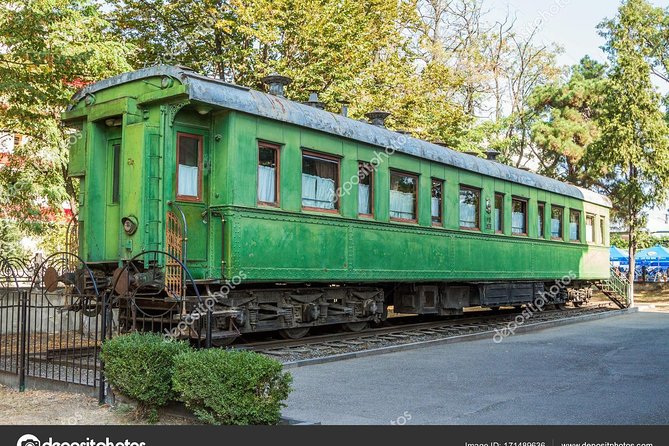
A driver-guide can make this route feel personal and clear, or it can make the long day feel like a transfer between parking lots. The strongest names attached to this outing are Luka, Paata, Tornike, Emilia, and George. Luka was praised for turning each site into a fuller history lesson, Paata for combining warmth with useful explanations, and Tornike for speaking in easy-to-follow English.
You should also know about the language concern. The activity is offered in English, but some departures appear to serve both English and Russian speakers. Several customers felt the Russian explanations were much longer, leaving the English translation brief. One person described the English as elementary and another said the guide spent too little time explaining the sites.
That does not mean every departure will have this problem. It does mean you should confirm the language arrangement at pickup and ask for the English explanation before the group moves on. If the guide is named in advance, asking for Luka, Paata, Tornike, Emilia, or George may be useful, but the information does not guarantee a particular guide.
Safety and group management also matter on a route with uneven archaeological paths. There are serious complaints about phone use while driving, unsafe driving, and a guide failing to keep track of people at Uplistsikhe. These accounts conflict with the strong praise for other departures, so I would pay attention to how the guide handles the first stop. A professional guide should make meeting times and group boundaries clear.
What the $19 price really buys you
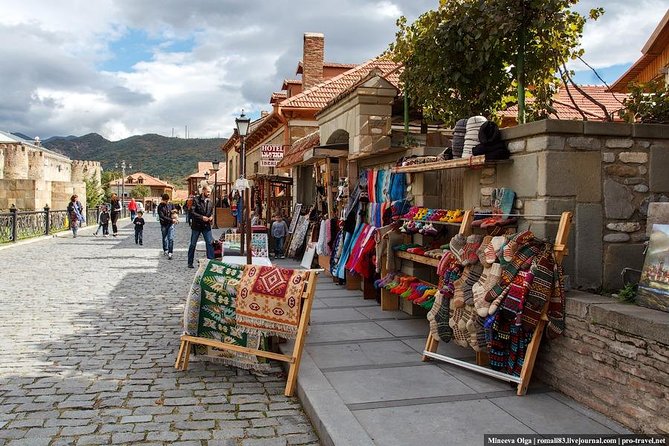
At $19 per person, this is one of the more inexpensive ways to reach several major sites outside Tbilisi. Transport, guide service, and the basic day plan are included. For a small group of up to 15, that is good value if the guide is effective and the vehicle is comfortable.
The headline price does not cover everything. Set aside money for:
- Uplistsikhe admission, listed as 17 GEL in the main details
- Stalin Museum admission, also listed as 17 GEL
- Lunch or dinner
- Any drinks or personal purchases
The price is best understood as an economical transport-and-guiding package, not an all-inclusive tour. You are paying very little for a long day, so compromises are possible: a basic restaurant, limited time at some sites, and a guide whose English ability may vary.
If you value convenience and want to see the four locations without arranging separate transport, the cost is attractive. If you want a polished, carefully paced tour with guaranteed equal bilingual commentary, a more expensive small-group option may be safer.
Who should book this Georgian history day?
I would choose this trip if you have limited time in Tbilisi and want a broad introduction to the region. It suits you if churches, archaeology, scenic viewpoints, and twentieth-century history all sound worthwhile.
It is also a good match if you prefer having transport arranged. The route covers too much ground for an easy independent day unless you are comfortable organizing multiple transfers.
You may want a different plan if you dislike long days, uneven walking surfaces, optional stops decided by the group, or religious sites. Uplistsikhe needs proper walking shoes, and the schedule does not promise a leisurely pace.
I would also think twice if precise English interpretation is essential. The named guides received very positive praise, but the language complaints are too consistent to ignore. Confirm the language and the planned Gori stop before you set out.
Should you book it?
Book it if you want maximum variety for a very low base price and can accept a busy schedule. Jvari’s view, Svetitskhoveli Cathedral, and Uplistsikhe are strong reasons to go, while Gori adds a difficult but worthwhile historical choice.
I would book only after confirming three things: the day’s guide and language, whether Gori is included, and the current entrance fees. With a good English-speaking guide, this can be an excellent introduction to Georgia beyond Tbilisi. With a rushed schedule or weak translation, the same route can feel like too many stops in too little time.
Free cancellation is available if you cancel at least 24 hours before the 9 a.m. start. Poor weather may lead to another date or a full refund.
FAQ
How long does the tour last?
The main tour details give an approximate duration of nine hours, beginning at 9 a.m. and ending back at the meeting point in Tbilisi.
Where does the tour start?
The ticket redemption point is 3 Vakhtang Gorgasali Street in Tbilisi. The activity ends back at the meeting point.
Is the tour offered in English?
Yes, English is listed as an available language. The tour may also include Russian commentary, and English explanations may vary by guide.
Are entrance tickets included?
Admission to Jvari and the Mtskheta church visit is listed as included. Uplistsikhe and the Stalin Museum require separate payment, with both listed at 17 GEL in the main details.
Is the Stalin Museum visit guaranteed?
No. The Gori museum visit is described as an optional stop chosen according to the group’s wishes.
Can I cancel for a full refund?
Yes, if you cancel at least 24 hours before the experience begins. Changes or cancellations made less than 24 hours before departure are not accepted, and poor weather may lead to a new date or a full refund.
More Historical Tours
- Tbilisi old town & soviet heritage – Private driver-guided Tour
★ 5.0 · 83 reviews - A 6-Day Private Expedition into Rich Heritage
★ 5.0 · 34 reviews - Kazbegi-Ananuri-Gudauri: Epic Views & History (Group)
★ 5.0 · 15 reviews - Jewish Heritage Walking Tour with Kosher Wine Tasting
★ 5.0 · 15 reviews
Recently added around Tbilisi
- Northern Armenia Highlights Tour from Tbilisi★ 5.0 · 3 reviews
- Wild Georgia 4WD PACK Adventure through Kakheti and Kazbegi 2in1★ 5.0 · 3 reviews
- Kakheti wine region – Private Tour★ 5.0 · 3 reviews
- Jvari monastery & Mtskheta – Half day group tour from Tbilisi★ 5.0 · 3 reviews
- Private Full Day Trip to Kazbegi Mountains★ 5.0 · 3 reviews
- Kakheti With Top Destinations★ 5.0 · 3 reviews
- Private Effortless transfer from Tbilisi to Gudauri ski resort★ 5.0 · 3 reviews
- Borjomi – Rabati -Vardzia Private Full Day Tour from Tbilisi★ 5.0 · 3 reviews
Mtskheta & Jvari Tours, compared.
Mtskheta,Jvari,Bazaar,wine tasting,Chronicles of Georgia
Read our review →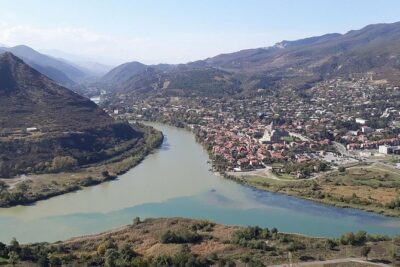
Jvari-Uplistsike-Chronicle of Georgia, PRIVATE Trip
Read our review →
Mtskheta – Jvari. Full City Tour on Hop On Hop Off Bus
Read our review →
Ancient Georgia Group Tour: Mtskheta,Jvari, Gori, Uplistsikhe
Read our review →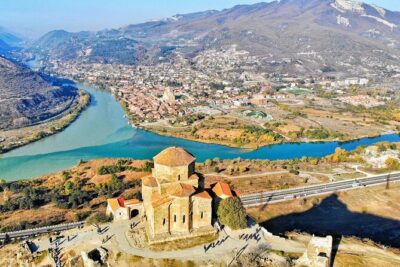
Ancient Mtskheta and Chronicle of Georgia half day tour
Read our review →
Private Day Trip to Gudauri and Kazbegi from Tbilisi via Jvari and Mtskheta
Read our review →Browse the lists this tour appears in