
Reviewed · MTSKHETA & JVARI TOURS
Private Walking Tour in Tbilisi and Mtskheta Old Town
Georgia’s story is written in stone. This private tour connects Tbilisi’s old churches and fortress with the ancient capital of Mtskheta, giving you a useful first look at Georgian faith, politics, and place. I like the personal format, since only your group takes part, and I like the mix of walking, views, and a short private-car ride beyond the city.
The tour also has an unusually strong focus on context. Guide Giorgi received praise for making Georgian history and politics especially informative. The main consideration is pace: four to five hours covers a lot, so some stops are brief and the day includes several churches, stairs, hills, and outdoor viewpoints.
In This Review
- Key reasons this tour is worth considering
- Starting around Liberty Square and entering old Tbilisi
- Anchiskhati Basilica, Tbilisi’s oldest building
- Sioni Cathedral and Tbilisi’s close religious mix
- Jan Shardeni Street, where old meets new
- Metekhi Cathedral above the Mtkvari River
- Riding the Tbilisi aerial tramway
- Narikala Fortress and the best Tbilisi views
- The 30-minute ride to Mtskheta
- Jvari Church above the meeting rivers
- Svetitskhoveli Cathedral in ancient Mtskheta
- What the $55 price really covers
- The guide factor: Giorgi’s history and politics focus
- Who should book this Tbilisi and Mtskheta tour?
- Should you book it?
- FAQ
- Where does the tour start?
- Does the tour include pickup?
- How long does the experience last?
- Is the tour private?
- What language is offered?
- How do you travel from Tbilisi to Mtskheta?
- Is the aerial tramway ticket included?
- Do the churches and Narikala Fortress charge admission?
- Are service animals allowed?
- Can you cancel for a full refund?
Key reasons this tour is worth considering
- Tbilisi and Mtskheta in one half-day: You see the modern capital’s Old Town and Georgia’s former capital without arranging a second excursion.
- A private group with guide Giorgi: The format gives your own group the experience, while one review praised Giorgi’s ability to explain history and politics in greater depth.
- The cable car is included: The aerial tramway adds a quick ride above Tbilisi and leads naturally toward Narikala Fortress.
- A strong religious and cultural route: You visit Georgian Orthodox churches, while the area near Sioni Cathedral also brings a mosque, Armenian church, synagogue, and Catholic church into the story.
- Two excellent viewpoints: Narikala looks across Tbilisi, while Jvari offers views toward Mtskheta and the meeting point of the Mtkvari and Aragvi rivers.
- A simple cancellation window: You can cancel up to 24 hours before the start for a full refund.
Starting around Liberty Square and entering old Tbilisi
The tour begins around Liberty Square, a practical starting point for reaching Tbilisi’s historic center. From here, the route moves through old streets and religious sites before switching from city walking to a private car ride toward Mtskheta.
That change of setting is one of the tour’s best features. You do not spend the entire morning looking at similar buildings. Instead, Tbilisi gives you layers of urban history, while Mtskheta offers a smaller, older setting with major religious sites and broad views.
The total time is listed as roughly four to five hours. That is enough for a substantial introduction, but not enough for long visits at every stop. You should expect a brisk route, especially because the schedule includes eight locations and a drive of about 30 minutes between Tbilisi and Mtskheta.
More Mtskheta and Jvari trips:
- Day Trip to Mtskheta Gori and Uplistsikhe
★ 5.0 · 1,801 reviews - Tbilisi:Mtskheta,Jvari,Bazaar,wine tasting,Chronicles of Georgia
★ 5.0 · 730 reviews - Mtskheta-Gori-Uplistsikhe
★ 5.0 · 112 reviews
Anchiskhati Basilica, Tbilisi’s oldest building
The first stop is Anchiskhati Basilica, described as the oldest building in Tbilisi. The visit lasts about 10 minutes, with no admission charge.
A short stop makes sense here. The basilica is an early anchor for the Old Town route, and its age gives you a clear sense that Tbilisi is not only a scenic city of balconies and river views. It is also a place shaped by centuries of worship, rebuilding, and political change.
Ten minutes will not allow a slow architectural study. I would treat this as an introduction rather than a full church visit. Listen closely to the explanation, then use the rest of the walk to notice how the basilica fits into the surrounding historic streets.
Sioni Cathedral and Tbilisi’s close religious mix
Sioni Cathedral receives about 15 minutes. Like Anchiskhati Basilica, admission is free.
The special value here is the surrounding religious mix. Near Sioni, you can find a Muslim mosque, an Armenian church, a Jewish synagogue, and a Catholic church. The tour includes visiting these nearby places as well, making this more than a stop at one Orthodox cathedral.
That compact cluster helps explain Tbilisi better than a list of dates can. The city sits at a meeting point of cultures and faiths, and you can see that relationship on foot. I especially like this part of the route for anyone interested in politics, religion, or the way communities share one historic city.
The schedule is still tight. Since the cathedral and nearby religious sites are grouped into one short section, you will not have unlimited time inside each place. Modest clothing may also be sensible for church visits, although the supplied tour details do not set out a specific dress code.
Jan Shardeni Street, where old meets new
Jan Shardeni Street is planned for about 15 minutes. It is named for Jean-Baptiste Chardin and represents the meeting of old and new lifestyles in Tbilisi.
This stop changes the tone. After churches and religious history, you get a street-level look at how the Old Town functions today. The route uses the street to show that Tbilisi is not a museum frozen in the past. Historic settings and present-day life occupy the same small area.
Fifteen minutes is enough to understand the point and get your bearings, but you may want to return later if you enjoy browsing or taking photographs. The tour has a fixed route, so this is more a guided introduction than free time for wandering.
More walks:
- Tbilisi Walking Tour Including Cable Car and Traditional Bakery
★ 5.0 · 1,310 reviews - Tbilisi:Evening Walking & Talking Tour with Wine & Boat Ride
★ 5.0 · 572 reviews - Old Tbilisi Highlights walking tour with wine & 10 tastings
★ 5.0 · 276 reviews - Old Tbilisi Tour: Private Walking Tour With Wine Tasting
★ 5.0 · 273 reviews
Metekhi Cathedral above the Mtkvari River
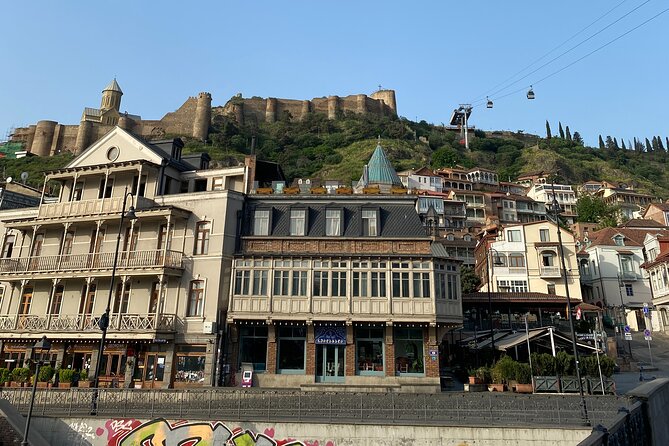
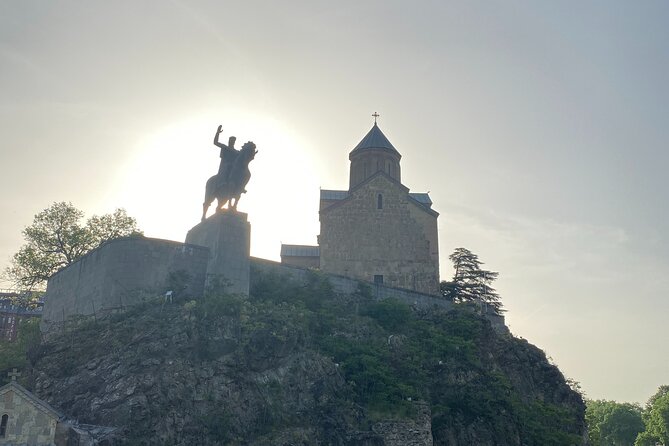
The next stop is Metekhi Cathedral, on the left bank of the Mtkvari River. The visit lasts around 15 minutes and admission is free.
The churchyard includes a statue of King Vakhtang Gorgasali, the fifth-century ruler linked here with the construction of a strong castle and the first church at the site. That detail gives the stop a direct connection to the city’s early story.
The location matters as much as the church. Because Metekhi sits above the river, the stop helps you understand Tbilisi’s physical shape. The Mtkvari is not just a waterway in the background. It divides and connects the city, while the elevated church site gives the route a strong visual pause.
Again, the time is brief. You will get the site’s main story and setting, but the tour is designed to keep moving rather than linger over every carving or corner.
Riding the Tbilisi aerial tramway
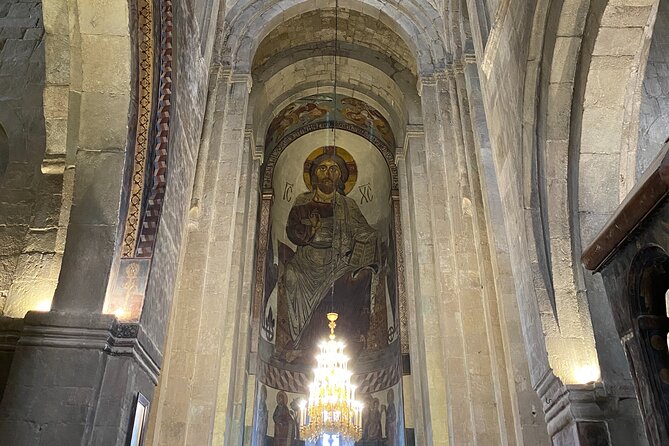
The aerial tramway is scheduled for about 15 minutes, and the ticket is included.
This is a useful change from walking. The cable car offers sightseeing over Tbilisi’s Old Town, allowing you to see the city from above before reaching Narikala Fortress. Since the ride is part of the route rather than an optional extra, you do not need to arrange it separately.
I like the way this section works in the overall plan. Churches and narrow streets can make a city feel close and compressed. The tramway opens the view and shows how the river, old center, and hills relate to each other.
The ride is short, so think of it as a scenic link rather than a major attraction by itself. If you dislike heights, you may want to consider that the tour includes an aerial transport segment. The supplied details do not specify what happens if weather or operations affect the ride, so that is worth confirming when booking if the cable car is a priority for you.
Narikala Fortress and the best Tbilisi views
Narikala Fortress gets the longest Tbilisi stop, about 40 minutes. There is no admission charge.
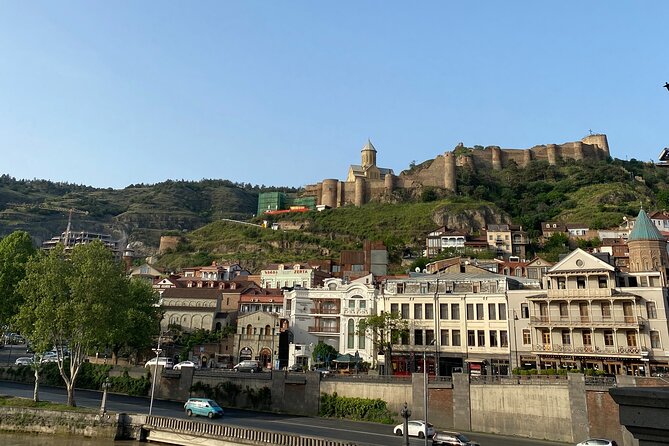
The ancient fortress overlooks Tbilisi and the Mtkvari River. Its first walls are also connected with King Vakhtang Gorgasali in the fifth century. This makes Narikala more than a viewpoint. It ties the city’s defenses, royal history, river position, and hilltop setting together.
Fortresses work best when you can see what they were protecting, and Narikala gives you that chance. From above, Tbilisi’s Old Town is easier to understand as a city built around a river and surrounded by hills.
Forty minutes is a helpful amount of time, but expect some walking around an old fortress site. The tour description does not specify the surface or accessibility conditions, so anyone with mobility concerns should ask Giorgi before booking. Most people can participate, and service animals are allowed, but the route includes elevated historic places and should not be treated like a flat city stroll.
The 30-minute ride to Mtskheta
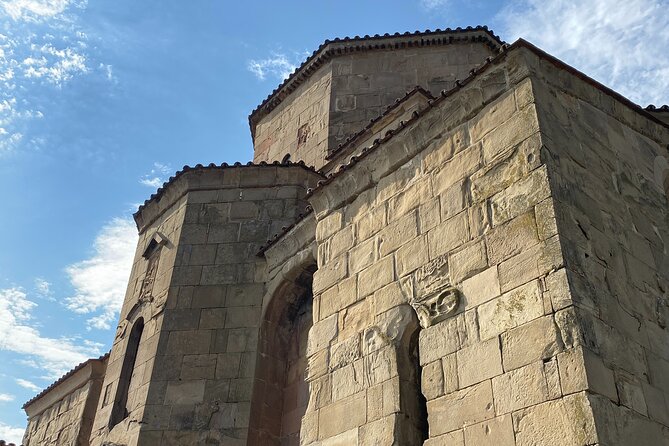
After the Tbilisi portion, your whole group travels by private car to Mtskheta. The drive takes about 30 minutes.
This transfer is a real advantage. You do not need to navigate public transport or organize a separate day trip to the former capital. The private format also keeps the group together, which is useful when the tour has a tight schedule.
The ride creates a natural break between the two parts of the experience. Tbilisi feels like a living capital with a layered Old Town. Mtskheta brings a different scale and a more concentrated set of historic and religious sites.
Because the car ride is part of the tour, you should allow the full four to five hours rather than planning another fixed activity immediately afterward. The exact return time can vary with the pace of the group and road conditions.
Jvari Church above the meeting rivers
Jvari Church receives about one hour. Admission is free.
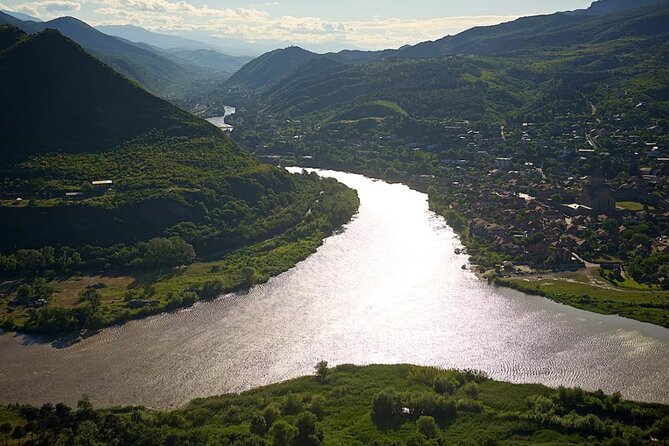
The church is about 14 centuries old and includes ancient castle walls. Its setting is the main attraction for many people: from the hills, you can see the meeting point of the Mtkvari and Aragvi rivers and look toward Mtskheta below.
This is one of the strongest visual parts of the tour. The river junction gives the stop a clear sense of place, while the hilltop position explains why Jvari has such importance as a lookout and religious site. You are not only entering an old church. You are seeing the wider setting that helped make Mtskheta important.
The hour allows more breathing room than the short Tbilisi stops. Use it for the view as well as the building. The description presents Jvari as a hill location, so plan for outdoor conditions and some walking rather than expecting an indoor-only visit.
Svetitskhoveli Cathedral in ancient Mtskheta
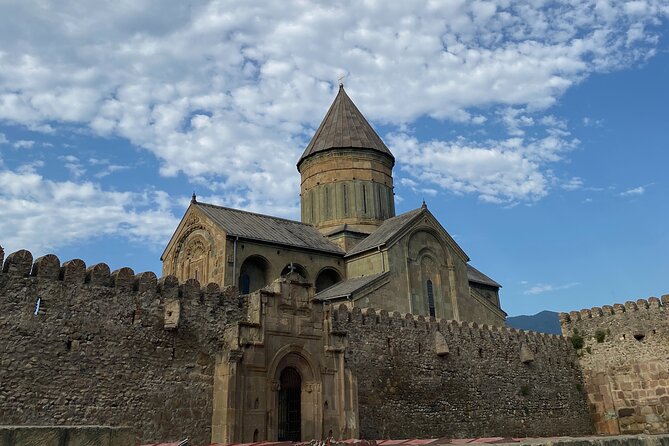
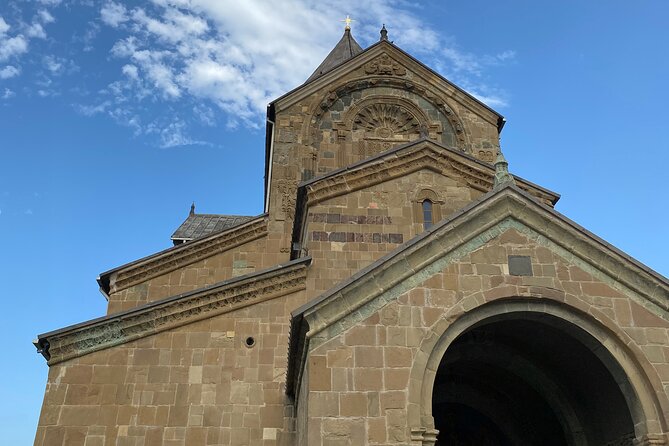
The final major stop is Svetitskhoveli Cathedral, with about one hour in Mtskheta.
The walk through Mtskheta includes a visit to this church and sightseeing connected with the hills around Jvari. Mtskheta is presented as the most ancient capital of Georgia, so the stop gives the tour a fitting close: you finish not in a single isolated monument, but in the historic center of an old Georgian capital.
An hour is enough to give this section weight. After the shorter church visits in Tbilisi, you have more time to take in Mtskheta’s streets and the cathedral itself. The sequence also works well: first see the town from the hills at Jvari, then experience it at street level.
The tour ends with a car ride back to Tbilisi. That return transfer is included in the structure of the experience, so you do not need to solve the journey home yourself.
What the $55 price really covers
At $55 per person, the price is reasonable if you want one guide to handle both Tbilisi and Mtskheta. You are paying for a private activity, English-language guiding, the Tbilisi cable-car ticket, transport between the two cities, and a route that includes several major sites.
The value is strongest for a small group that wants history explained rather than simply pointed out. The private format means your group is the only group taking part, which can make questions easier and keep the day more focused.
The value is less clear if you only want a slow walk through Tbilisi. You will leave the city for Mtskheta, and the route covers a lot in limited time. Someone who prefers long café breaks, shopping, or unplanned wandering may find the schedule too structured.
The free admission at the churches and fortress also keeps extra costs down. The cable-car ticket is included, which is a useful detail since it is one of the more distinctive parts of the city route.
The guide factor: Giorgi’s history and politics focus
Guide Giorgi is an important part of the experience. One detailed review praised the tour with him as highly informative and especially strong for anyone interested in Georgian history and politics. That is the clearest sign of what this tour does best: it aims to explain why the places matter, not just name them.
You should tell Giorgi what interests you at the start. If you want more context about rulers, churches, political change, or the relationship between communities in Tbilisi, say so early. The route contains plenty of material, but the short stops mean your questions can help shape the emphasis.
The experience is offered in English. Confirmation is provided at booking, and pickup is offered, with the stated starting area around Liberty Square. The tour is near public transportation, though the main plan uses walking and a private car.
Who should book this Tbilisi and Mtskheta tour?
I would choose this tour if you have limited time in Georgia and want the two most important historic settings covered in one outing. It suits first-time visitors who want a clear route, an English-speaking guide, included transport, and a private group rather than a large shared excursion.
It also fits anyone with a strong interest in history, religion, or politics. The combination of Orthodox churches, nearby Muslim, Armenian, Jewish, and Catholic sites, royal figures, fortifications, and former capitals gives Giorgi plenty to explain.
Families and most active visitors should be able to participate, according to the supplied information. Still, ask about the walking conditions if stairs, hills, or uneven historic sites are a concern. Service animals are allowed.
I would not pick it if your main goal is a relaxed, unplanned day. The schedule is full, and several Tbilisi stops last only 10 or 15 minutes. You get breadth and context, not hours at one monument.
Should you book it?
Book this private tour if you want a focused introduction to Tbilisi and Mtskheta, especially with a guide who can discuss history and politics in depth. The cable car, Narikala Fortress, Jvari’s river views, and Svetitskhoveli Cathedral give the route plenty of variety.
Skip it if you prefer to explore at your own speed or want a tour devoted only to Tbilisi. For most first visits, though, the $55 price offers solid value because it combines guiding, private transport, the cable-car ticket, and two major Georgian historic centers in about half a day.
FAQ
Where does the tour start?
The tour starts around Liberty Square in Tbilisi and begins with visits to Old Town sites.
Does the tour include pickup?
Pickup is offered. The stated starting area is around Liberty Square.
How long does the experience last?
The tour lasts approximately four to five hours.
Is the tour private?
Yes. Only your group participates in the private activity.
What language is offered?
The tour is offered in English.
How do you travel from Tbilisi to Mtskheta?
The whole group travels by private car, and the journey takes about 30 minutes.
Is the aerial tramway ticket included?
Yes. Admission for the Tbilisi aerial tramway is included.
Do the churches and Narikala Fortress charge admission?
The listed admission for Anchiskhati Basilica, Sioni Cathedral, Metekhi Cathedral, Narikala Fortress, Jvari Church, and Svetitskhoveli Cathedral is free.
Are service animals allowed?
Yes, service animals are allowed.
Can you cancel for a full refund?
Yes. You can cancel at least 24 hours before the experience start time for a full refund. Cancellations or changes made less than 24 hours before the start are not accepted for a refund.
Recently added around Tbilisi
- Northern Armenia Highlights Tour from Tbilisi★ 5.0 · 3 reviews
- Wild Georgia 4WD PACK Adventure through Kakheti and Kazbegi 2in1★ 5.0 · 3 reviews
- Kakheti wine region – Private Tour★ 5.0 · 3 reviews
- Jvari monastery & Mtskheta – Half day group tour from Tbilisi★ 5.0 · 3 reviews
- Private Full Day Trip to Kazbegi Mountains★ 5.0 · 3 reviews
- Kakheti With Top Destinations★ 5.0 · 3 reviews
- Private Effortless transfer from Tbilisi to Gudauri ski resort★ 5.0 · 3 reviews
- Borjomi – Rabati -Vardzia Private Full Day Tour from Tbilisi★ 5.0 · 3 reviews
Mtskheta & Jvari Tours, compared.
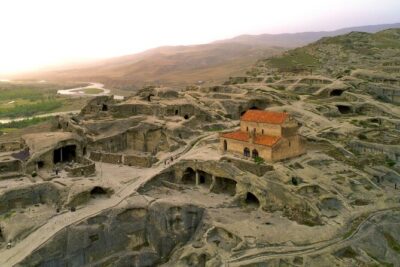
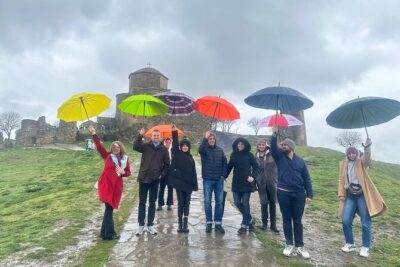
Mtskheta,Jvari,Bazaar,wine tasting,Chronicles of Georgia
Read our review →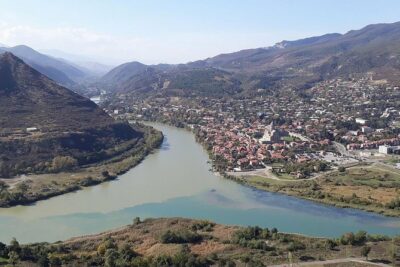
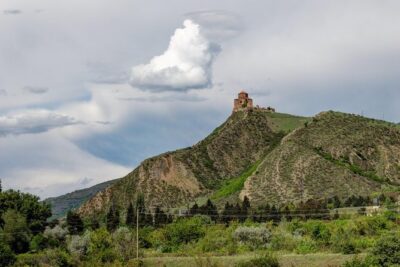
Mtskheta, Jvari, gori, uflistsikhe, history and panorama (group tours)
Read our review →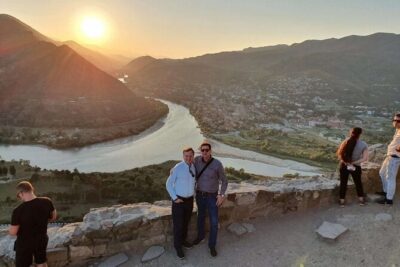
Jvari-Uplistsike-Chronicle of Georgia, PRIVATE Trip
Read our review →
Mtskheta – Jvari. Full City Tour on Hop On Hop Off Bus
Read our review →
Ancient Georgia Group Tour: Mtskheta,Jvari, Gori, Uplistsikhe
Read our review →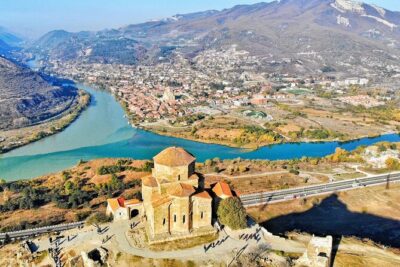
Ancient Mtskheta and Chronicle of Georgia half day tour
Read our review →Browse the lists this tour appears in