
Reviewed · MTSKHETA & JVARI TOURS
One-day tour in ancient Mtskheta, Gori and Uplistsikhe
Georgia’s past is packed into one long day. This tour links the country’s old religious capital, a Soviet-era birthplace, and an ancient cave city, giving you a sharp look at three very different sides of Georgian history. I like the excellent variety and the chance to see major sights beyond Tbilisi without arranging several separate trips. Pickup, bottled water, an air-conditioned vehicle, and a professional guide also make the $50.13 price appealing. The main drawback is the pace: ten hours is a full day, and lunch plus entry fees for the Stalin Museum and Uplistsikhe cost extra.
I also like that the route includes both famous monuments and places with a more unusual edge. You get sweeping views from Jvari, church architecture in Mtskheta, Stalin’s preserved home and railway carriage in Gori, and rough-cut chambers at Uplistsikhe. Guide Aleko received especially warm praise for making the day enjoyable, and one canceled group tour was turned into a private outing without an added charge.
- Jvari’s hilltop setting: See the Mtkvari and Aragvi rivers meet below a sixth-century monastery.
- Mtskheta’s religious heart: Visit Svetitskhoveli Cathedral, one of Georgia’s most important churches.
- Gori’s unusual history stop: Explore the birthplace museum of Joseph Stalin, including his house and train wagon.
- Uplistsikhe’s carved stone rooms: Walk through an ancient settlement dating back to the second or first millennium BC.
- A practical Tbilisi day trip: Pickup, transport, fuel, water, and guiding are included in the listed price.
- A fast but useful route: About ten hours covers five stops, though the schedule leaves little room for wandering.
In This Review
- Why This Route Works So Well From Tbilisi
- Jvari Monastery and the Meeting of Two Rivers
- Mtskheta’s Streets and Svetitskhoveli Cathedral
- Gori Fortress Above the City
- Stalin’s Birthplace and the Soviet Museum
- Uplistsikhe, Georgia’s Carved Cave City
- What the $50.13 Price Really Covers
- The Guide and Group Experience
- Who Should Book This Day Trip
- Should You Book It?
- FAQ
- How long does the tour last?
- Where does the tour start?
- What places are visited?
- Is transportation included?
- Are admission fees included?
- Is lunch included?
- How many people can join the tour?
- Can I cancel for a full refund?
Why This Route Works So Well From Tbilisi
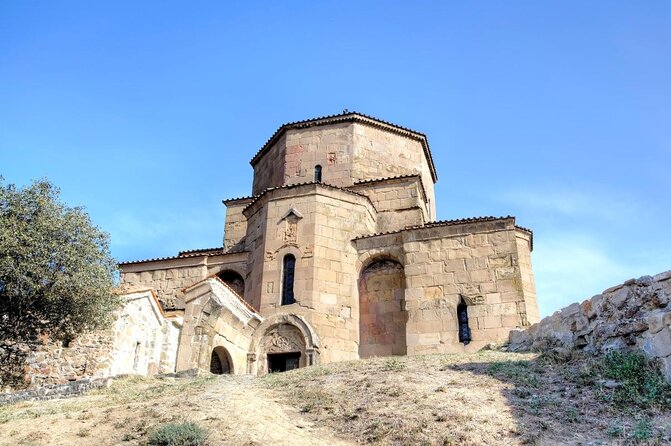
This is a strong choice if you want to move beyond Tbilisi but have only one free day. The route covers roughly Georgia’s religious foundations, medieval power centers, Soviet memory, and pre-Christian archaeology in a single loop.
That range is the tour’s greatest strength. Mtskheta feels ceremonial and spiritual. Gori brings a more complicated political story. Uplistsikhe is stark, ancient, and open to the sky. You are not seeing five versions of the same monument.
The tour lasts about ten hours, so you should expect a busy schedule rather than a slow country outing. The listed stops allow about 20 minutes at Jvari, 30 minutes at Svetitskhoveli, 30 minutes at Gori Fortress, 45 minutes at the Stalin Museum, and one hour at Uplistsikhe. Driving time and transitions fill out the rest of the day.
Pickup is offered, and transport is by air-conditioned vehicle. That matters in Georgia, where a day covering several historic sites can otherwise require multiple taxis, marshrutkas, or complicated connections. Bottled water and the fuel surcharge are included, so the advertised price is not padded with a separate transport charge.
The group can include up to 20 people. That is small enough for a guide to explain the main points, but it is not a private tour by default. One useful detail is that the operator has arranged a solo outing at no extra cost when a group booking was canceled for lack of numbers. That suggests some flexibility, though you should not assume every booking will become private.
Jvari Monastery and the Meeting of Two Rivers
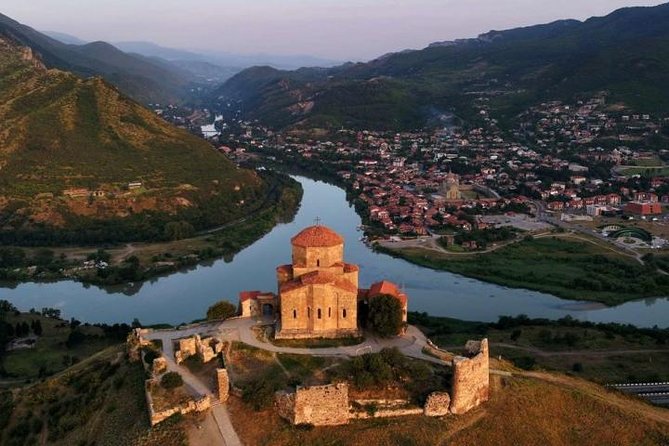
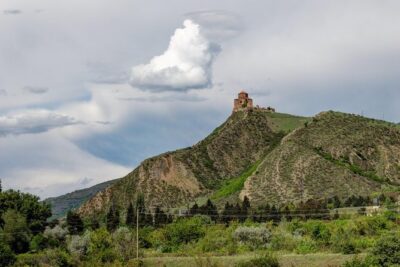
The first stop is Jvari Monastery, a sixth-century Georgian Orthodox complex perched on a rocky hill above Mtskheta. Its location is the star of the visit. From the hilltop, you look toward the confluence of the Mtkvari and Aragvi rivers and the former capital below.
Jvari is also tied to Georgia’s conversion to Christianity. After King Mirian III adopted Christianity, a large wooden cross was raised on this hill. A smaller church followed in the second half of the sixth century under Guaram, the ruler of Kartli.
You get about 20 minutes here, with no admission fee listed. That is enough for the main view and a quick look at the monastery, but not enough for a long architectural study. Bring a phone or camera, since the hilltop position gives this stop much of its visual appeal.
The short visit also sets the tone for the day. Georgia’s early religious story is not presented in a museum case. It is tied to hills, rivers, churches, and old capitals that you can see with your own eyes.
More Gori and Uplistsikhe trips:
- Day Trip to Mtskheta Gori and Uplistsikhe
★ 5.0 · 1,801 reviews - Mtskheta-Gori-Uplistsikhe
★ 5.0 · 112 reviews - Mtskheta, Jvari, gori, uflistsikhe, history and panorama (group tours)
★ 4.5 · 107 reviews
Mtskheta’s Streets and Svetitskhoveli Cathedral
From Jvari, the tour continues into Mtskheta, the former capital of the Kingdom of Iberia. The old town is compact, with streets, balconies, and traditional architecture that give you a feel for the city beyond its main church.
The key stop is Svetitskhoveli Cathedral, a major Eastern Orthodox church built in the eleventh century. It is recognized as a UNESCO World Heritage Site and is currently the second-largest church building in Georgia after Tbilisi’s Holy Trinity Cathedral.
You have about 30 minutes here, and admission is listed as free. That short window is best used inside and around the cathedral rather than trying to cover every lane in town. Look for the architectural details, observe the religious atmosphere, and leave a little time to appreciate the cathedral’s role in Georgian spiritual life.
Svetitskhoveli is connected to the story of Christ’s tunic. According to the religious legend, Elioz brought the tunic from Jerusalem to Mtskheta, where his sister Sidonia died after touching it. She was buried with the garment, and a cedar tree later grew over the grave. The cathedral’s name is linked to the idea of a life-giving pillar, a reference to the sacred story surrounding the site.
The legend is part of the place’s meaning, but the visit is not only about belief. The cathedral also shows why Mtskheta mattered as a capital and religious center for centuries. I would pay close attention to the guide here, since the background helps turn a quick church stop into something more memorable.
Gori Fortress Above the City
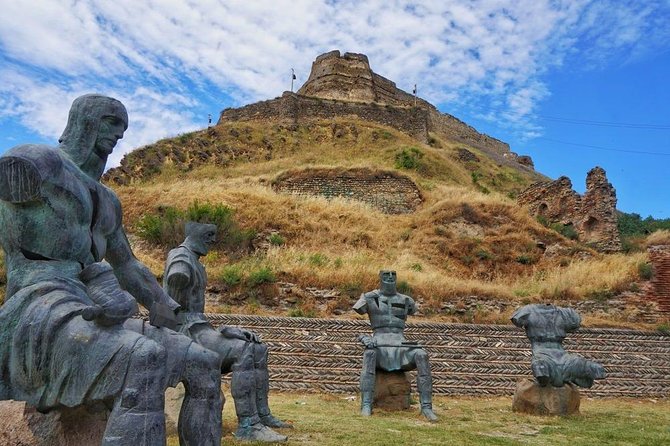
Gori brings a different mood. Its fortress rises on a hill above the city and dates back to the thirteenth century, although much of what you see today comes from the seventeenth and eighteenth centuries.
The castle changed hands among Ottomans, Georgians, and Persians. It was also badly damaged by a magnitude 6.2 earthquake in 1920. Those layers make the fortress less about one perfectly preserved building and more about Gori’s position in a contested part of eastern Georgia.
The scheduled visit is about 30 minutes, with no admission fee listed. That gives you time to see the hilltop remains and the city below, but the stop is not designed for a long archaeological exploration. If you enjoy ruins and broad views, you will likely appreciate it. If you prefer intact interiors and detailed displays, this may feel brief.
Gori Fortress also helps separate the city from its more famous association with Stalin. Before the museum, you get a reminder that Gori’s story stretches far beyond one twentieth-century leader.
Stalin’s Birthplace and the Soviet Museum
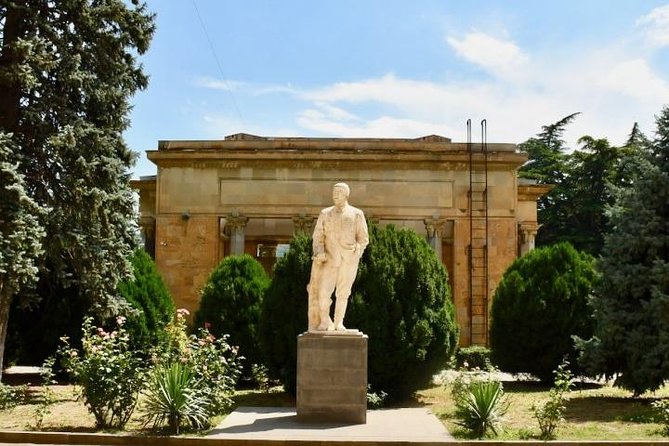
The Joseph Stalin Museum is the most politically charged stop of the day. Stalin was born in Gori, and the museum preserves Soviet-era characteristics while presenting material connected with his life and rule.
The visit lasts about 45 minutes. The museum includes Stalin’s birthplace, his museum, and a railway carriage associated with him. The preserved house is a particularly unusual sight, since it connects a world leader to a very specific place in Gori.
Admission is not included, so plan for an additional fee. The tour information does not give the exact amount. A local guide can help you move through the exhibits, but much of the museum material is labeled in Georgian and Russian. If you need English explanations, an English-speaking guide may be worth arranging if one is available.
The museum requires a clear-eyed approach. It retains its Soviet presentation, so the tone may feel more respectful toward Stalin than many modern history museums would. That is part of what makes the stop useful. You are not just learning about Stalin. You are seeing how his memory has been presented in his birthplace.
I would not treat this as a simple celebration or a simple condemnation. Use it to ask how governments shape historical memory, especially around a figure linked to industrialization, wartime leadership, repression, and mass suffering. The museum’s Soviet-era character is itself an exhibit.
More Mtskheta and Jvari trips:
- Tbilisi:Mtskheta,Jvari,Bazaar,wine tasting,Chronicles of Georgia
★ 5.0 · 730 reviews - Mtskheta-Jvari-Uplistsike-Chronicle of Georgia, PRIVATE Trip
★ 5.0 · 105 reviews - Tbilisi – Mtskheta – Jvari. Full City Tour on Hop On Hop Off Bus
★ 4.5 · 91 reviews - Ancient Georgia Group Tour: Mtskheta,Jvari, Gori, Uplistsikhe
★ 4.5 · 73 reviews
Uplistsikhe, Georgia’s Carved Cave City
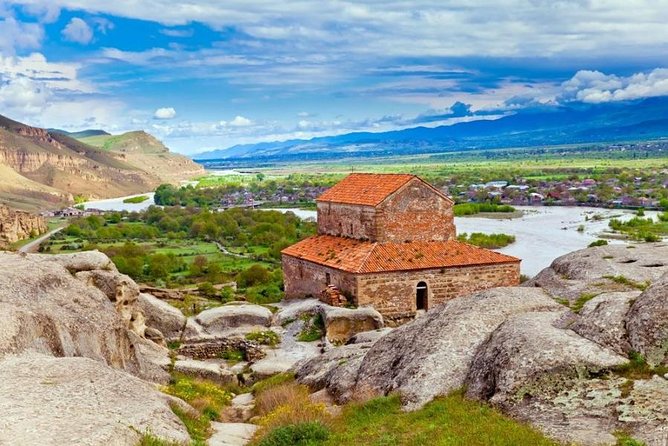
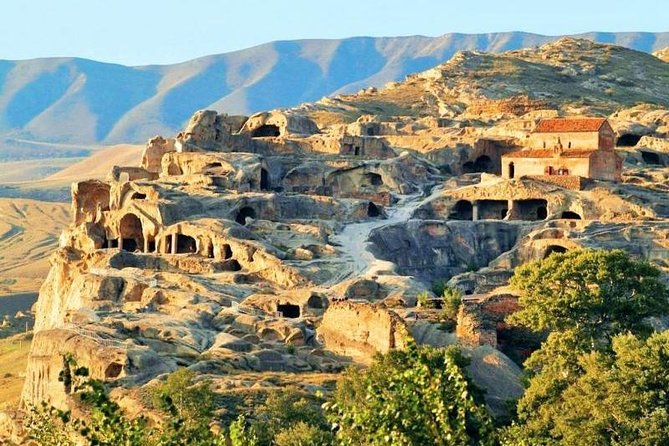
Uplistsikhe is the day’s most distinctive stop. The name means fortress of the lord, and archaeologists identify the site as one of Georgia’s oldest urban settlements. Its history reaches back to the second or first millennium BC.
The settlement developed in the ancient kingdom of Kartli, also known as Iberia in classical accounts. It served as a political and religious center, and in the Middle Ages it sat along a trade route linking Byzantium with India and China.
You have about one hour here, with admission extra. That is the longest single stop, and it needs the time. Uplistsikhe is not a single cave or one building. It is a spread of carved rooms, stone surfaces, and open sections that make more sense as an old town than as a conventional monument.
The rough stone gives the place a different feel from Mtskheta’s churches. You walk through spaces cut into the rock and try to picture how people used them across different periods. The site’s importance is also tied to local written tradition, which credits its founding to the mythical Uplos, son of Mtskhetos and grandson of Kartlos.
Wear practical shoes and watch your footing. The supplied information does not specify the exact path or surface conditions, so you should be ready for an uneven historic site rather than a polished indoor attraction. The tour’s one-hour allotment lets you see the principal areas, but it may not satisfy you if you want to study every chamber.
Uplistsikhe is a fitting final stop because it pushes the story back before Christianity, medieval kings, and Soviet rule. After a day of churches, castles, and political memory, these carved spaces offer a very different view of Georgia’s past.
What the $50.13 Price Really Covers
At $50.13 per person, this tour offers solid value if you want transport and a guide for a full day. The price includes an air-conditioned vehicle, bottled water, fuel surcharge, pickup, and professional guide service.
The two important exclusions are lunch and admission to the Stalin Museum and Uplistsikhe. The exact entrance prices are not provided, so your final cost will be higher than the headline rate. Still, you are paying for access to several distant sights in one organized route, not merely for entry to one monument.
The value is strongest for people who do not want to rent a car or work out intercity transport. You also gain a guide who can connect the religious story of Mtskheta with the political history of Gori and the archaeology of Uplistsikhe.
The value is weaker if you want long visits, relaxed meals, or freedom to change the schedule. Five substantial stops in ten hours requires discipline. You will see a lot, but you will not have unlimited time at any one place.
The Guide and Group Experience
The guide can shape this tour more than the vehicle or the route. Aleko is specifically praised for making the day enjoyable and for providing plenty of information. That is especially useful at Svetitskhoveli and the Stalin Museum, where context adds much more than a quick photograph.
The group limit is 20 people. A group of that size can work well for a day trip, though the experience may feel less personal than a private guide. Pickup is included, which removes one common source of stress in Tbilisi.
One unusual strength is the operator’s response when a booking did not attract enough people. Instead of simply canceling, the company arranged a solo tour without an extra charge. The tour requires a minimum number of participants, so this flexibility is not guaranteed, but it is a reassuring sign for anyone booking ahead.
The experience has received three perfect ratings in the supplied record, with praise focused on the host, transport, pickup, and overall organization. That is a small sample, so I would treat it as encouraging rather than definitive.
Who Should Book This Day Trip
I would recommend this tour if you want a broad first look at Georgian history and have only one day outside Tbilisi. It suits people who enjoy ruins, religious architecture, political history, and guided explanation in equal measure.
It is also a good fit if you value convenience. Pickup, a vehicle, fuel, water, and a guide are bundled together, and you do not need to coordinate several separate transfers.
You may want a different arrangement if you prefer slow travel. A private custom tour could give you more time in Mtskheta, a longer lunch, or a more detailed visit to Uplistsikhe. The same applies if you dislike politically complicated museums or want extensive English interpretation at every stop.
Book at least a day ahead if your plans are firm, since the tour is commonly booked around 18 days before departure. Free cancellation is available up to 24 hours before the start time for a full refund. Within 24 hours, changes and refunds are not accepted.
Should You Book It?
Book this tour if you want maximum historical variety in one organized day. Jvari and Mtskheta give you Georgia’s Christian roots, Gori adds fortress walls and Stalin’s difficult legacy, and Uplistsikhe reaches back to the ancient world.
Go in knowing that the schedule is full and that lunch and two admission fees are extra. If you can accept the pace, the $50.13 starting price is fair for the transport and guiding included. I would choose it for a first visit to Georgia, especially if Aleko is guiding the group and you want a clear introduction to the country beyond Tbilisi.
FAQ
How long does the tour last?
The tour lasts approximately 10 hours.
Where does the tour start?
The tour is based in Tbilisi, and pickup is offered.
What places are visited?
The tour visits Jvari Monastery, Svetitskhoveli Cathedral in Mtskheta, Gori Fortress, the Stalin Museum, and Uplistsikhe Cave Town.
Is transportation included?
Yes. An air-conditioned vehicle, fuel surcharge, bottled water, and professional guide service are included.
Are admission fees included?
No. Admission to the Stalin Museum and Uplistsikhe is not included. Jvari Monastery, Svetitskhoveli Cathedral, and Gori Fortress are listed with free admission.
Is lunch included?
No. Lunch is not included in the tour price.
How many people can join the tour?
The maximum group size is 20 people.
Can I cancel for a full refund?
Yes, if you cancel at least 24 hours before the experience starts. Cancellations within 24 hours are not refundable, and the tour may be canceled if its minimum number of participants is not reached.
Recently added around Tbilisi
- Northern Armenia Highlights Tour from Tbilisi★ 5.0 · 3 reviews
- Wild Georgia 4WD PACK Adventure through Kakheti and Kazbegi 2in1★ 5.0 · 3 reviews
- Kakheti wine region – Private Tour★ 5.0 · 3 reviews
- Jvari monastery & Mtskheta – Half day group tour from Tbilisi★ 5.0 · 3 reviews
- Private Full Day Trip to Kazbegi Mountains★ 5.0 · 3 reviews
- Kakheti With Top Destinations★ 5.0 · 3 reviews
- Private Effortless transfer from Tbilisi to Gudauri ski resort★ 5.0 · 3 reviews
- Borjomi – Rabati -Vardzia Private Full Day Tour from Tbilisi★ 5.0 · 3 reviews
Mtskheta & Jvari Tours, compared.
Mtskheta,Jvari,Bazaar,wine tasting,Chronicles of Georgia
Read our review →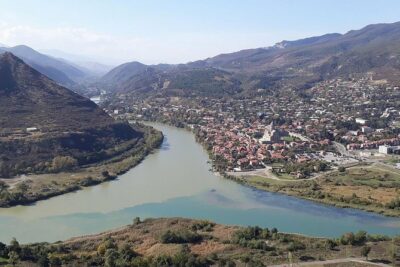
Mtskheta, Jvari, gori, uflistsikhe, history and panorama (group tours)
Read our review →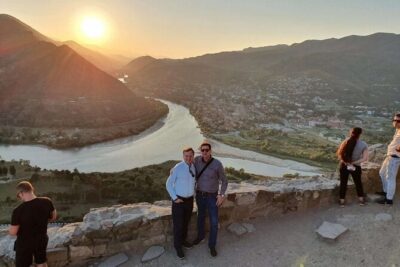
Jvari-Uplistsike-Chronicle of Georgia, PRIVATE Trip
Read our review →
Mtskheta – Jvari. Full City Tour on Hop On Hop Off Bus
Read our review →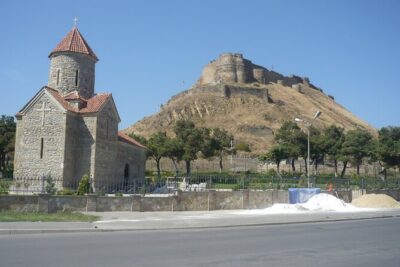
Ancient Georgia Group Tour: Mtskheta,Jvari, Gori, Uplistsikhe
Read our review →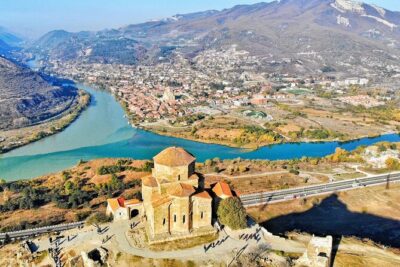
Ancient Mtskheta and Chronicle of Georgia half day tour
Read our review →Browse the lists this tour appears in