
Reviewed · MTSKHETA & JVARI TOURS
Full Day Tour of Tbilisi and Mtskheta
Ancient churches, river views, and old Tbilisi fit one full day. This private tour links Georgia’s former capital, Mtskheta, with the country’s current capital, giving you a useful first look at Georgian faith, architecture, and city life. I especially like the chance to see Jvari Monastery and Svetitskhoveli Cathedral with a guide, then finish among Tbilisi’s sulfur baths, fortress ruins, and old lanes. The other strong point is the flexible guiding: past guests praised Anna, Eka, Tamara, and Maia for clear English, humor, cultural insight, and thoughtful help on steep paths.
The main consideration is the long, tightly packed day. You get about seven hours and 40 minutes, but there are eight planned stops, so this is sightseeing at a brisk pace rather than a slow village visit. The $158 price is not the cheapest way to see these places, and you should also check the minimum booking requirement, since the tour details mention both two people and six people.
In This Review
- Key points to know before booking
- Why combine Mtskheta and Tbilisi in one day?
- Jvari Monastery and the meeting of two rivers
- Svetitskhoveli Cathedral, Georgia’s sacred center
- Walking Mtskheta and visiting a local wine shop
- Samtavro Monastery and the quieter side of Mtskheta
- Narikala Fortress and Tbilisi from above
- Abanotubani, Legtakhevi, and the story of Tbilisi
- Meidan Bazaar, Shardeni Street, and the final city walk
- Metekhi Cathedral and the view across the river
- Guide quality, transport, and the $158 price
- Who should book this Tbilisi and Mtskheta day?
- Should you book it?
- FAQ
- How long does the tour last?
- Where does the tour start?
- Is the tour private?
- What is included in the price?
- Are meals included?
- Can I enter every church on the tour?
- What is the cancellation policy?
Key points to know before booking
- Jvari Monastery gives you the day’s best view: The sixth-century church overlooks Mtskheta and the meeting point of the Aragvi and Mtkvari rivers.
- Mtskheta supplies the religious heart of the tour: Svetitskhoveli Cathedral is one of Georgia’s most sacred churches and is associated with Christ’s robe.
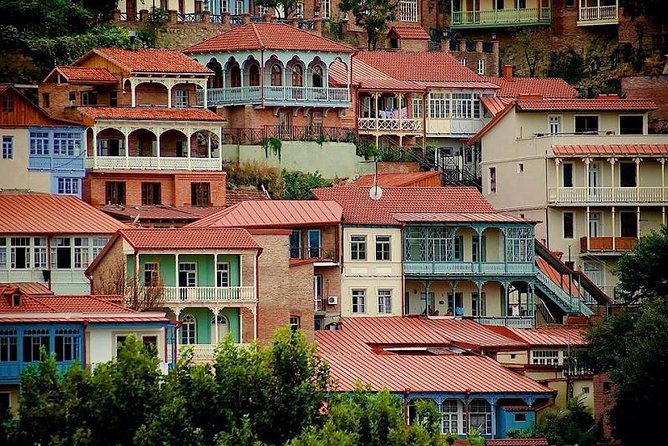
- Tbilisi finishes with strong city views: A cable-car ride to fourth-century Narikala Fortress leads into Abanotubani, Legtakhevi, Meidan Square, and Shardeni Street.
- The guide can shape the city portion: Eka tailored the Tbilisi stops for one guest who had already taken another walking tour.
- Church access depends on the calendar: Services can prevent entry on Sunday mornings, Saturday evenings, and religious holidays.
- The price includes transport, water, guiding, and entrance fees: Meals and alcoholic drinks cost extra.
Why combine Mtskheta and Tbilisi in one day?
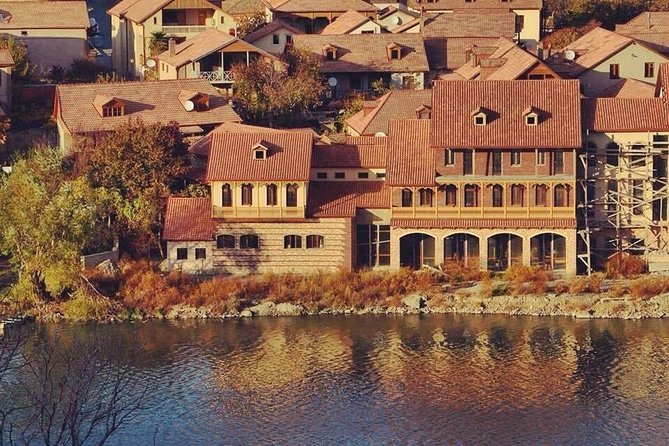
This tour works because the two places explain different parts of Georgia. Mtskheta is the old spiritual and political center, while Tbilisi shows the country’s later urban life, with fortress walls, bathhouses, churches, markets, cafés, and narrow streets.
You begin at 10:00 am near the Giant Bicycle monument at Rose Revolution Square. From there, the guide and driver take you toward Mtskheta. The order makes sense: you first see the ancient capital from above, then walk through its historic center before returning to Tbilisi for the afternoon.
I like this setup for a first day in Georgia. You do not need to piece together separate transport to Mtskheta, and a guide can explain why these churches matter instead of leaving you with a quick photo stop. The trade-off is pace. Each major stop has a planned visit of roughly 40 minutes to one hour, and a full day of churches and viewpoints can feel demanding if you prefer long café breaks.
The tour is described as private, with only your group participating. At the same time, the booking information gives two different minimums: one section says at least two people per booking, while another says at least six people. Confirm this point before paying, particularly if you are a couple or a small family.
More Mtskheta and Jvari trips:
- Day Trip to Mtskheta Gori and Uplistsikhe
★ 5.0 · 1,801 reviews - Tbilisi:Mtskheta,Jvari,Bazaar,wine tasting,Chronicles of Georgia
★ 5.0 · 730 reviews - Mtskheta-Gori-Uplistsikhe
★ 5.0 · 112 reviews
Jvari Monastery and the meeting of two rivers
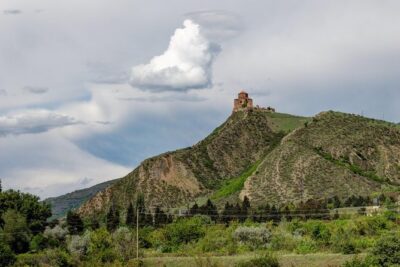
Jvari Monastery is the first major stop, and it is a fine choice. The sixth-century church sits high above Mtskheta, where you can look down toward the town and see the Aragvi and Mtkvari rivers meet.
The view gives the site its power. Instead of seeing a church as an isolated building, you see its position above the old capital and understand why this hill mattered. Your guide can also provide the religious and historical setting, which is useful because the exterior is compact and the visit itself may not take a full hour for everyone.
You should allow for uneven ground and uphill walking here. The tour includes transport to the site, but it does not remove every physical challenge. One guide, Tamara, received particular praise for helping a guest’s mother on the hills. That is a useful sign for families and older visitors, though you should still judge your own comfort with slopes.
Clear weather matters at Jvari. One guest chose the tour date using a weather forecast so the river junction and town would show well in photographs. Since the view is a major reason to come, a cloudy day will not ruin the visit, but good visibility adds a lot.
Svetitskhoveli Cathedral, Georgia’s sacred center
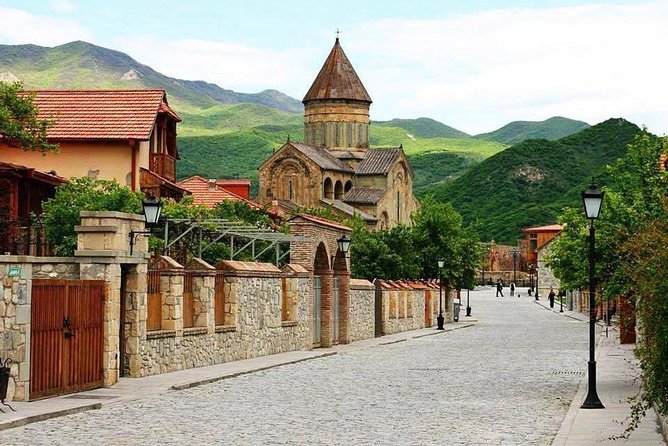
After Jvari, you descend into Mtskheta for Svetitskhoveli Cathedral. This is one of the most important religious buildings in Georgia, and local tradition connects it with the preservation of Christ’s robe.
The cathedral gives you a different experience from Jvari. Jvari is about height, silence, and views. Svetitskhoveli is about worship, sacred tradition, and the importance of Mtskheta as a religious center. Plan to listen closely to the guide here, since the meaning of the building is as important as its stonework.
Church rules are a real practical issue. Entry is prohibited during services, including Sunday mornings, Saturday evenings, and religious holidays. If your date falls at one of those times, the operator says it may reverse the order and begin in Tbilisi before continuing to Mtskheta. That helps, but it does not guarantee that every church interior will be available.
Dress appropriately for places of worship. The tour operates in all weather, and the day moves between outdoor viewpoints and indoor religious sites, so layers and sensible shoes are a good idea.
Walking Mtskheta and visiting a local wine shop
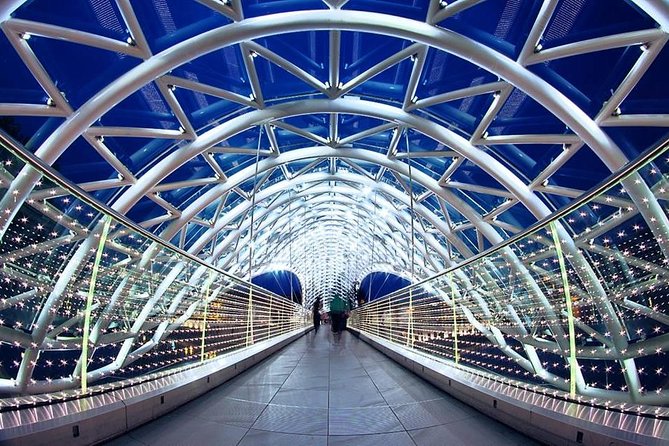
The City-Museum Reserve of Mtskheta gives you time to walk through the old town rather than only stopping at its famous churches. This is where the day feels less like a monument checklist and more like a short visit to a living place.
You can visit a local wine shop and buy Georgian wine. Alcohol is not included, and the minimum drinking age is 18. The stop is useful if you want to take home a local bottle, but remember that you still have several hours of sightseeing ahead. Buy only what you can comfortably carry.
The planned visit lasts about an hour. That allows for a pleasant walk, but it may not feel like enough time if you want a long meal, extensive shopping, and relaxed photography. A Georgian lunch was included as an appreciated extra on one reported outing, but meals are officially not included in the tour price. Treat lunch as something to arrange or pay for separately, not as part of the package.
A few more ways to spend a day out of Tbilisi
- Kutaisi Canyons and Caves from Tbilisi Full Day Tour
★ 5.0 · 448 reviews - Kazbegi and Gudauri Full Day Private Tour from Tbilisi
★ 5.0 · 447 reviews - Full Day Private Wine Tour in Kakheti Region with Lunch and 3 Wine Tastings
★ 5.0 · 207 reviews - Kazbegi Full-Day Private Tour with Scenic Stops from Tbilisi
★ 5.0 · 125 reviews
Samtavro Monastery and the quieter side of Mtskheta
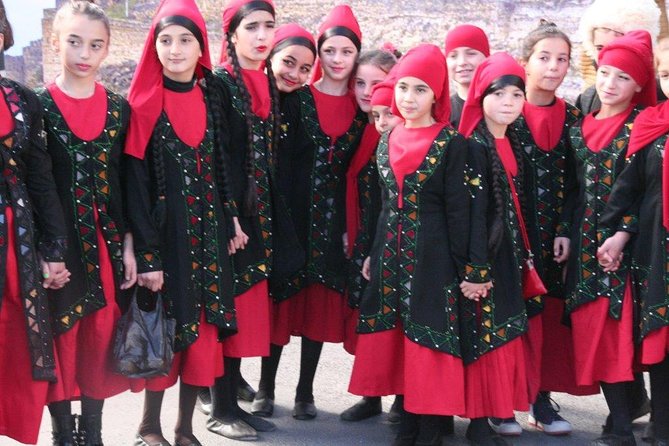
Samtavro Church comes next, with about 40 minutes at the medieval monastery in Mtskheta’s historic area. It is a shorter visit than the two major UNESCO sites, but it adds another layer to the old capital.
This stop is best understood as part of the town’s religious network. You are not simply seeing one famous cathedral and leaving. You are moving through several places that show how important Mtskheta remains in Georgian religious life.
The short timing also helps keep the overall day moving. If you are fascinated by church architecture, you may wish for more time. If you are ready for a change after Jvari and Svetitskhoveli, 40 minutes is probably enough.
Narikala Fortress and Tbilisi from above
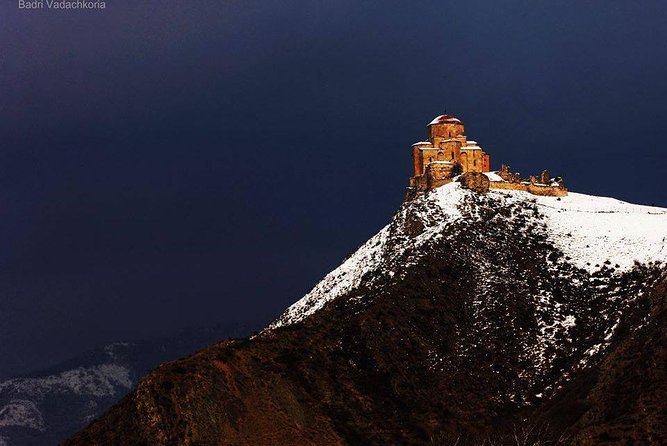
Back in Tbilisi, the tour takes you by aerial cable car to Narikala Fortress. The fortress dates to the fourth century, and its ruined walls provide one of the best broad views over the city.
The ride itself is part of the appeal. It saves a steep climb and gives you a quick change of pace after Mtskheta’s churches. At the top, you can explore the ruins and look across Tbilisi before walking down toward the sulfur bath district.
Cable-car service can be interrupted. One past visit found the cable cars closed, but the guide substituted a ride on the city funicular, which still gave the group a high view. That flexibility is encouraging, but you should not assume the replacement will always be available.
The walk down is scenic but not effortless. The route continues toward Legtakhevi, Meidan Square, and Shardeni Street, so comfortable footwear matters. The tour is not a pure vehicle sightseeing trip. You will spend time on foot, with hills and historic paving underfoot.
Abanotubani, Legtakhevi, and the story of Tbilisi
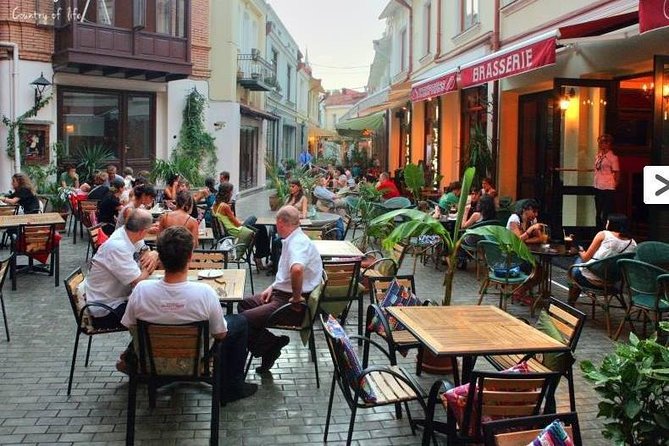
Abanotubani is Tbilisi’s old sulfur-bath district, located beside the Mtkvari River below Narikala. The hot springs are tied to the traditional story of King Vakhtang Gorgasali, whose falcon led him to the springs after falling in the area. That discovery is linked to the founding of the city.
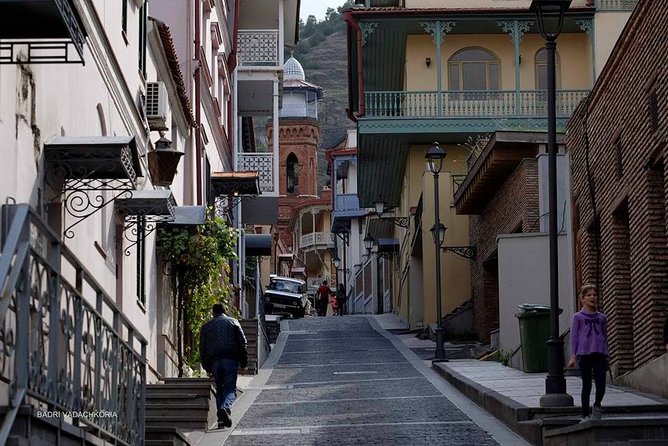
This part of the tour gives Tbilisi its character. The baths are not just an attractive old quarter. They help explain the city’s name and its early growth. You may find the area more atmospheric than the formal church visits, with domed bath roofs, historic streets, and the river nearby.
The route also includes the small waterfall in Legtakhevi. It is a compact natural feature in the old city and a welcome break from stone monuments. The stop is not a major hike, but the combination of stairs, slopes, and walking means you should pace yourself.
Meidan Bazaar, Shardeni Street, and the final city walk
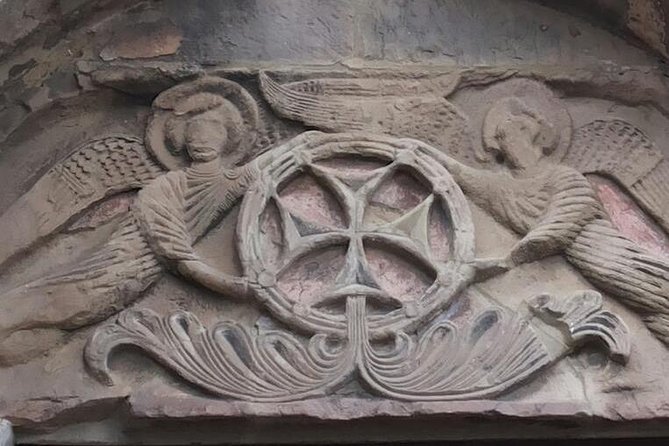
After Abanotubani and Legtakhevi, you continue to Meidan Square, Meidan Bazaar, Shardeni Street, Cotton Row, and Iron Row. This is the commercial and social part of the old town, with souvenir shops, art galleries, cafés, and places to browse.
You will have a chance to buy gifts and see a more current side of Tbilisi. I like that the tour includes this after the historical sites. It keeps the day from becoming a string of churches and ruins, and it gives you a little freedom to look around.
Keep your expectations realistic. A guided stop through the bazaar and nearby streets is not the same as an unhurried shopping afternoon. If you see something you want, ask how much time you have before making a purchase.
Metekhi Cathedral and the view across the river
The last major stop is Metekhi plateau and Metekhi Cathedral, a thirteenth-century church above the Mtkvari. It is one of old Tbilisi’s key architectural monuments and provides another strong view across the historic center.
Ending here gives the tour a useful final chapter. Jvari presents Mtskheta from above, while Metekhi helps you read Tbilisi from the river. By this point, you have seen the two cities through churches, fortresses, markets, and water.
The planned stop lasts about an hour, though the exact rhythm will depend on the group, traffic, and time spent earlier. The tour then returns to the Giant Bicycle monument, where it began.
Guide quality, transport, and the $158 price
The guide is central to the value of this tour. Past outings were led by Anna, Eka, Tamara, and Maia, with repeated praise for clear English, humor, historical explanations, and personal attention. One group found Anna both well informed and good company. Another appreciated Eka’s ability to adjust the Tbilisi portion around sights already covered on an earlier walking tour.
That flexibility matters. A fixed route can be dull if you have already seen one section of Tbilisi, but a good guide can shift emphasis. You should tell the guide what you have already visited and what matters most to you.
Transport is another strong point. A comfortable vehicle with a pleasant driver was praised, and the included service is especially useful because Mtskheta and the hilltop sites are spread out. Bottled water is included, as are entrance fees. Most scheduled stops have no separate admission charge, while the Narikala cable-car entry is included.
At $158 per person, the tour is not a bargain basement outing. Its value comes from having a private guide and driver, covering two important cities in one day, and avoiding the work of arranging transport and timing yourself. It makes more financial sense if you are sharing the private vehicle with several people and want context at the sites.
The price does not include meals or alcoholic drinks. One enjoyable outing included a Georgian lunch, but that is not part of the stated package. Budget separately for food and wine.
Who should book this Tbilisi and Mtskheta day?
I would choose this tour if you have limited time in Georgia and want a guided introduction to both capitals. It suits first-time visitors, families who value door-to-door transport, and anyone who wants church history explained rather than simply photographed.
It also suits people who prefer a private arrangement. You can ask the guide to adjust the Tbilisi section, as Eka did for a returning participant. The tour’s 90 percent recommendation rate and 4.6 rating suggest a strong overall record, while the lower score about Sunday church access points to the main planning trap.
I would hesitate if you want a slow day, a long meal, or extensive time inside each church. I would also check the minimum group rule carefully, because the provided details conflict between two and six people per booking.
Cancellation is free up to 24 hours before the start time. Cancellations or changes inside that window are not refunded or accepted, and if the minimum number is not met, the operator offers another date or a full refund.
Should you book it?
Book this tour if you want the major sights of Mtskheta and Tbilisi in one organized day, with transport, a guide, and a strong mix of viewpoints, churches, old streets, and local shopping.
The best reasons are Jvari’s river view, Svetitskhoveli’s sacred importance, Narikala’s city panorama, and the chance to work with a guide such as Anna, Eka, Tamara, or Maia. Choose a date with clear weather if photography matters, avoid church-service times when possible, and confirm the minimum booking requirement before committing.
Skip it if you already know both cities well or would rather spend a full day slowly exploring one neighborhood. For a first visit, though, this is a practical and worthwhile way to understand how Georgia’s ancient capital and modern capital fit together.
FAQ
How long does the tour last?
The tour lasts approximately 7 hours and 40 minutes. It begins at 10:00 am and ends back at the Giant Bicycle monument meeting point.
Where does the tour start?
You meet the guide and driver near the Giant Bicycle monument at Rose Revolution Square in Tbilisi, Georgia.
Is the tour private?
Yes. The activity is described as private, and only your group participates.
What is included in the price?
The price includes a professional guide and driver, transportation, bottled water, and all entrance fees.
Are meals included?
No. Meals are not included. Alcoholic drinks are also excluded, though Georgian wine is available to buy during the Mtskheta wine-shop stop.
Can I enter every church on the tour?
Church entry is not permitted during services, including Sunday mornings, Saturday evenings, and religious holidays. If this affects your date, the operator may change the order and begin in Tbilisi.
What is the cancellation policy?
You can cancel up to 24 hours before the start time for a full refund. Cancellations or changes made less than 24 hours before the tour are not refunded or accepted.
Recently added around Tbilisi
- Northern Armenia Highlights Tour from Tbilisi★ 5.0 · 3 reviews
- Wild Georgia 4WD PACK Adventure through Kakheti and Kazbegi 2in1★ 5.0 · 3 reviews
- Kakheti wine region – Private Tour★ 5.0 · 3 reviews
- Private Full Day Trip to Kazbegi Mountains★ 5.0 · 3 reviews
- Kakheti With Top Destinations★ 5.0 · 3 reviews
- Jvari monastery & Mtskheta – Half day group tour from Tbilisi★ 5.0 · 3 reviews
- Private Effortless transfer from Tbilisi to Gudauri ski resort★ 5.0 · 3 reviews
- Borjomi – Rabati -Vardzia Private Full Day Tour from Tbilisi★ 5.0 · 3 reviews
Mtskheta & Jvari Tours, compared.
Mtskheta,Jvari,Bazaar,wine tasting,Chronicles of Georgia
Read our review →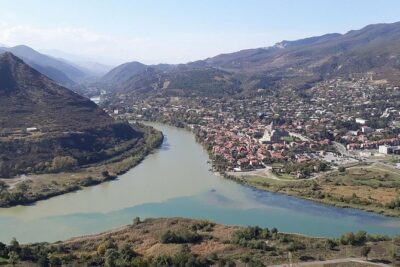
Mtskheta, Jvari, gori, uflistsikhe, history and panorama (group tours)
Read our review →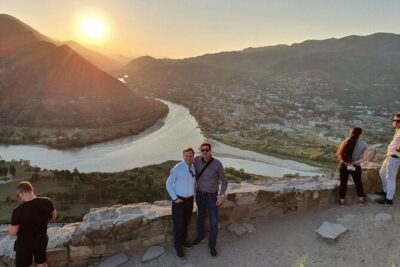
Jvari-Uplistsike-Chronicle of Georgia, PRIVATE Trip
Read our review →
Mtskheta – Jvari. Full City Tour on Hop On Hop Off Bus
Read our review →
Ancient Georgia Group Tour: Mtskheta,Jvari, Gori, Uplistsikhe
Read our review →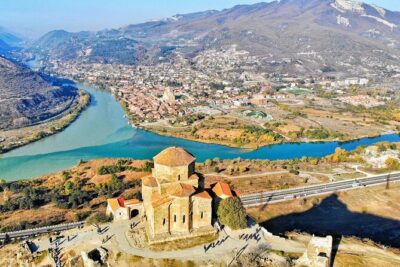
Ancient Mtskheta and Chronicle of Georgia half day tour
Read our review →Browse the lists this tour appears in