
Reviewed · TBILISI WALKING TOURS
Classic Tbilisi Walking Tour
Tbilisi rewards walkers. This tour links Freedom Square, the old streets of Sololaki, Betlemi churches, Narikala Fortress, and Abanotubani in a compact three-hour route. I like the smart mix of old religious sites and newer city landmarks, and I like that the cable-car ride adds hilltop views without turning the outing into a hard climb. The main consideration is price: at $134 per person, it is costly for a short group walking tour, especially since lunch, transport beyond the cable car, and tips are extra.
The strongest part is the guide. Eka has been praised for being friendly, funny, flexible, fluent in English, and able to answer questions about Georgia with ease. The route also gives you a useful first look at Tbilisi’s Soviet-era past, medieval fortifications, church traditions, and modern public architecture in one morning. Still, the advertised duration is about three hours, while one account describes a longer five-hour outing, so I would confirm the exact schedule when booking.
In This Review
- Key points to know before booking
- Why this route works for a first morning in Tbilisi
- Freedom Square and Sololaki: starting with the city’s public face
- Lado Gudiashvili Square and the climb toward Kldisubani
- Betlemi churches and the remains of the Ateshgah
- The Bridge of Peace and Tbilisi’s modern side
- The cable car to Narikala Fortress
- Abanotubani, Meidan Square, and the sulfur bath district
- What the guide adds to the $134 price
- Practical advice for a smoother morning
- Who should book this Tbilisi walking tour?
- Should you book the Classic Tbilisi Walking Tour?
- FAQ
- Where does the Classic Tbilisi Walking Tour begin?
- Where does the tour end?
- Is the cable-car ride included?
- How long does the tour last?
- What should I wear for the church visits?
- Can I cancel for a full refund?
Key points to know before booking
- The route begins at 10:00 am at Freedom Square, near the old city hall and the Chronograph store.
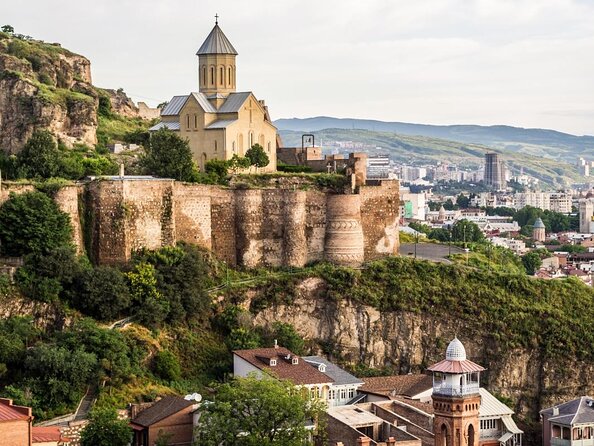
- You ride the aerial cable car to Narikala Fortress, with the ticket included in the tour price.
- Betlemi’s uphill steps require comfortable shoes, and the churches have a dress code.
- The tour ends at Abanotubani, beside the Monument Fountain Falcon and Pheasant, not back at your starting point.
- The group may be large, with up to 99 people permitted, so guide access can vary.
- The $134 price pays for structure and guiding, not a meal or a private car.
Why this route works for a first morning in Tbilisi
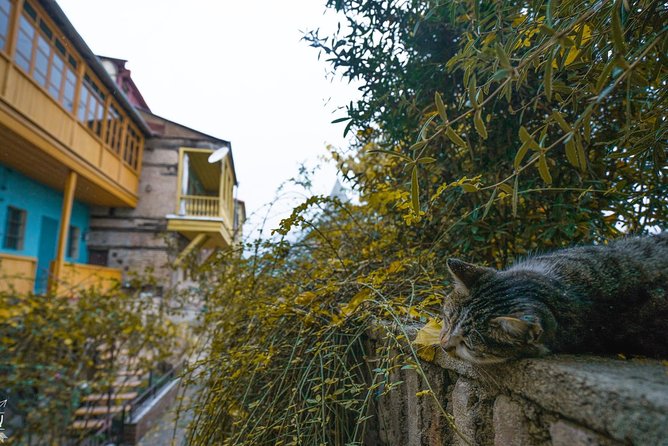
Tbilisi can feel confusing at first. Streets twist around hills, the Mtkvari River cuts through the center, and the old town mixes churches, balconies, bathhouses, Soviet-era buildings, and bold modern design. A guide helps you connect those pieces instead of seeing them as unrelated sights.
This route is especially useful early in your stay. You begin in the central city, walk through Sololaki and Kldisubani, cross the river, ride up to Narikala, and finish near the sulfur baths. By the end, you have a mental map of the areas you may want to revisit on your own.
I also like the balance between walking and the cable car. You get a close look at streets and squares, but you do not spend the entire morning climbing Tbilisi’s hills. The cable car gives your legs a break at the right moment, although the walk to the Betlemi churches still includes stairs.
The tour is offered in English and includes a professional guide. It operates in all weather, so you should dress for the forecast rather than assume a sunny morning. Tbilisi’s hill streets can feel slippery in wet weather, and church visits call for respectful clothing.
More walks through old Tbilisi:
- Tbilisi Walking Tour Including Cable Car and Traditional Bakery
★ 5.0 · 1,310 reviews - Old Tbilisi Highlights walking tour with wine & 10 tastings
★ 5.0 · 276 reviews - Old Tbilisi Tour: Private Walking Tour With Wine Tasting
★ 5.0 · 273 reviews
Freedom Square and Sololaki: starting with the city’s public face
Meet at 10:00 am at Freedom Square, near the old city hall and the Chronograph store. This is a practical starting point because it is central and close to public transportation. You are not being collected from your hotel, so plan extra time to reach the meeting point.
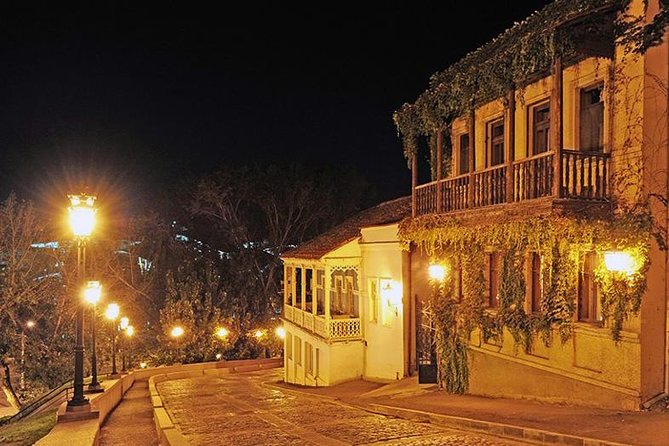
The first walk takes about 15 minutes through recently renovated streets in Sololaki. This opening section is brief, but it sets up the city well. Freedom Square is one of Tbilisi’s main civic spaces, while Sololaki leads you into older streets with a more local, residential feel.
I would pay attention to the changes in architecture here. The value of a guide is not just naming buildings. It is explaining how central Tbilisi changed under Russian rule, during the Soviet period, and after independence. The supplied tour description specifically includes Soviet-era history, so ask questions if that period interests you.
Do not expect a museum-style stop with a long interior visit. This is a street-level introduction. You are moving through the city, listening, and getting your bearings.
Lado Gudiashvili Square and the climb toward Kldisubani
After Freedom Square, you reach Lado Gudiashvili Square. The square has been renovated, and from here the route follows Asatiani Street toward Kldisubani. This part lasts about 15 minutes.
The short stop matters because it shows how Tbilisi’s public spaces are being refreshed while older neighborhoods remain in active use. Renovation can make a square easier to appreciate, but it can also make the setting feel more polished than some surrounding streets. Your guide can help place those changes in context.
The route then begins to turn uphill. Kldisubani is one of the historic parts of the old city, and the change in elevation is part of the experience. I would wear shoes with a firm sole and avoid bringing a heavy bag. The tour is not described as strenuous, but stairs and slopes are unavoidable on the way to the churches.
This is also a good point to tell your guide what interests you. One particularly praised guide, Eka, was described as flexible about guest preferences. That sort of flexibility can make a short tour much more useful, especially if you want more history, religion, architecture, or recent politics.
Betlemi churches and the remains of the Ateshgah
The walk continues uphill to the Lower and Upper Betlemi Churches. Allow about 30 minutes for this section. The route also points out the remains of a fifth-century Zoroastrian Ateshgah fire temple, giving you a glimpse of the religious layers beneath modern Tbilisi.
That combination is one of the tour’s best features. You are not seeing Georgia’s past as a single story. The churches, the older fire temple remains, the hills, and the views all point to a city shaped by different faiths and cultures over time.
The church dress code is important. Women are expected to wear a head scarf and dress, while men should wear long trousers. The supplied information does not say that scarves or covering clothing are provided, so bring suitable items with you. If you arrive in shorts or uncovered shoulders, entry may be limited.
The views around Betlemi are another reward for taking the stairs. You get a higher look across the old city, and the setting helps explain why Tbilisi’s hills matter so much to its layout. The time here is not long, so listen closely and take photographs when the guide pauses rather than trying to document every step.
More walks:
- Tbilisi:Evening Walking & Talking Tour with Wine & Boat Ride
★ 5.0 · 572 reviews - Private Tbilisi Food Tour: 9 Tastings Walk in Bohemian District
★ 5.0 · 227 reviews - Tbilisi Old Town Walking Tour with a Local Guide
★ 5.0 · 168 reviews - Discover Tbilisi: Hidden Gems and Iconic Sights Walking Tour
★ 5.0 · 138 reviews
The Bridge of Peace and Tbilisi’s modern side
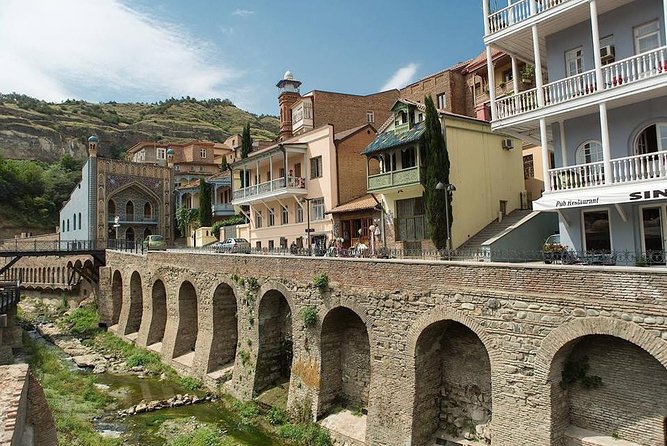
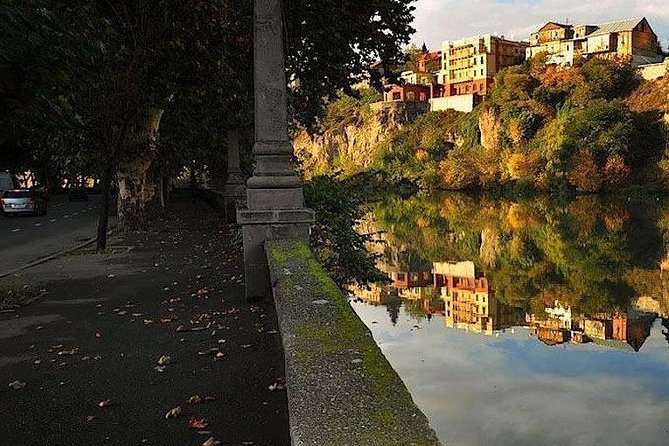
The next stop is the Bridge of Peace, a contemporary pedestrian bridge made of glass and steel. Its bow shape crosses the Mtkvari River and creates a sharp contrast with the old streets and fortress above.
The bridge stop lasts about 30 minutes, which gives the guide time to explain its place in modern Tbilisi. It is an easy section of the walk, with no church dress rules or steep climb. You can focus on the river, the bridge structure, and the way the old and new parts of the city face one another.
Some visitors may find the bridge’s design striking. Others may prefer the older streets and churches. That contrast is useful, even if modern architecture is not your main interest. It keeps the tour from presenting Tbilisi as only a medieval city.
Because the bridge is a public pedestrian route, conditions may be busy at times. The possible group size is up to 99 people, which is large for a walking tour. A group that big can make it harder to hear every explanation or stay close to the guide. If group size matters to you, ask the operator whether a smaller departure is available.
The cable car to Narikala Fortress
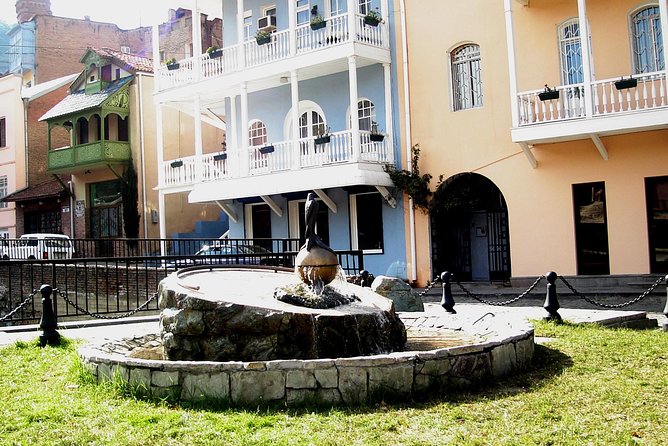
From the bridge area, you reach the aerial cable-car station and ride up to Narikala Fortress. The cable-car ticket is included, and this is the only listed transportation included in the price.
The ride changes the pace of the morning. After walking through streets and climbing toward Betlemi, you gain height quickly and get broad views over Tbilisi. The cable car is not simply a way to save time. It helps you understand the city’s shape, with the river below and the old neighborhoods spread across the hills.
Narikala dates to the fourth century and occupies a high position above the city. The fortress is the tour’s longest stop, with about an hour allowed. That gives you time to walk around the site, hear its story, and take in the views.
You should keep your expectations realistic. Narikala is a fortress ruin, not a fully restored palace or a museum with a large display collection. Its appeal comes from the walls, the position above Tbilisi, and the connection between the old defensive site and the modern city below.
The cable car is included, but service for transportation to or from other attractions is not. You are not riding in a private vehicle, and hotel pickup and drop-off are not included. After the tour, you will need to arrange your own return from Abanotubani or continue exploring on foot.
Abanotubani, Meidan Square, and the sulfur bath district
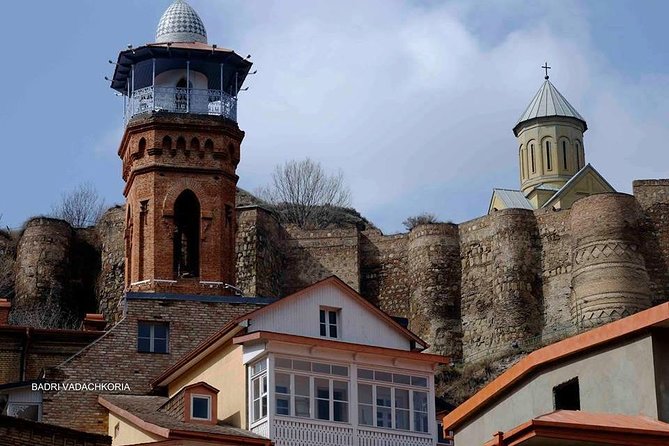
After exploring Narikala, the route heads downhill toward the sulfur bathhouses. The final section takes about 30 minutes and reaches Meidan Square and the surrounding streets before ending at Abanotubani.
This is a satisfying finish because the neighborhood brings together several themes from the tour. You have the old city’s narrow streets, the fortress above, the Mtkvari nearby, and Tbilisi’s famous sulfur-bath district. The tour ends at the Monument Fountain Falcon and Pheasant.
Ending here is practical. Abanotubani is a good place to continue your day, find lunch, or investigate the bathhouses independently. Lunch is not included, so you will need to make your own plans. Dinner is also outside the tour, and there is no hotel transfer.
The walk downhill may be easier than the climb to Betlemi, but uneven paving and steps can still slow you down. If you have mobility concerns, ask before booking. The supplied details say most people can participate, but they do not promise a wheelchair-accessible route.
What the guide adds to the $134 price
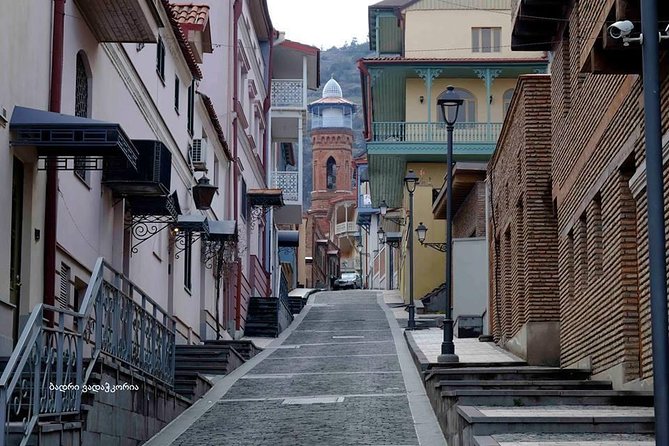
At $134 per person, this is not a bargain walking tour. The listed inclusions are a professional English-speaking guide and the aerial cable-car ride. You pay separately for tips, food, drinks, and any transport after the tour.
The price makes more sense if you value a planned route and a strong guide. A good guide can explain why a fire temple, Orthodox churches, Soviet history, a modern bridge, and a fourth-century fortress all belong in the same story. Without that context, you could visit the same places and miss much of what links them.
The price makes less sense if you want a private tour, a long museum visit, or extensive transportation. The group limit of 99 means the experience may feel more like a scheduled city walk than an intimate outing. There is no indication that lunch, tastings, or entrance to additional attractions are included.
Guide quality is likely to shape your experience more than any other factor. Eka has received especially warm praise for her humor, English, flexibility, and ability to handle questions. You cannot assume she will lead every departure, but you can request her when booking if she is available.
One account also describes a five-hour experience, while the advertised duration is approximately three hours. That may reflect a different schedule or a longer version, but it is worth confirming before you plan lunch, a museum visit, or another timed activity.
Practical advice for a smoother morning
Arrive early at Freedom Square. The meeting point is specifically at the Chronograph store, and a central square can have several nearby landmarks. Having the exact address open on your phone will reduce stress.
Wear comfortable shoes with good grip. The route includes old streets, uphill walking, church steps, the fortress area, and a descent toward the bathhouses. You do not need specialist hiking gear, but thin soles and slippery shoes are poor choices.
Dress with church visits in mind. Women should bring a head scarf and wear a dress or suitable covering, while men should wear long trousers. These rules are part of visiting active religious sites, not a minor detail to handle after arrival.
Carry water and keep some flexibility in your schedule. No lunch is provided, and the tour may run longer than three hours depending on the guide and group. The tour operates in all weather, so a light rain layer or sun protection may be useful.
Tips are not included. If the guide gives you a clear introduction to the city and answers your questions well, plan to tip separately. The tour also requires you to make your own way to Freedom Square and away from Abanotubani.
Free cancellation is available up to 24 hours before the start time for a full refund. Changes or cancellations made less than 24 hours ahead are not accepted for a refund, using local Tbilisi time as the cutoff.
Who should book this Tbilisi walking tour?
I would recommend it to a first-time visitor who wants a structured introduction before exploring independently. The route covers several of Tbilisi’s most useful reference points, and the finish near the sulfur baths makes it easy to continue sightseeing.
It also suits you if you enjoy asking questions. The strongest praise has gone to guides who explain Georgia broadly, not just the next building on the route. If you want a guide who can discuss Soviet-era life, religious sites, city changes, and local customs, request Eka if possible.
This may not suit you if you dislike hills, stairs, or scheduled group walks. It may also disappoint you if you expect a private experience or consider $134 too much for three hours. Independent walkers can visit Freedom Square, the Bridge of Peace, Narikala, and Abanotubani on their own, but they will need to arrange the route and cable car separately and provide their own context.
Should you book the Classic Tbilisi Walking Tour?
Book it if you want a well-organized first look at Tbilisi, value an English-speaking guide, and like the idea of combining old churches, Soviet-era stories, a modern bridge, a fortress, and the sulfur-bath district. The cable car is a smart inclusion, and the route finishes in one of the city’s most useful neighborhoods.
Skip it if you are comfortable planning your own walking route or want a smaller, cheaper outing. At this price, guide quality and group size matter greatly. Request Eka if available, confirm whether your departure is closer to three or five hours, and bring proper church clothing and comfortable shoes.
FAQ
Where does the Classic Tbilisi Walking Tour begin?
The tour begins at 10:00 am at the Chronograph store near the old city hall on Freedom Square, Tbilisi 0105, Georgia.
Where does the tour end?
The tour ends in Abanotubani near the Monument Fountain Falcon and Pheasant.
Is the cable-car ride included?
Yes. The aerial cable-car ride to Narikala Fortress is included in the tour price.
How long does the tour last?
The advertised duration is approximately three hours. One account describes a five-hour outing, so confirm the expected timing when booking.
What should I wear for the church visits?
Women are expected to wear a head scarf and dress. Men should wear long trousers. Comfortable shoes are also advisable because the route includes stairs and hills.
Can I cancel for a full refund?
Yes, if you cancel at least 24 hours before the experience start time. Cancellations or changes made less than 24 hours ahead are not accepted for a refund.
Recently added around Tbilisi
- Northern Armenia Highlights Tour from Tbilisi★ 5.0 · 3 reviews
- Wild Georgia 4WD PACK Adventure through Kakheti and Kazbegi 2in1★ 5.0 · 3 reviews
- Kakheti wine region – Private Tour★ 5.0 · 3 reviews
- Private Full Day Trip to Kazbegi Mountains★ 5.0 · 3 reviews
- Kakheti With Top Destinations★ 5.0 · 3 reviews
- Jvari monastery & Mtskheta – Half day group tour from Tbilisi★ 5.0 · 3 reviews
- Borjomi – Rabati -Vardzia Private Full Day Tour from Tbilisi★ 5.0 · 3 reviews
- Private Effortless transfer from Tbilisi to Gudauri ski resort★ 5.0 · 3 reviews
Tbilisi Walking Tours, compared.
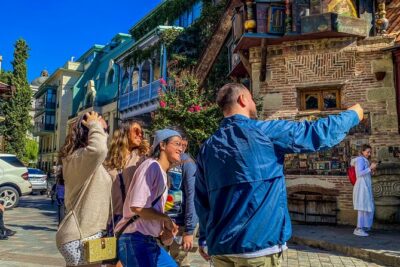
Tbilisi Walking Tour Including Cable Car and Traditional Bakery
Read our review →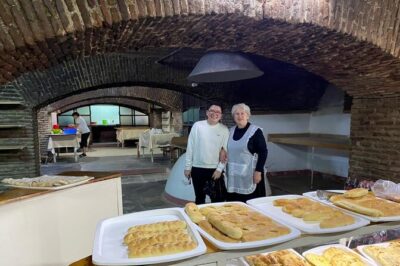
Old Tbilisi Highlights walking tour with wine & 10 tastings
Read our review →
Old Tbilisi Tour: Private Walking Tour With Wine Tasting
Read our review →
Tbilisi Walking Tour Including Cable Car and Wine Tasting
Read our review →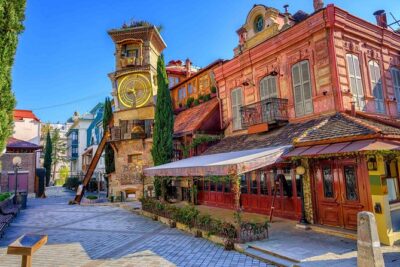
Very Friendly Tbilisi Walking Tour (wine tasting & cable car)
Read our review →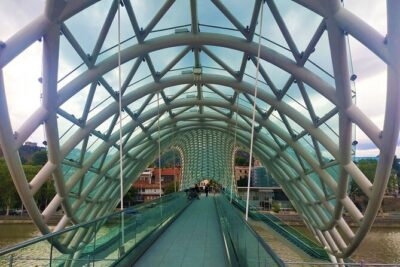
Tbilisi Walking Tour with Cable Car, Wine Tasting & Bread Bite
Read our review →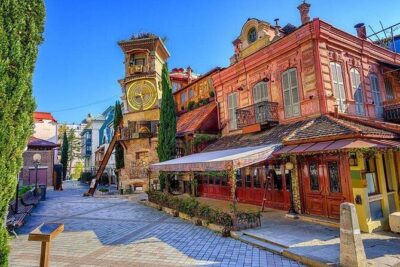

Old Tbilisi & Mtskheta. Private tour from Kutaisi
Read our review →Browse the lists this tour appears in