
Reviewed · CITY TOURS
City tour Tbilisi on red bus
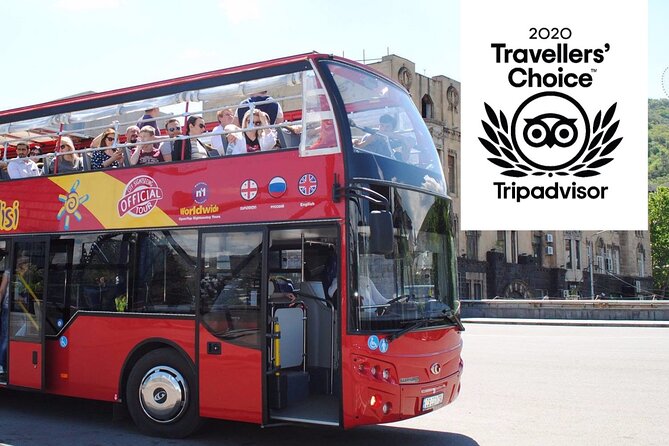
Tbilisi looks best from above. This red double-decker tour gives you a useful first look at the Georgian capital, from the old defensive walls and sulphur baths to Rustaveli Avenue and the Mtkvari River. I like the easy city overview and the chance to ride instead of walk every hill and bridge. I also like the 24-hour ticket, which can help you return to places you want to see more closely. The main catch is uneven service: buses may arrive late, and the commentary and hop-on, hop-off instructions are not always as clear as you might expect.
At $20 per person, this is a fair introduction to Tbilisi if you want orientation, simple transport, or a low-effort way to see the main sights. I would not treat it as a full substitute for a walking tour. The audio guide can be thin, and one complete ride may take closer to an hour than the advertised 90 minutes.
In This Review
- Key points to know before boarding
- What you see from the red double-decker bus
- Starting at 44 Kote Afkhazi Street
- Meidan Square and the sulphur bath district
- Metekhi Cathedral and the Mtkvari River
- Rike Park and the Peace Bridge
- Dry Bridge Market and Agmashenebeli Avenue
- Freedom Square, Rustaveli Avenue, and Heroes Square
- Is the 24-hour ticket good value at $20?
- The audio guide and the human element
- Waiting times, weather, and the hop-on question
- Who will enjoy this Tbilisi bus tour?
- Should you book the red bus in Tbilisi?
- FAQ
- Where does the Tbilisi red bus tour start?
- What time does the tour begin?
- How long does the bus tour last?
- How long is the ticket valid?
- Is an audio guide included?
- Does the tour return to its starting point?
- What is included in the $20 price?
- What is the cancellation policy?
Key points to know before boarding
- The route covers Tbilisi’s big postcard sights, including Meidan Square, the sulphur bath district, Metekhi, Rike Park, the Peace Bridge, Freedom Square, Rustaveli Avenue, and Dry Bridge Market.
- Your $20 ticket is valid for 24 hours, not just for the first circuit, giving you a chance to use the bus as sightseeing transport.
- Headsets are supplied, with audio commentary available in 14 languages, though the quality and availability of guidance can vary.
- The ride is useful for people with limited walking ability, especially if hills, uneven streets, cold, or rain would make a city walk difficult.
- Allow extra time for the bus, since reported waits range from about 30 minutes to an hour.
- The tour begins and ends at 44 Kote Afkhazi Street, near the old town, with a 10:00 am start time.
What you see from the red double-decker bus

The red line is designed as a broad sweep through central Tbilisi. It is less about entering monuments and more about linking the city’s main districts while giving you a quick sense of how they fit together.
The route includes the old part of the city, where defensive walls point to Tbilisi’s long record of invasions and rebuilding. You pass Meidan Square and the sulphur bath district, two of the most recognizable parts of the old town. The streets here are compact and atmospheric, but they can also be tiring to explore on foot, especially when you are still getting used to the city.
The Mtkvari River provides one of the clearest visual threads of the ride. Tbilisi developed along this river, and several important sights sit on or above its banks. Metekhi Cathedral and the Metekhi wall are especially striking from the bus because of their position above the water.
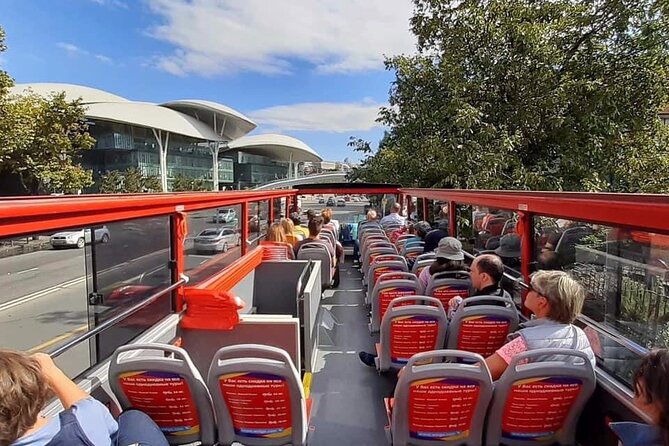
You also pass Rike Park and the Peace Bridge, two modern additions to the riverfront. From the upper deck, you may get a better view of the bridge, park, river, and surrounding hills than you would from street level. The view is one of the strongest reasons to take the tour early in your stay.
The route then reaches central areas such as Freedom Square and Rustaveli Avenue. Rustaveli is one of Tbilisi’s main avenues, lined with major public buildings and cultural sights. You will not have time to study each one from the moving bus, but the ride helps you decide where to return later.
Heroes Square and Agmashenebeli Avenue broaden the picture beyond the old town. That matters because first-time visitors often spend all their time around the baths and narrow lanes. The red bus shows you that Tbilisi is more than its historic core.
A few more ways to spend a day out of Tbilisi
- Day Trip to Kakheti Wine Region Including 9 Wine Tastings
★ 5.0 · 2,774 reviews - Highlights of Caucasus Mountains-Jinvali,Ananuri,Gudauri,Kazbegi(Group tour)
★ 5.0 · 2,682 reviews - Day Trip to Kazbegi and Gudauri
★ 5.0 · 2,009 reviews
Starting at 44 Kote Afkhazi Street
The meeting point is at 44 Kote Afkhazi Street, in the old-town area. The scheduled start is 10:00 am, and the activity returns to the same meeting point.
This is a practical starting place because you can combine the bus with time in the old town before or after the ride. The nearby streets lead toward Meidan Square, the sulphur baths, and other central sights. Still, give yourself enough time to find the exact departure point. A city bus tour is not much fun when you are running down a street looking for a red bus.
The ride is capped at 50 people. That is not a small group, but it is more manageable than a very large coach excursion. Upper-deck seating may be popular, and the available space can change with demand and weather.
One useful detail is that the bus may be operated by a multilingual guide. The audio system is intended to keep the commentary clear, and headsets are included. At its best, this arrangement lets you look out the window without trying to hear a guide over traffic.
Meidan Square and the sulphur bath district
Meidan Square is one of the natural places to begin understanding old Tbilisi. It sits close to the sulphur bath district, where the city’s famous thermal springs shaped both its identity and its old-town layout.
From the bus, you get the setting rather than a close inspection. The streets around here are narrow, and a moving double-decker bus cannot pause beside every doorway or bathhouse. I would use this part of the ride as a preview, then return on foot if the old town is your main reason for visiting Tbilisi.
The audio commentary should help identify the area, but do not expect a detailed lesson at every corner. Some passengers have found the narration too brief, while others have received clear explanations and helpful answers from the staff. That difference appears to be one of the tour’s weak spots.
Metekhi Cathedral and the Mtkvari River
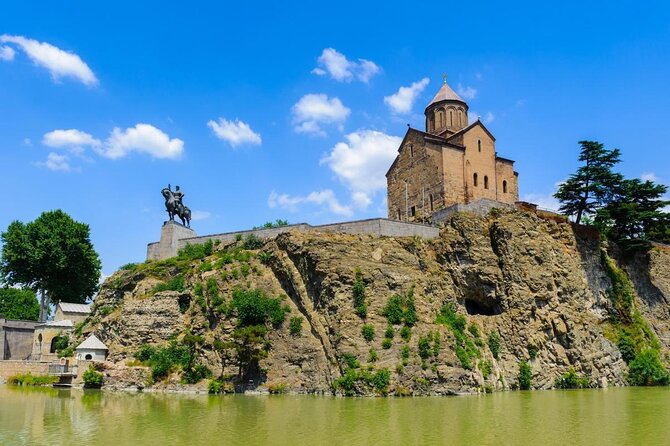
Metekhi Cathedral is one of the route’s most memorable sights. Perched beside the Mtkvari River, it gives you a strong view of Tbilisi’s older religious and defensive setting.
The bus passes the cathedral rather than providing an extended visit. That is fine for orientation, but less satisfying if you want photographs or time to look at the building itself. You may also need to keep your eyes open because the bus moves on quickly.
The river section is one of the better moments for an upper-deck seat. You can see how the old city rises from the riverbanks, while newer public spaces occupy the water’s edge. On a clear day, this is where the ride feels most worthwhile.
If you have limited mobility, this pass-by view can be especially valuable. You get access to a sight that might otherwise involve extra walking, slopes, or uneven streets. One passenger with a sprained ankle found the bus a particularly useful way to see Tbilisi without spending the whole day on foot.
A completely different kind of day out of Tbilisi:
- Day Trip to Mtskheta Gori and Uplistsikhe
★ 5.0 · 1,801 reviews - Tbilisi Walking Tour Including Cable Car and Traditional Bakery
★ 5.0 · 1,310 reviews - Day Trip to Armenia Including Homemade Lunch
★ 5.0 · 1,162 reviews - Kakheti Wine Region: Signagi and Bodbe Tour with 10 Wine Tastings
★ 5.0 · 1,019 reviews
Rike Park and the Peace Bridge
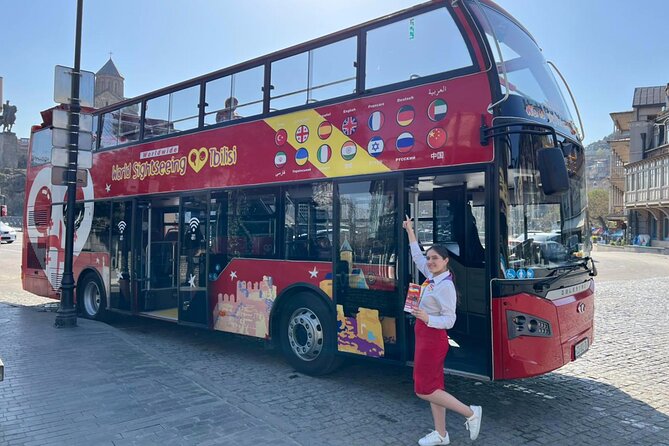
Rike Park and the Peace Bridge give the tour a modern counterpoint to the old town. The bridge’s unusual shape is easy to recognize, and the riverfront offers some of the city’s most photographed views.
The bus does not include admission to attractions because it is mainly a transport and sightseeing circuit. You pass these places at no extra cost, then decide where to spend more time during the 24-hour ticket period.
This is where the hop-on, hop-off promise needs a little caution. Stops may be announced, but the instructions about leaving the bus, waiting for the next one, and knowing the timetable are not always explicit. Before getting off, ask the staff when the next bus is expected and confirm that the route returns to the same area.
Dry Bridge Market and Agmashenebeli Avenue

Dry Bridge Market is another pass-by point. The market is known as a flea-market area, so it may appeal to you if you enjoy browsing old objects, souvenirs, and secondhand finds. The tour itself does not include market time, and no food, drinks, or shopping purchases are included.
If Dry Bridge is high on your list, treat the bus as transport reconnaissance. Note the location, then return during the 24-hour ticket window or by another local transport option. A quick pass from a moving bus will not tell you much about the market’s stalls.
Agmashenebeli Avenue adds another layer to the city. It is a useful reminder that Tbilisi has several distinct central districts, not one single old-town quarter. The route gives you a practical sense of distance and helps you plan later visits.
Freedom Square, Rustaveli Avenue, and Heroes Square
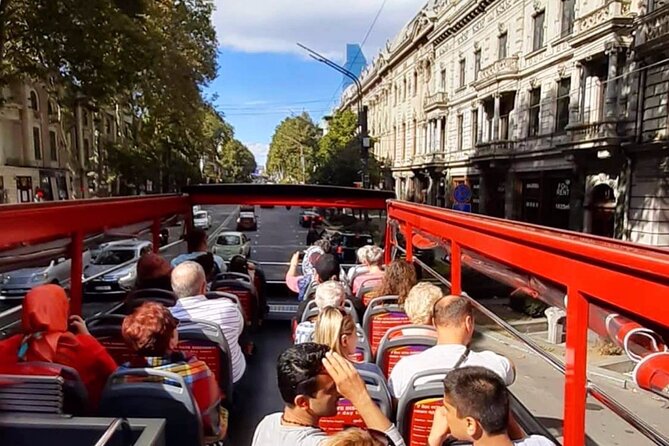
Freedom Square is one of the main reference points in central Tbilisi. It connects the old town with Rustaveli Avenue and makes a useful point for planning your next walk.
Rustaveli Avenue is broader and more formal than the old-town streets. From the bus, you can take in the scale of the avenue and see how different this part of the city feels from Meidan Square. The commentary may identify notable buildings, but the moving view is quick, so keep the headset volume comfortable and watch for landmarks outside the window.
Heroes Square carries the route farther from the oldest center. This portion is useful for anyone staying outside the old town or trying to understand Tbilisi’s wider layout. If you only have one day in the city, the ride can save you from spending your morning guessing which districts are close together.
Is the 24-hour ticket good value at $20?
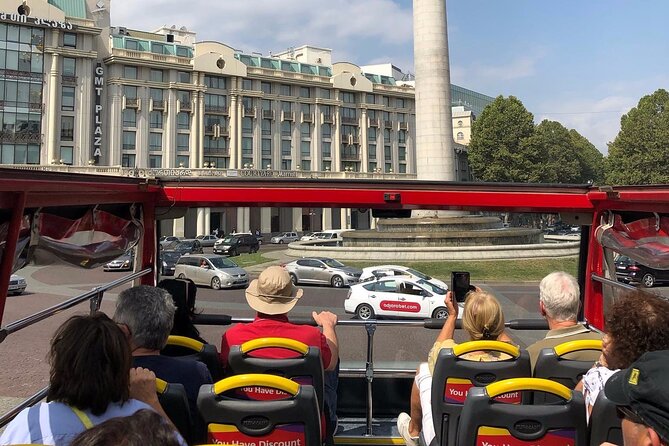
At $20, the tour is reasonably priced if you use it as both a city introduction and a way to reduce walking. The included 24-hour access is the key value, not the length of the first ride.
A complete circuit is advertised at about 90 minutes, but actual reports place it closer to one hour on some departures. Delays and long parking periods can affect the timing in either direction. If you have a tightly packed schedule, do not build your whole day around a precise return time.
The ticket makes more sense when you use it strategically:
- Take the first circuit to see which districts interest you.
- Get off at one or two useful points.
- Confirm the next bus time before leaving.
- Use the remaining ticket period to reduce walking between central sights.
The value is weaker if you simply ride once and leave. One passenger found the extra 24-hour access less useful because the complete route finished in about an hour and the stops were not clearly explained. That is a fair criticism.
The audio guide and the human element
The excursion is accompanied by audio commentary in 14 languages, and headsets are supplied. The headsets are important because city traffic can make ordinary spoken commentary hard to catch.
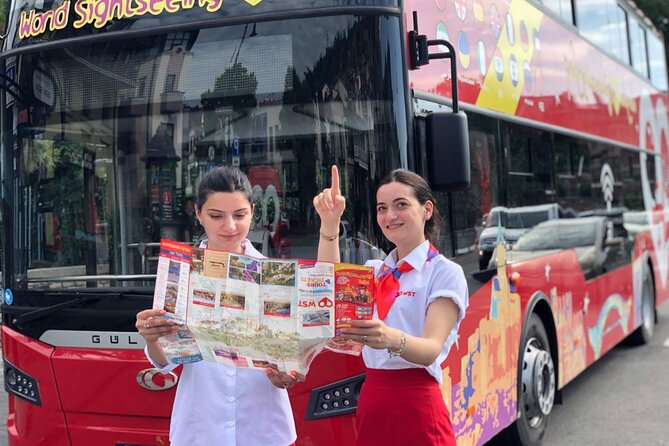
English is offered, and the bus may also have a multilingual guide. Staff members at the starting point have been described as helpful, and at least one guide was able to answer questions in English. That human help can make a big difference when the audio track leaves out context.
Still, I would keep expectations modest. The audio guide is meant to identify sights and provide basic background, not replace a specialist walking guide. Some narration may tell you what you are passing without explaining why it matters or exactly where to look.
Check your headset as soon as you board. If you do not receive one, ask immediately rather than waiting until the bus has reached the far side of the route. The quality of the experience depends heavily on being able to match the spoken description to the building outside.
Waiting times, weather, and the hop-on question
The biggest practical risk is timing. Bus intervals can be around 30 minutes, but reported waits have reached 40 minutes or even an hour. That may happen because of traffic, parking, route planning, or a changed operating schedule.
Rain and cold make this problem much worse. One passenger was asked to leave the bus in wet weather and wait for the next vehicle, which turned a simple sightseeing ride into an uncomfortable delay. If the forecast is poor, bring a waterproof layer and do not assume you can remain on the same bus for the entire operating period.
The hop-on, hop-off format is useful in theory, but you need to manage it actively. Ask three questions before you step off:
- How long until the next bus?
- Does this stop serve the same red line?
- Where exactly should I wait?
The tour ends back at the meeting point, but individual stop arrangements may not be explained in much detail. A printed tour brochure can help, and one has been supplied on some departures.
Who will enjoy this Tbilisi bus tour?
I would recommend it most strongly to:
- First-time visitors who want a quick city orientation.
- People who cannot comfortably walk for several hours.
- Families who prefer a seated introduction before exploring on foot.
- Visitors staying for at least one full day, so the 24-hour ticket has a chance to pay off.
- Anyone who likes seeing a city from an upper deck and taking photographs along the way.
I would be more cautious if you want detailed local stories, exact historical explanations, or a carefully managed schedule. A walking tour will usually give you more time at the baths, cathedral, bridges, and old streets. The red bus is a broad introduction, not a close study.
Children must be accompanied by an adult, and most people can participate. The activity is near public transport and does not list health restrictions. Food and drinks are not included, so plan those separately.
Should you book the red bus in Tbilisi?
Book it if you want a low-effort overview of Tbilisi, especially during a short visit or while dealing with mobility limits. The route reaches many major sights, the upper-deck views can be excellent, and the 24-hour ticket gives you a chance to use the bus more than once.
Skip it if your main goal is detailed interpretation or guaranteed timing. In that case, spend the $20 on a walking experience or use ordinary city transport and explore the old town at your own pace.
If you do book, start early, bring a light rain layer, test the headset, and ask about the next departure before hopping off. Free cancellation is available when you cancel at least 24 hours before the 10:00 am start. That gives you some flexibility if the weather or your plans change.
FAQ
Where does the Tbilisi red bus tour start?
The tour starts at 44 Kote Afkhazi Street, Tbilisi 0105, Georgia.
What time does the tour begin?
The scheduled start time is 10:00 am.
How long does the bus tour last?
The advertised circuit takes approximately 1 hour and 30 minutes, although some departures may finish in about an hour.
How long is the ticket valid?
The included ticket is valid for 24 hours.
Is an audio guide included?
Yes. Headsets are included, and audio commentary is available in 14 languages. The activity is offered in English, and operation may include a multilingual guide.
Does the tour return to its starting point?
Yes. The activity ends back at the meeting point.
What is included in the $20 price?
The price includes the 24-hour ticket, headsets, and all taxes, fees, and handling charges. Food and drinks are not included unless specifically stated.
What is the cancellation policy?
You can receive a full refund if you cancel at least 24 hours before the experience start time. Changes or cancellations made less than 24 hours before the start are not accepted for a refund.
Recently added around Tbilisi
- Northern Armenia Highlights Tour from Tbilisi★ 5.0 · 3 reviews
- Wild Georgia 4WD PACK Adventure through Kakheti and Kazbegi 2in1★ 5.0 · 3 reviews
- Kakheti wine region – Private Tour★ 5.0 · 3 reviews
- Jvari monastery & Mtskheta – Half day group tour from Tbilisi★ 5.0 · 3 reviews
- Private Full Day Trip to Kazbegi Mountains★ 5.0 · 3 reviews
- Kakheti With Top Destinations★ 5.0 · 3 reviews
- Private Effortless transfer from Tbilisi to Gudauri ski resort★ 5.0 · 3 reviews
- Borjomi – Rabati -Vardzia Private Full Day Tour from Tbilisi★ 5.0 · 3 reviews
City Tours, compared.

City of Love Sighnaghi, Bodbe. KTW. Wine House Group tour
Read our review →
Mtskheta – Jvari. Full City Tour on Hop On Hop Off Bus
Read our review →
Day tour to Chronicles of Georgia, Gori city, Uplistsikhe cave
Read our review →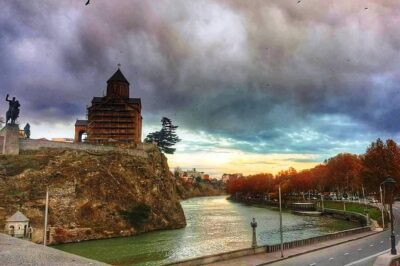
Tbilisi city tour PRIVATE excursion Airport and hotel pickup INCL
Read our review →
Tbilisi City Tour, Most Popular Tourists Destinations In The Capital Of Georgia
Read our review →

Browse the lists this tour appears in