
Reviewed · HIKING & TREKKING
Trekking Tour from Tusheti to Khevsureti via Atsunta Pass
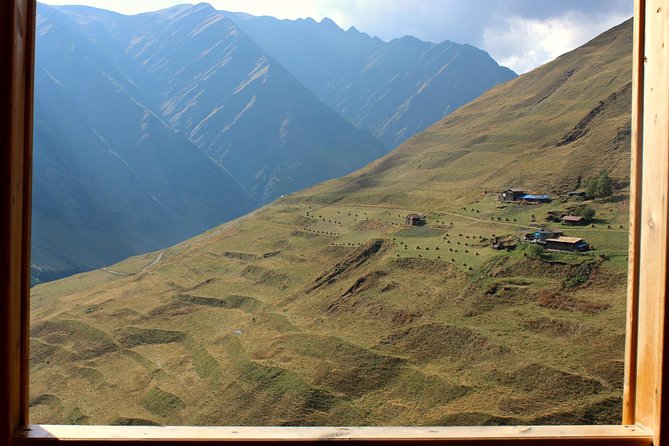
Remote Georgia rewards strong legs. This six-day trek links Tusheti and Khevsureti by way of the 3,431-meter Atsunta Pass, passing stone towers, alpine meadows, pine forests, and villages far from ordinary road trips. I like the mix of culture and wilderness, especially the visits to Dartlo, Mutso, and Shatili. I also like that meals, horses for luggage, camping gear, and major transfers are included. The main caution is simple: 72 kilometers of walking and a high mountain pass demand strong fitness, steady footing, and a taste for basic conditions.
The route begins with a long 4WD ride from Tbilisi, then spends several days in remote mountain country with few people and no huts. That isolation is the point, but it also means limited comfort and little room for a last-minute change of plan. Past trips have used guides including Dito, Tato, Dimitri, Nutsa, and Misha, with praise for friendly leadership, clear communication, local insight, good food, and flexible organization.
In This Review
- Key points before you book
- Why this Tusheti to Khevsureti route matters
- Day 1: The rough road to Omalo and Keselo Towers
- Day 2: Dartlo, Kvavlo, and the Pirikiti valley
- Day 3: Chesho, Parsma, and the approach to Girevi
- Day 4: From Girevi to the camping fields near Kvakhidi
- Day 5: Atsunta Pass at 3,431 meters
- Day 6: Mutso, Shatili, and the long return to Tbilisi
- Food, lodging, luggage, and group size
- Who should book this trek?
- Practical details that affect the decision
- Should you book the Atsunta Pass trek?
- FAQ
- Where does the tour start?
- Where does the tour end?
- How long is the trek?
- What is the highest point on the route?
- Is transport included?
- Are meals included?
- Is accommodation included?
- Do horses carry luggage?
- What fitness level is required?
Key points before you book
- A 3,431-meter crossing: Atsunta Pass is the physical high point and the most demanding section of the route.
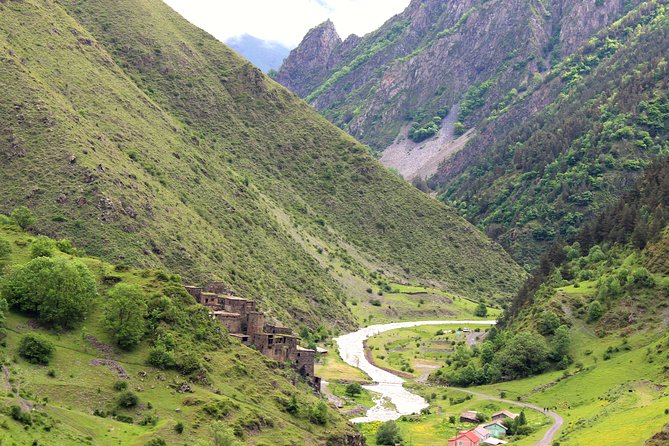
- Four historic mountain villages: Dartlo, Mutso, Shatili, and the ruined village of Kvavlo provide the cultural backbone of the trek.
- Three days in the open mountains: After Girevi, the trail leaves the easier road corridor and follows shepherd paths through remote country.
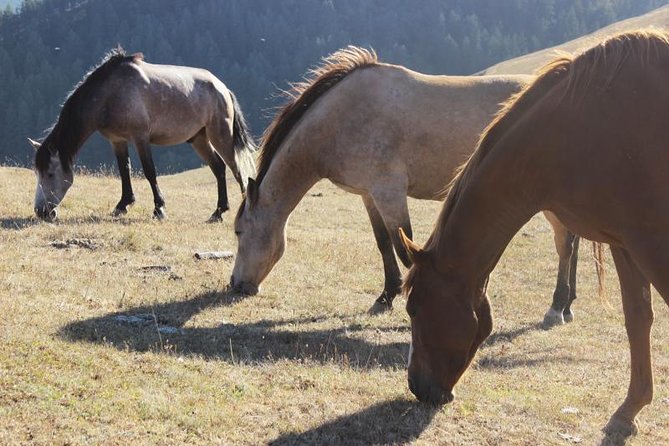
- Luggage support by horse: You hike with a lighter pack while horses carry luggage, an important help on long uphill days.
- A real comfort compromise: You get guesthouses, tents, sleeping bags, mats, and cooked meals, but some guesthouse facilities are shared.
- Small group format: The maximum group size is 15 people, with a multilingual guide possible.
Why this Tusheti to Khevsureti route matters
Georgia has no shortage of mountain trips, but this route has a useful shape. It begins among the settled stone villages of Tusheti, moves into three days of open mountain walking, then ends among Khevsureti’s fortified towers and narrow gorges.
That change in mood is what makes the trip memorable. In Tusheti, you see how people built homes and defensive structures in difficult terrain. In the middle section, there are no villages or mountain huts, and the scenery takes over. In Khevsureti, the trail becomes easier again as you approach inhabited places.
The price is $1,620 per person. That is not a budget walk, but the cost covers far more than guiding. You get the difficult 4WD transport from Tbilisi to Omalo, vehicle transport from Mutso through Shatili and back to Tbilisi, six days of guide leadership, guesthouse stays, camping equipment, horses for luggage, and all listed breakfasts, lunches, and dinners.
You still pay separately for drinks, trekking poles, a backpack, and your final night in Tbilisi. For a remote crossing with transport arranged at both ends, the price can make sense, especially if you value not having to organize horses, food, tents, and mountain transfers yourself.
More hiking:
- David Gareji and Real Rainbow Mountains Off-Road adventure + hike
★ 5.0 · 129 reviews - 8-Day Trekking Group Tour in Svaneti
★ 5.0 · 21 reviews - Kazbegi Tour with Gergeti Church, Waterfall Hike & Hidden Gems
★ 5.0 · 19 reviews
Day 1: The rough road to Omalo and Keselo Towers
The trip starts at 9 a.m. by the Giant Bicycle monument at Rose Revolution Square in Tbilisi. From there, you drive toward the Kakheti region before taking a mountain route over a pass at about 2,850 meters.
Allow roughly six hours for the drive to Omalo, and about ten hours for the full day. This is not a minor transfer before the real trip begins. The road is part of the experience, and reaching Tusheti by 4WD is one reason the region remains so remote.
After arrival, you explore Omalo and the Keselo Towers. Omalo gives you a first look at Tusheti’s mountain architecture, while the towers provide a strong introduction to the defensive building style found throughout the region.
The day is long, and much of it is spent in the vehicle. If you are hoping to start hiking immediately, this may feel slow. I would treat the drive as necessary access to a part of Georgia that ordinary sightseeing transport does not reach.
You stay overnight in an Omalo guesthouse with private facilities. That first night matters because it gives you a proper base before the walking becomes more serious.
Day 2: Dartlo, Kvavlo, and the Pirikiti valley
The second day takes you toward Dartlo in the Pirikiti Tusheti valley. Tusheti is divided roughly between the Pirikiti Alazani river ravine and the Gometsari Alazani river area, and this route follows the Pirikiti side.
Dartlo is one of the most attractive villages on the route. Its renovated stone houses and defensive buildings show the compact design used in a region where protection mattered. The village is not presented as a museum display. It remains part of a wider mountain setting, with paths, slopes, and high peaks around it.
From Dartlo, you hike up to Kvavlo. The one-way walk is about 3.2 kilometers, with roughly 400 meters of ascent, from 1,833 to 2,182 meters. It takes about two hours one way, so this is a meaningful uphill outing rather than a short village stroll.
Kvavlo is mostly ruined, but that is part of its appeal. Its old towers and houses sit above the Alazani river, with broad views over the surrounding mountains. You get a clear contrast here: Dartlo offers restored village life, while Kvavlo shows what time and abandonment can do to the same stone-building tradition.
The full day is listed at about ten hours. That includes walking, time in the villages, and the return or onward movement through the valley. You sleep at a Dartlo guesthouse with shared facilities, so do not expect the private-room comfort of Omalo.
Day 3: Chesho, Parsma, and the approach to Girevi
On Day 3, the route follows the Pirikiti Alazani river upstream through a narrowing gorge. The pace shifts from village exploration to a longer mountain approach.
The route includes Chesho and Parsma, both known for attractive stone houses and towers. These stops are useful because they show that Tusheti is not defined by one famous village. The area is a chain of small settlements, each shaped by the same hard climate and steep terrain.
From Parsma, the path becomes narrower as you continue toward Girevi. The change is gradual, but it signals what comes next. Roads and village paths give way to shepherd routes, and the trip begins to feel more remote.
Girevi is an important staging point. It is the last of the Tusheti settlements on this itinerary before the route heads into the wilderness. The guesthouse has shared facilities, and dinner and breakfast are included.
Another ten-hour day makes pacing important. You should not spend all your energy racing between the villages. A strong guide can help set a sensible rhythm, and past trips have included guides such as Dito, Tato, and Dimitri. Their reported strengths include local knowledge, friendly company, quick communication, and flexible organization.
A few more ways to spend a day out of Tbilisi
- Day Trip to Kakheti Wine Region Including 9 Wine Tastings
★ 5.0 · 2,774 reviews - Highlights of Caucasus Mountains-Jinvali,Ananuri,Gudauri,Kazbegi(Group tour)
★ 5.0 · 2,682 reviews - Day Trip to Kazbegi and Gudauri
★ 5.0 · 2,009 reviews - Day Trip to Mtskheta Gori and Uplistsikhe
★ 5.0 · 1,801 reviews
Day 4: From Girevi to the camping fields near Kvakhidi
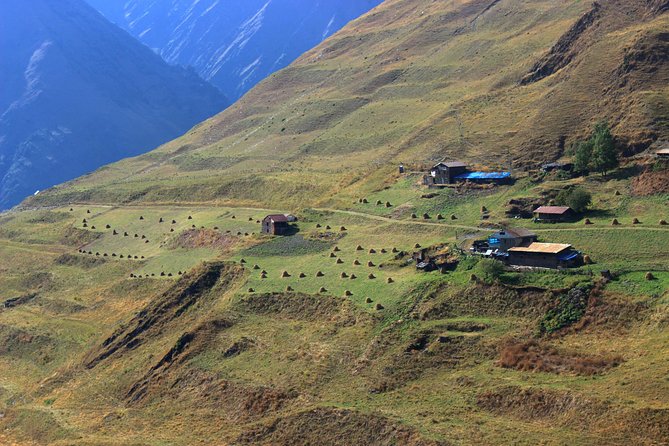
This is where the trip becomes a proper mountain trek. After breakfast, you leave Girevi and follow a narrow gorge above the village.
You cross small mountain rivers and pass the ruined village of Chontio. The route then continues toward Kvakhidi, where the surroundings open into green fields, alpine meadows, and rocky ground.
The itinerary describes this as the hardest part of the trip, and the ten-hour day explains why. The difficulty is not only the distance. You are moving through remote country, crossing uneven ground, and preparing for the high pass ahead.
There are no mountain huts and no settlements in this three-day wilderness section. Other hikers may be present, but the route is specifically valued for its lack of ordinary human activity. That makes the camping stop near Kvakhidi feel earned.
Camping equipment is provided, including tents, sleeping bags, sleeping mats, and cooking gear. Dinner is included, so you are not expected to carry a full kitchen on your back. Horses transport luggage, which should make the walking more manageable, though you still need your own day pack with personal essentials.
Day 5: Atsunta Pass at 3,431 meters
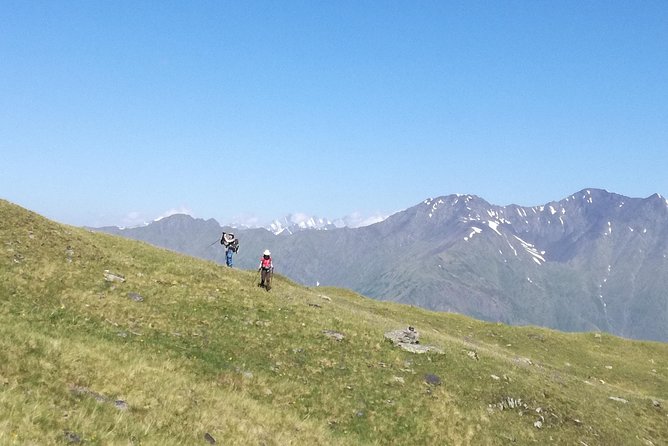
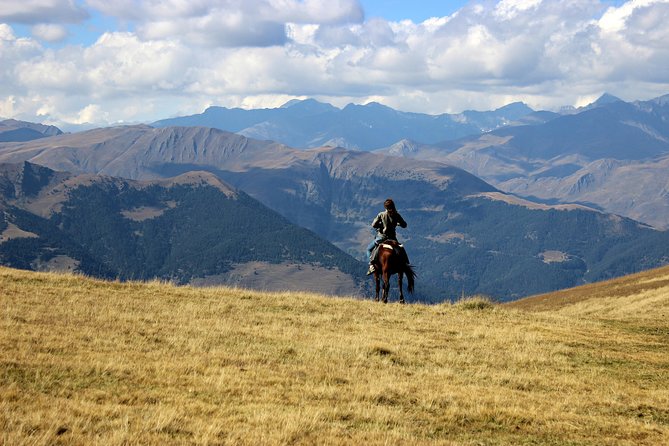
Day 5 is the central challenge of the crossing. You start early and hike up to Atsunta Pass, the highest point of the trip at 3,431 meters above sea level.
The pass is a natural high point in every sense. You stop for snacks and views across alpine meadows and surrounding mountain ridges. This is the place to slow down, catch your breath, and take in the scale of the route you have crossed.
The ascent is the section that makes fitness a serious booking requirement. The information for the trip calls for a strong physical level, and that should be taken literally. Six days of walking, two camping nights, steep ground, and altitude are not a good match for someone who only takes occasional easy walks.
After Atsunta Pass, you descend toward the Khidotani ridge and camp in an open alpine meadow. The descent can feel easier than the climb, but tired legs bring their own problems. Trekking poles are not included, so I would plan to bring them if you normally rely on support on steep descents.
The night in the open meadow is one of the tour’s strongest features for the right person. There is no guesthouse comfort, but there is also no road noise, busy resort, or schedule of indoor attractions. You are simply in the mountains, with camp, food, and the route ahead.
Day 6: Mutso, Shatili, and the long return to Tbilisi
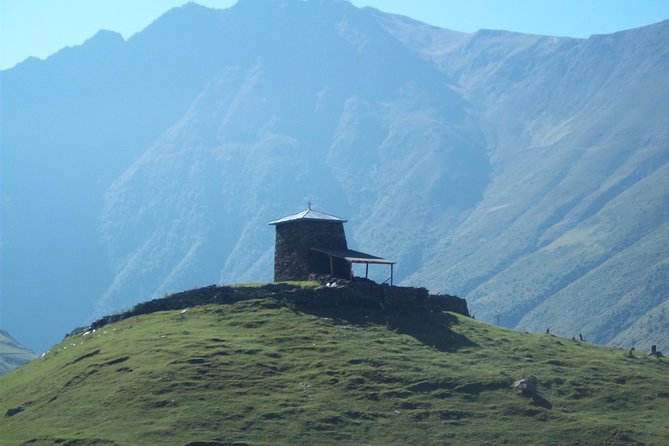
After breakfast, you hike down through a narrow gorge and reach the first inhabited place in Khevsureti. Passing Khone marks the return to settled country after the remote crossing.
The route then reaches Mutso, a largely abandoned village with stone towers and houses set among steep rocky surroundings. The fortified complex has been renovated, and you take a two-kilometer detour to see it properly.
Mutso is not a quick roadside photo stop. The detour gives you time to understand how the buildings fit into the mountain setting, and why defensive village design was so important in Khevsureti. The towers and narrow gorge create a very different feeling from the wider meadows near the pass.
Near Mutso, a vehicle and driver meet the group. You then drive to Shatili, another remarkable medieval complex of stone towers and houses, before continuing to Tbilisi in a comfortable vehicle.
This is another ten-hour day, and it combines hiking, sightseeing, and a long transfer. You should expect to arrive tired. Shatili is an important final stop, but the return to Tbilisi means the tour ends with transport rather than a relaxed final evening in the mountains.
The accommodation information includes an overnight at a Shatili guesthouse with shared facilities. Since the Day 6 plan also describes transport onward to Tbilisi, confirm the exact sleeping arrangement and return timing with TrekGeorgia before departure.
Food, lodging, luggage, and group size
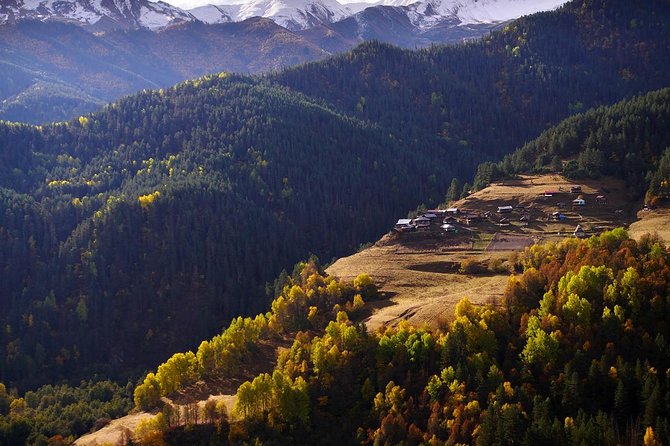
The food plan is a real advantage. Six dinners, six lunches, and five breakfasts are included, along with attention to dietary requirements if you provide them at booking. In remote mountain country, having meals arranged removes one major worry.
The accommodation varies. Omalo has private facilities, while Dartlo, Girevi, and Shatili use shared facilities. The route also includes camping with basic equipment. Think practical mountain hospitality, not polished hotels.
The horses carrying luggage are especially helpful on the pass section. You still need a personal backpack, and the tour does not include a backpack or trekking poles. Pack light, keep important personal items with you, and ask the operator about the exact luggage transfer arrangement before you leave.
The maximum group size is 15 people. That is small enough for a social trip without turning every narrow path into a queue. The guide may be multilingual. Past guide teams have included Dito and Tato, as well as Nutsa and Misha, and the strongest feedback has focused on warm company, organization, local understanding, and good food.
Who should book this trek?
I would recommend it to fit hikers who want a serious mountain route with cultural stops built in. It suits solo hikers particularly well because the group setting, included meals, and guide support make a remote trip easier to manage alone.
It also works for couples and friends who want more than a standard Georgian road tour. You see villages that are difficult to reach, then spend three days away from settled areas. The route gives you both human stories in stone and long stretches of quiet mountain country.
I would not choose it for a first-ever multi-day hike unless you already have strong fitness and are comfortable with camping. The daily schedule is long, facilities can be shared, and the Atsunta crossing reaches high altitude. The tour is not designed around luxury or leisurely mornings.
The minimum age is 14, but age alone does not decide suitability. The important question is stamina. Every participant needs a current passport, and passport name, number, expiry date, and country are required when booking.
Practical details that affect the decision
The meeting point is the Giant Bicycle monument at Rose Revolution Square in Tbilisi, with a 9 a.m. start. The activity ends back at that meeting point after the return from Khevsureti.
Confirmation is normally issued at booking. If you book within seven days of departure, confirmation can take up to 48 hours and depends on availability. The operator permits one suitcase and one carry-on per person, but oversized items need prior approval.
The cancellation terms reward early planning. Cancel at least six full days before the start for a full refund. Cancellation two to six days ahead receives a 50 percent refund, while cancellation less than two full days ahead receives no refund. Changes follow the same cutoffs, so check your plans before booking.
Should you book the Atsunta Pass trek?
Book it if you want Georgia at its most remote and can handle six long days, basic camping, shared facilities, and a 3,431-meter pass. The best reasons are the unusual route, the horse-supported luggage, the included meals and equipment, and the sequence of villages from Dartlo to Mutso and Shatili.
Think twice if you want a soft adventure, short walks, or dependable hotel comfort. The long drives and wilderness section are part of the deal, not side notes.
For a strong hiker who values real mountain access, this is a well-designed crossing with a clear payoff. You get the tough road into Tusheti, the quiet center of the Caucasus, and a memorable finish among Khevsureti’s stone towers.
FAQ
Where does the tour start?
The tour starts at 9 a.m. at the Giant Bicycle monument at Rose Revolution Square in Tbilisi, Georgia.
Where does the tour end?
The activity ends back at the meeting point in Tbilisi after transport from Shatili.
How long is the trek?
The experience lasts approximately six days, with about 72 kilometers of walking involved.
What is the highest point on the route?
The highest point is Atsunta Pass at 3,431 meters above sea level.
Is transport included?
Yes. The tour includes a 4WD transfer from Tbilisi through Alavani to Omalo, plus vehicle transport from Mutso to Shatili and then to Tbilisi.
Are meals included?
Yes. The package includes six lunches, five breakfasts, and six dinners. Drinks are not included.
Is accommodation included?
Yes. The package includes guesthouse stays in Omalo, Dartlo, Girevi, and Shatili, plus basic camping equipment for the wilderness section.
Do horses carry luggage?
Yes. Horses are included for luggage transportation. A backpack and trekking poles are not included.
What fitness level is required?
You should have a strong physical fitness level. The route includes long ten-hour days, remote mountain paths, camping, and the ascent to Atsunta Pass.
Recently added around Tbilisi
- Northern Armenia Highlights Tour from Tbilisi★ 5.0 · 3 reviews
- Wild Georgia 4WD PACK Adventure through Kakheti and Kazbegi 2in1★ 5.0 · 3 reviews
- Kakheti wine region – Private Tour★ 5.0 · 3 reviews
- Jvari monastery & Mtskheta – Half day group tour from Tbilisi★ 5.0 · 3 reviews
- Private Full Day Trip to Kazbegi Mountains★ 5.0 · 3 reviews
- Kakheti With Top Destinations★ 5.0 · 3 reviews
- Private Effortless transfer from Tbilisi to Gudauri ski resort★ 5.0 · 3 reviews
- Borjomi – Rabati -Vardzia Private Full Day Tour from Tbilisi★ 5.0 · 3 reviews
Hiking & Trekking, compared.
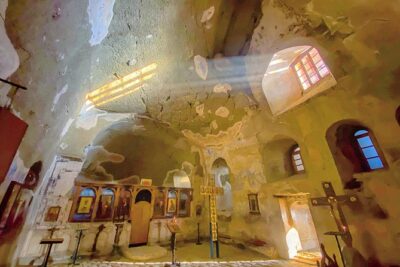
David Gareji and Real Rainbow Mountains Off-Road adventure + hike
Read our review →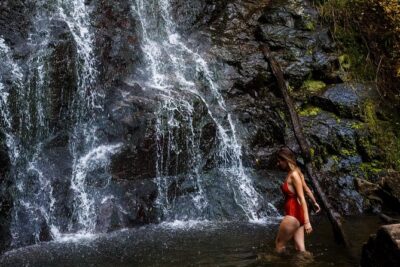
Batumi & Mtirala N.P. Hiking tour from Kutaisi
Read our review →
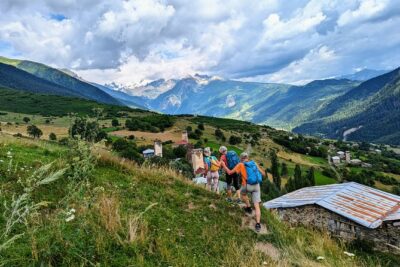
Kazbegi Tour with Gergeti Church, Waterfall Hike & Hidden Gems
Read our review →
Five days tour to Khevsureti (Abudelauri lakes) & Kazbegi with hikes.
Read our review →
Private Hiking Tour to Machakhela National Park from Batumi
Read our review →Browse the lists this tour appears in