
Reviewed · CHRONICLES OF GEORGIA TOURS
Top highlights of Tbilisi: Old City Sameba Chronicles of Georgia
Tbilisi reveals itself in layers. This private, five-to-six-hour tour connects Old Tbilisi’s major sights with the distant Chronicles of Georgia, giving you a useful first look at the city without making you solve the transport puzzle yourself. I especially like the door-to-door pickup and the chance to see both the old center and a monument well outside it. The main consideration is pace: nine stops in one day means some visits are brief.
I also like that the tour is private, offered in English, and priced at $35 per person, with an air-conditioned vehicle and entrance fees included. Guides such as Mariami, Makho, and Mindia have been praised for clear explanations, helpful photo-taking, and flexible pacing. Still, lunch is not included, and the tour requires good weather, so you should plan a backup day if rain is likely.
In This Review
- Key points at a glance
- A useful first look at Tbilisi
- Metekhi Cathedral and the first city views
- Rike Park and the modern face of Tbilisi
- Narikala Fortress above the Old City
- Leghvtakhevi Waterfall in Abanotubani
- Meidan Bazaar for Georgian-made gifts
- Jan Shardeni Street and the social center of Old Tbilisi
- The Bridge of Peace and renewed Tbilisi
- Sameba Cathedral, the city’s largest church
- The Chronicles of Georgia, the day’s big finish
- What the $35 price really covers
- Guide quality and the private format
- Who should book this Tbilisi tour?
- Should you book it?
- FAQ
- How long does the Tbilisi tour last?
- Is hotel pickup available in Tbilisi?
- Is the tour private?
- Is the tour offered in English?
- Is lunch included?
- What happens if bad weather cancels the tour?
Key points at a glance
- Nine contrasting stops in five to six hours: You see churches, fortifications, a waterfall, a market, modern architecture, and a large outdoor monument.
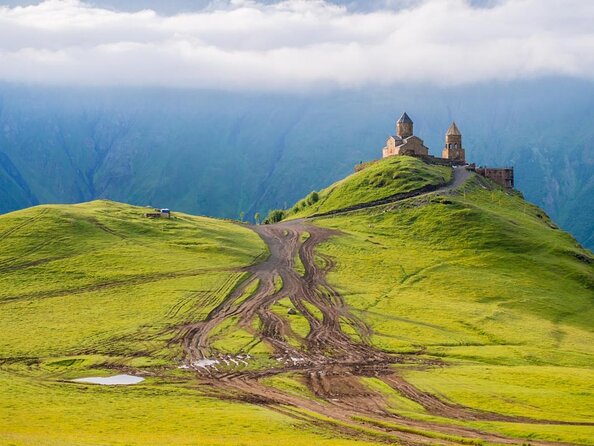
- The Chronicles of Georgia is the visual highlight: Its 16 huge pillars sit outside central Tbilisi and offer a very different view of the city.
- Pickup anywhere in Tbilisi: This saves time at the start, especially if you are staying outside the Old City.
- A private English-language outing: Only your group participates, so you can ask questions and request a slower or faster pace.
- A strong first-day choice: The route introduces Georgian faith, kings, Soviet-era monumental art, and modern Tbilisi in one outing.
- Bring lunch money and sensible shoes: Food is excluded, and several stops involve walking on old streets and around hilltop sites.
A useful first look at Tbilisi
Tbilisi can feel confusing at first. The city spreads along the Mtkvari River, while its oldest quarters climb the hills on both sides. A half-day route by private vehicle helps you connect places that are close on a map but not always easy to link on foot.
This is not only an Old City walk. The route begins in the historic center, then moves through parks, fortress paths, bathhouse streets, shopping lanes, and the modern Bridge of Peace before reaching Sameba Cathedral. It finishes at the Chronicles of Georgia, a large monument farther from the central sights.
That mix gives you more than a checklist of old buildings. You get a quick introduction to the religious life of Georgia, its medieval defenses, its modern city planning, and the way national history is presented through monumental art.
The schedule is full. Most stops last between 10 and 40 minutes, with one hour at the Chronicles of Georgia. I would treat this as an orientation tour rather than a day for slow museum visits or long meals. It is designed to show you the shape of Tbilisi and help you decide where to return later.
More Chronicles of Georgia visits:
- Tbilisi:Mtskheta,Jvari,Bazaar,wine tasting,Chronicles of Georgia
★ 5.0 · 730 reviews - Mtskheta-Jvari-Uplistsike-Chronicle of Georgia, PRIVATE Trip
★ 5.0 · 105 reviews - Day tour to Chronicles of Georgia, Gori city, Uplistsikhe cave
★ 5.0 · 86 reviews
Metekhi Cathedral and the first city views
Metekhi Cathedral is a strong opening stop because it places you above the river and close to the story of Tbilisi’s beginnings. The site is linked with King Vakhtang, who began developing the city as a capital and established a church on this hill in the fifth century.
You have about 35 minutes here, enough time to look around the church and take in the views over Old Tbilisi. The position matters as much as the building. From this height, you can begin to understand how the river, cliffs, domes, bridges, and old neighborhoods fit together.
I would listen carefully during this stop because it gives context for the rest of the day. Tbilisi is not a flat, orderly collection of sights. Its character comes from the meeting of river, hill, fortress, church, and neighborhood, and Metekhi makes that arrangement easy to see.
Admission is free. Modest clothing is sensible around Georgian Orthodox churches, though the provided information does not specify a formal dress rule.
Rike Park and the modern face of Tbilisi
A short visit to Rike Park follows. You get about 15 minutes here, so this is more of a visual pause than a full park visit.
The park is one of the newer designed public spaces in central Tbilisi. Its unusual feature is its shape: seen from above, the whole park is intended to resemble a map of Georgia. That detail gives the place a national focus that goes beyond lawns and paths.
Rike Park also helps show how much Tbilisi has changed. You move from the old hilltop cathedral to a deliberately planned modern space in just a few minutes. Keep your expectations realistic, though. Fifteen minutes is enough for an overview and photographs, not for a relaxed stroll through every corner.
Narikala Fortress above the Old City
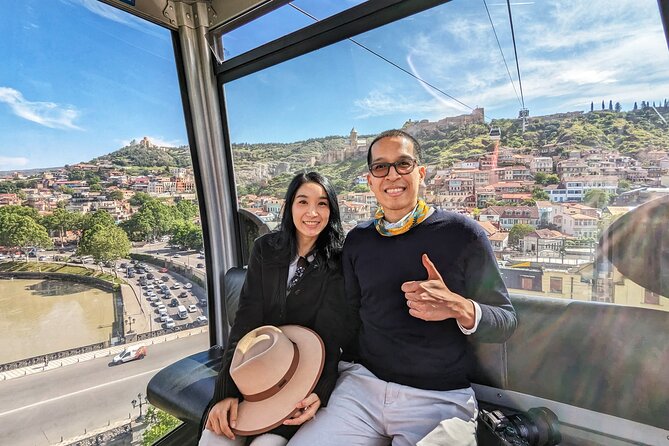
Narikala is one of the essential Tbilisi stops. The fortress draws the eye from many parts of the city, and its hilltop position gives you broad views across the Old City and the Mtkvari River.
The visit lasts about 40 minutes, with admission included. You can expect time to walk around the fortress area, look across the rooftops, and take photographs. The site is especially striking when seen from below at night, but this daytime tour focuses on its setting and views.
The practical point is footwear. A fortress visit means uneven ground and some walking, even though the tour uses a vehicle between major areas. If you want the best photographs, keep your camera ready before you reach the main viewpoint.
Narikala is also a good place to ask your guide about the city’s defensive past. The fortress is not an isolated monument. It explains why this part of Tbilisi developed around steep slopes and narrow routes.
A few more ways to spend a day out of Tbilisi
- Day Trip to Kakheti Wine Region Including 9 Wine Tastings
★ 5.0 · 2,774 reviews - Highlights of Caucasus Mountains-Jinvali,Ananuri,Gudauri,Kazbegi(Group tour)
★ 5.0 · 2,682 reviews - Day Trip to Kazbegi and Gudauri
★ 5.0 · 2,009 reviews - Day Trip to Mtskheta Gori and Uplistsikhe
★ 5.0 · 1,801 reviews
Leghvtakhevi Waterfall in Abanotubani
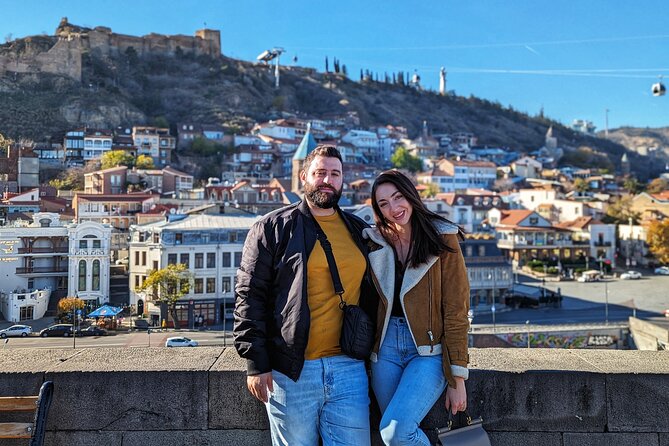
The route then drops into Abanotubani, one of the oldest parts of Tbilisi, for Leghvtakhevi Waterfall. The waterfall is about 22 meters high and sits within the Old City, making it an unusual contrast with the surrounding streets and bathhouse district.
You have roughly 20 minutes here. That is enough to reach the viewpoint, enjoy the sound of the water, and take photographs. The stop is compact, but it breaks up the churches and fortifications with something natural.
The waterfall can be slippery or awkward underfoot in wet conditions, so take care. Since the experience depends on good weather, a rainy day may affect both comfort and photographs. Admission is free.
Meidan Bazaar for Georgian-made gifts
Meidan Bazaar offers a short shopping stop in an underground tunnel-shop. The focus is on products made in Georgia, including wine, handmade socks, postcards, jams, sauces, spices, and tea.
You get 25 minutes here. That is enough for a look and perhaps a small purchase, but not a long tasting session or an extended shopping trip. The value of this stop is convenience: you can see several types of Georgian goods in one place without searching across the city.
I would use it to compare prices and note products you may want to find elsewhere later. A market stop can sometimes feel tourist-oriented, and this one is openly aimed at visitors, but the emphasis on Georgian-made items makes it more useful than a generic souvenir shop.
Jan Shardeni Street and the social center of Old Tbilisi
Jan Shardeni Street is a compact pedestrian lane known for galleries, vitreous enamel work, handmade items, bars, and restaurants. The tour allows about 25 minutes here.
This is one of the livelier parts of the Old City, and it gives you a sense of Tbilisi as a place where people eat, meet, browse, and socialize. It is not a formal monument, which is precisely why it belongs on the route. You see how the historic center functions as a neighborhood and nightlife district, not just as a collection of preserved buildings.
The timing is useful for orientation, but you will not have much time for a full meal. Since lunch is not included, you could ask your guide about returning here later if you want to eat in the Old City. Keep in mind that the tour continues, so a quick snack may be more practical than a long restaurant stop.
The Bridge of Peace and renewed Tbilisi
The Bridge of Peace crosses the Mtkvari River and opened in 2010. Its glass-and-steel form is one of the symbols of modern Tbilisi, and it creates a clear visual link between the older districts and newer public spaces.
The stop lasts about 10 minutes. That is short, but the bridge is easy to appreciate quickly. You can walk across part of it, take photographs, and see the river corridor from a different angle.
This is a useful counterpoint to Metekhi and Narikala. The earlier stops show Tbilisi’s older religious and defensive layers, while the bridge represents a city presenting itself through new architecture. Some visitors may prefer the old streets to the modern design, but seeing both gives you a fairer picture of present-day Tbilisi.
Sameba Cathedral, the city’s largest church
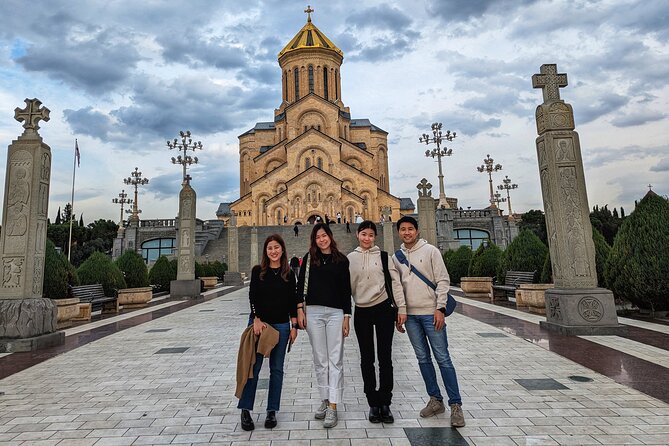
The Tbilisi Holy Trinity Cathedral, usually called Sameba, is the main cathedral of the Georgian Orthodox Church and the largest cathedral in the country. The tour gives you about 40 minutes here.
The scale is the first thing you notice. Sameba is a major religious complex rather than a small Old City chapel, and its setting gives the visit a different feel from Metekhi. Your guide can help explain the role of Georgian Orthodoxy and the place of the cathedral in modern national life.
Admission is free. As with Metekhi, respectful behavior and suitable clothing are wise. The time allowance lets you see the main exterior and interior areas available to visitors, though the exact access can depend on services or local conditions.
Sameba is one of the stops where a guide adds real value. Without context, you see a large cathedral. With explanation, you can better understand why it matters to Georgia and how it differs from the smaller historic churches in the Old City.
The Chronicles of Georgia, the day’s big finish
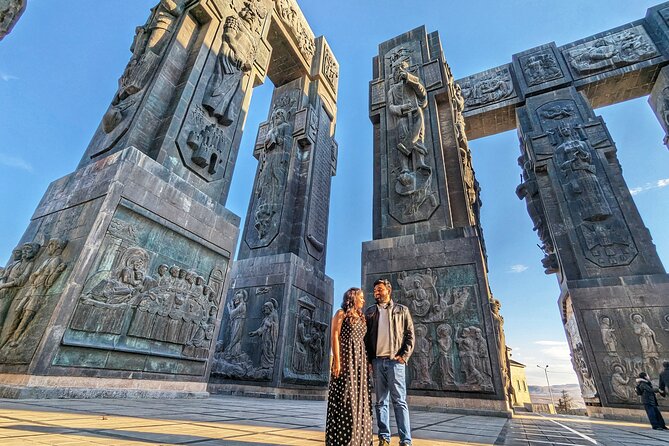
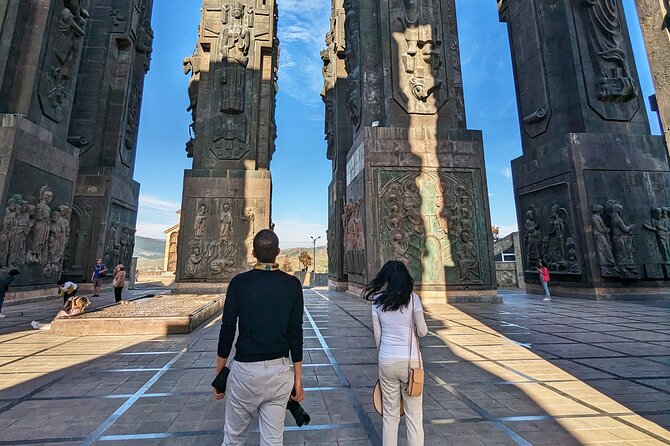
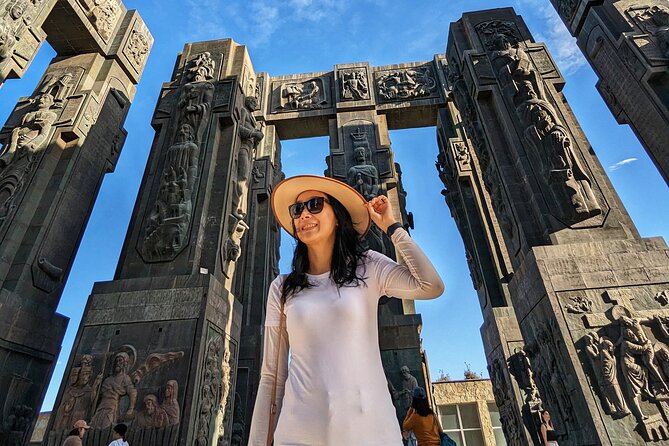
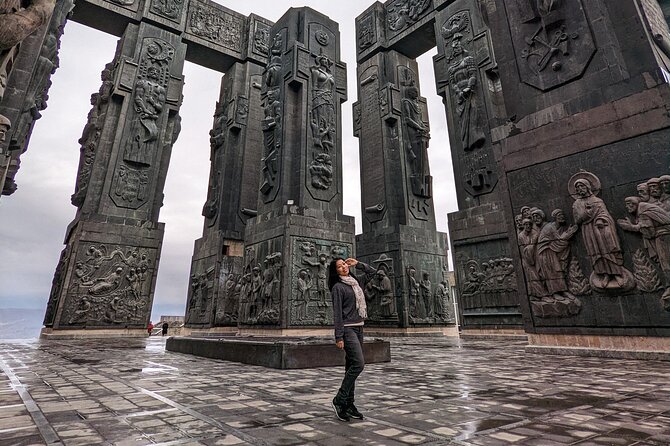
The Chronicles of Georgia is the most unusual stop on the route. Also called the History Memorial of Georgia or Georgian Stonehenge, it consists of 16 massive pillars showing scenes from Georgian history, Georgian rulers, and the life of Jesus.
You spend about an hour here, the longest stop of the day. That extra time is welcome because the monument is large, dramatic, and farther from central Tbilisi. The scale can be hard to grasp from photographs. Walking among the pillars lets you see the carved figures and compare the religious scenes with the national stories.
The setting is a major part of the experience. The site gives you a different angle on Tbilisi, away from the familiar Old City streets. The views are frequently singled out as breathtaking, and this is the place where the tour feels most distinct from a standard central walking route.
I would save phone battery and camera space for this stop. The columns, open setting, and broad views offer many strong photo angles. A guide is also particularly useful here because the carvings are not self-explanatory. Makho has been praised for explaining both older and more recent Georgian history, while other guides have helped visitors understand the monument in clear, approachable terms.
The site is free to enter, but its distance from the center makes it less convenient to reach on a casual walk. That is a major reason this private tour can be good value.
What the $35 price really covers
At $35 per person, the tour includes an air-conditioned vehicle, pickup anywhere in Tbilisi, and all fees and taxes. You also receive an English-language guide and a private outing for your own group.
The price looks strongest when you value time and transport. The Chronicles of Georgia is outside the central cluster, and the route includes several stops that would be awkward to arrange in the right order on foot. You are paying for a compact route, local explanation, and door-to-door movement rather than just entry to attractions.
Lunch is not included, so budget separately for food. The itinerary does pass places with bars and restaurants, but the schedule does not promise a meal break. Ask about timing at the start if eating at a particular hour matters to you.
A private tour also changes the value calculation. You are not sharing the day with a large group, and only your party participates. That makes it easier to ask questions or request a little more time at a favorite stop, though nine scheduled locations still require a fairly brisk rhythm.
Guide quality and the private format
The strongest part of this experience is the human element. Mariami has been praised for friendly explanations, helpful local suggestions, and taking good photographs. Makho has been noted for explaining both older and recent Georgian history, especially at the Chronicles of Georgia. Mindia has been described as patient, enthusiastic, and willing to match the visitor’s pace.
Those details matter because the itinerary itself is dense. A guide who explains clearly can turn a series of quick stops into a connected story. A guide who helps with photographs also makes the day easier for solo visitors and couples.
The private format suits people who dislike large groups or want to ask questions freely. It is also useful for a first day in Tbilisi, when you may want a broad orientation before choosing which neighborhoods deserve more time.
The advertised duration is approximately five to six hours. Because the route includes nine stops, you should not expect long, unstructured time at each place. The benefit is range. The tradeoff is depth.
Who should book this Tbilisi tour?
I would recommend it most strongly to first-time visitors, couples, solo visitors, and anyone with limited time in Tbilisi. It gives you the famous Old City sights plus Sameba and the Chronicles of Georgia, which many central walking routes do not reach.
It is also a good fit if you want history explained in plain language rather than simply photographed. The guides have been praised for being friendly, patient, and helpful, and the private arrangement makes the day feel more personal.
You may want something else if you prefer slow travel. A person who wants to linger in churches, browse every market stall, eat a long Georgian lunch, or explore one neighborhood in detail may find the schedule too full.
Wear comfortable shoes, carry water, and leave room for a meal before or after the tour. Since poor weather can lead to a changed date or full refund, check the forecast before setting aside your only available day. Cancellations made at least 24 hours before the start time receive a full refund, while later changes are not accepted.
Should you book it?
Book this tour if you want a practical introduction to Tbilisi that combines the Old City with the city’s most distinctive outlying monument. The Chronicles of Georgia, private vehicle, flexible human guidance, and pickup service give the $35 price solid value.
Skip it if your ideal day means stopping for hours in one district. For most first visits, though, this is a smart orientation: broad rather than slow, personal rather than crowded, and full of the sights that help Tbilisi make sense.
FAQ
How long does the Tbilisi tour last?
The experience lasts approximately five to six hours.
Is hotel pickup available in Tbilisi?
Yes. Pickup is offered from any location in Tbilisi.
Is the tour private?
Yes. Only your group participates in the activity.
Is the tour offered in English?
Yes. English is the offered tour language.
Is lunch included?
No. Lunch is not included in the tour price.
What happens if bad weather cancels the tour?
If poor weather causes the experience to be canceled, you will be offered a different date or a full refund. You can also cancel at least 24 hours before the start time for a full refund.
Recently added around Tbilisi
- A Gastronomic Private Guided Journey Through Tbilisi★ 5.0 · 8 reviews
- Kakheti Wine Tour for beginners – 3 wineries★ 5.0 · 8 reviews
- Kakheti and Sighnaghi tour with winetasting★ 5.0 · 8 reviews
- Jvari Monastery, Ananuri, Gudauri, Kazbegi Group & Private Tour★ 4.5 · 8 reviews
- Kazbegi & Gudauri group tour from Tbilisi★ 5.0 · 8 reviews
- Tbilisi Lakes and Sightseeing tour★ 5.0 · 8 reviews
- Day Tour to Mtskheta, Gori (Stalin museum) and Uplistsikhe★ 4.5 · 8 reviews
- Group Day Tour of Mtskheta,Jvari,Samtavro★ 4.0 · 8 reviews
Chronicles of Georgia Tours, compared.
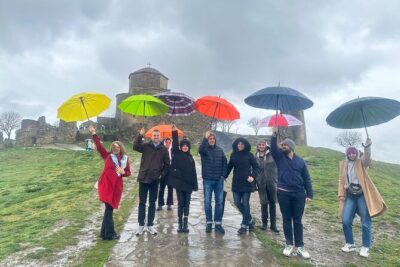
Mtskheta,Jvari,Bazaar,wine tasting,Chronicles of Georgia
Read our review →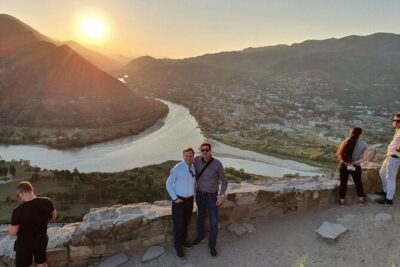
Jvari-Uplistsike-Chronicle of Georgia, PRIVATE Trip
Read our review →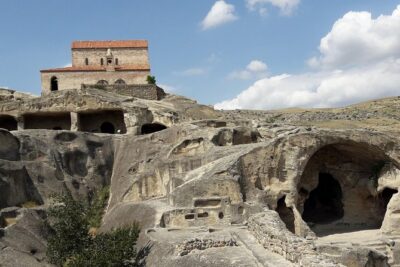
Day tour to Chronicles of Georgia, Gori city, Uplistsikhe cave
Read our review →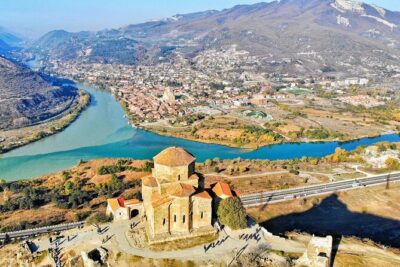
Ancient Mtskheta and Chronicle of Georgia half day tour
Read our review →
Sabaduri forest, Chronicles of Georgia, wolves and bears Zoo
Read our review →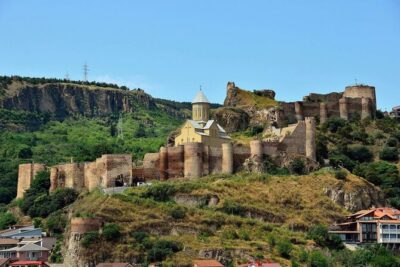
Day Tour Tbilisi – Mtskheta – Jvari – Chronicles of Georgia Monument-Tbilisi
Read our review →Browse the lists this tour appears in