Reviewed · TBILISI TOURS
Tbilisi ‘Dive into the Past’
Tbilisi reveals its secrets on foot. This four-hour private walk links the city’s oldest baths, fortress ruins, churches, steep lanes, and a famous puppet theater in one compact route. At $25 per person, it offers a practical introduction to old Tbilisi without the cost or formality of a long sightseeing program.
I especially like the small-group format and the mix of major sights with less obvious corners of the old town. I also like that the tour is designed to feel local rather than purely ceremonial, a point that mattered even to people born and raised in Tbilisi. The main consideration is physical: the route includes a lot of stairs, including a long climb along Betlemi Street.
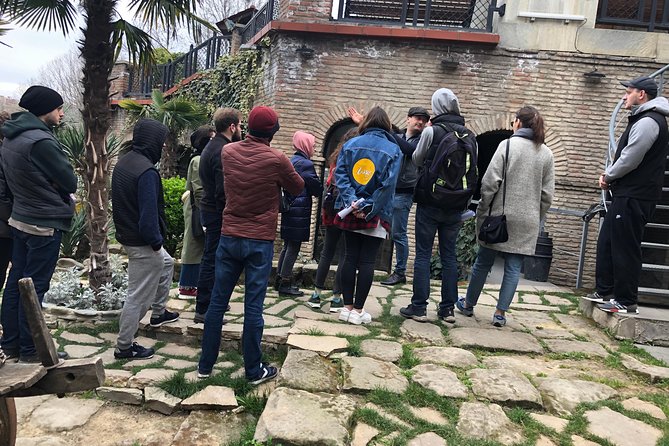
The tour starts at 10:00 am beside the Sayat Nova Sculpture and returns there after roughly four hours. It is offered in English, uses a mobile ticket, and is operated privately, so only your own group takes part. That makes it a good fit if you want to ask questions freely and keep the pace personal.
In This Review
- Key points to know before you book
- Meeting Sayat Nova at 10:00 am
- The sulphur baths beneath central Tbilisi
- Narikala Fortress and the city’s defensive past
- Betlemi Street, where the stairs take over
- A 15-minute stop at the sulphur waterfall
- Rezo Gabriadze’s tiny theater windows
- Anchiskhati Basilica, Tbilisi’s oldest basilica
- Fifth-century walls in the middle of modern Tbilisi
- What $25 really buys you
- Who will get the most from this walk
- Booking, cancellation, and weather
- Should you book Tbilisi Dive into the Past?
- FAQ
- How long is the Tbilisi Dive into the Past tour?
- What time does the tour begin?
- Where does the tour meet and finish?
- Is the tour private?
- Is the tour available in English?
- Does the tour include many stairs?
Key points to know before you book
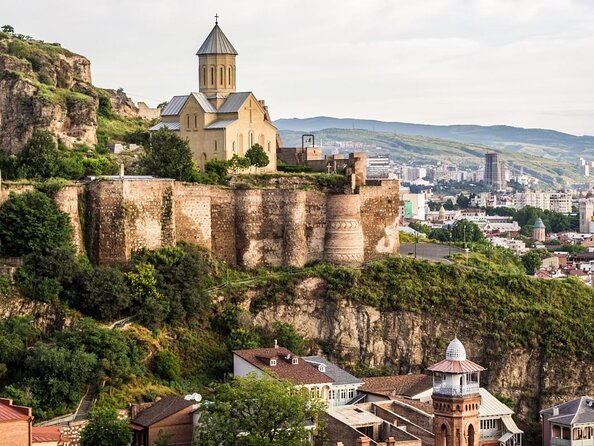
- Seven old-town stops in about four hours: You cover the sulphur baths, Narikala Fortress, Betlemi Street, the waterfall, theater, basilica, and fifth-century wall ruins.
- A genuinely private walk: Only your group participates, which allows more room for questions and a less hurried feel.
- Stairs are central to the experience: Betlemi Street includes a long walk up and down, so comfortable shoes and steady footing matter.
- The route mixes famous sights with local character: Narikala and Anchiskhati Basilica provide major landmarks, while the theater windows and old walls add smaller discoveries.
- A strong price for a focused city introduction: At $25 per person, the tour gives you four hours of guided walking and included admission at the listed stops.
- A weather-sensitive outing: Poor weather may lead to a different date or a full refund, and cancellation is free up to 24 hours before departure.
Meeting Sayat Nova at 10:00 am

The meeting point is the Sayat Nova Sculpture, listed at MRQ5+WHF in Tbilisi. The tour begins at 10:00 am and finishes at the same location, which makes the start and end simple to manage.
Because the activity is near public transportation, you should be able to reach the meeting area without arranging a private vehicle. The tour is a walking experience from there, not a bus trip between disconnected sights. That is important to understand before booking: the value comes from seeing how the old town’s buildings, lanes, stairways, and ruins fit together on foot.
The private format is one of the strongest features here. You are not being folded into a large group with a fixed pace. If your party wants more time at a church, needs a short pause after the stairs, or has questions about Georgian history and daily life, a private guide can respond more directly.
The supplied experience information does not name the individual guide, so I would not expect a specific person to be guaranteed. It does describe the team as friendly, and one account from a visitor from Turkey specifically praised the guide as nice and interesting. That points to a warm, conversational style, but your exact guide will depend on availability.
A few more ways to spend a day out of Tbilisi
- Day Trip to Kakheti Wine Region Including 9 Wine Tastings
★ 5.0 · 2,774 reviews - Highlights of Caucasus Mountains-Jinvali,Ananuri,Gudauri,Kazbegi(Group tour)
★ 5.0 · 2,682 reviews - Day Trip to Kazbegi and Gudauri
★ 5.0 · 2,009 reviews
The sulphur baths beneath central Tbilisi
The first stop is the Tbilisi Antique Archaeological Museum, where you see the oldest sulphur baths discovered in the center of the old town. The stop lasts about 30 minutes, and admission is included.
This is a useful opening because the baths help explain the city’s identity. Tbilisi is closely linked with its sulphur springs, and beginning here gives the rest of the walk a clear sense of place. You are not simply looking at old buildings. You are starting with the physical feature that helped shape the city.
The name of the stop may sound like a conventional museum visit, but the main appeal is the archaeological connection to the baths themselves. I would pay attention to how the guide explains the discovery and the role of sulphur water in Tbilisi. Since the tour spends only half an hour here, this is an introduction rather than a lengthy museum study.
Admission is included at the listed stops, so you do not need to budget extra entry fees for this part of the experience. The tour information does not provide a detailed description of the museum’s displays, so it is best to think of this stop as a focused historical visit rather than a large collection requiring several hours.
Narikala Fortress and the city’s defensive past
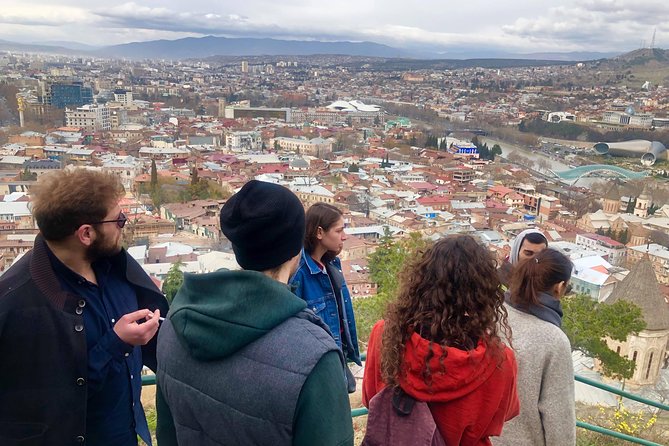
Narikala Fortress comes next, with about 30 minutes set aside for the visit. For centuries, Narikala served as Tbilisi’s main fortress, and its position gives this stop real weight in the story of the city.
I like the way this stop follows the baths. The first location explains the springs below the old town, while Narikala shifts your attention to power, defense, and control above it. Together, the two sites show why Tbilisi developed as a strategic settlement as well as a place of trade and daily life.
The information provided does not promise a particular viewpoint, transport method, or fortress section. You should expect a short guided visit rather than an extended exploration of every wall. Thirty minutes is enough to understand the fortress’s role and take in the setting, but it may feel brief if you want to linger over every stone.
Narikala also adds variety to the walk. After the archaeological stop, you move into a large historic structure with a very different mood. I would keep your phone or camera ready, but I would not treat the fortress as the entire focus of the tour. This experience is strongest as a connected old-town walk, with Narikala serving as one important chapter.
Betlemi Street, where the stairs take over
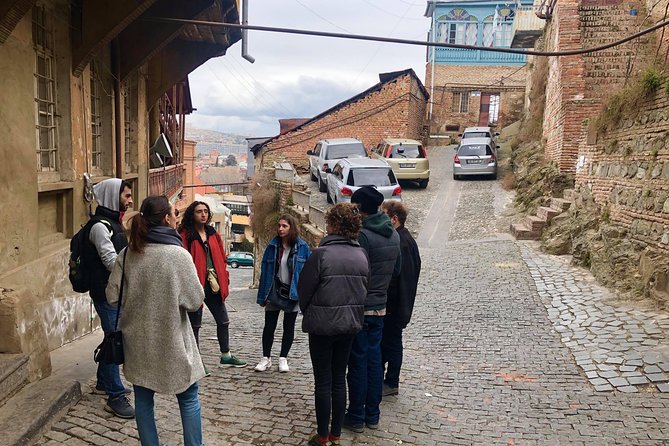
The longest scheduled stop is Betlemi Street, at about one hour. This is the part that demands the most from your legs, with a long walk up and down through the old town.
For me, this is likely the most revealing section of the route. A fortress or basilica can give you a clear landmark, but a steep old street shows how people move through the city itself. The steps connect different levels of Tbilisi and make you pay attention to the shape of the neighborhood instead of simply checking off sights.
The practical warning is serious. The tour specifically says it includes a lot of stairs, and Betlemi Street is the clearest example. Wear shoes with dependable grip, leave room in your schedule to walk at a steady pace, and do not choose this activity if repeated climbs are a major problem for you.
Most people can participate, according to the supplied information, but that does not mean the route is effortless. The private format helps here because your group may have more flexibility than a large tour, yet the guide cannot remove the stairs. If you have concerns about mobility, you should ask the provider before booking.
This hour also gives the guide the best chance to show you parts of Tbilisi that are easy to miss when moving quickly between major attractions. Two people who know the city well still found unexpected corners on this route, which suggests that local detail is a major part of the experience.
A completely different kind of day out of Tbilisi:
- Day Trip to Mtskheta Gori and Uplistsikhe
★ 5.0 · 1,801 reviews - Tbilisi Walking Tour Including Cable Car and Traditional Bakery
★ 5.0 · 1,310 reviews - Day Trip to Armenia Including Homemade Lunch
★ 5.0 · 1,162 reviews - Kakheti Wine Region: Signagi and Bodbe Tour with 10 Wine Tastings
★ 5.0 · 1,019 reviews
A 15-minute stop at the sulphur waterfall
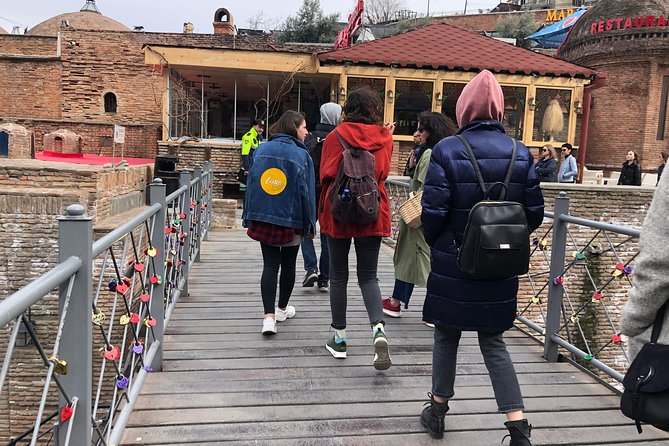
The Dzveli Tbilisi Sulphur Waterfall receives about 15 minutes. The description presents it as a place where the water and atmosphere can make you feel fresh simply by stopping nearby.
That wording captures the appeal better than a long technical explanation. After the stairs, the waterfall offers a short pause and another connection to Tbilisi’s sulphur-water identity. It is not scheduled as a major extended stop, so you should expect a quick look rather than time for a long break.
The waterfall also helps the route feel varied. You move from archaeology to a fortress, then through steep streets, and finally to running water in the old town. This is a small stop, but it prevents the walk from becoming a string of churches and masonry.
Since only 15 minutes are assigned, I would not build separate plans around it. Treat it as a brief atmospheric moment within the larger route. The guide may explain its connection to the surrounding baths, but no detailed interpretation is promised in the supplied information.
Rezo Gabriadze’s tiny theater windows
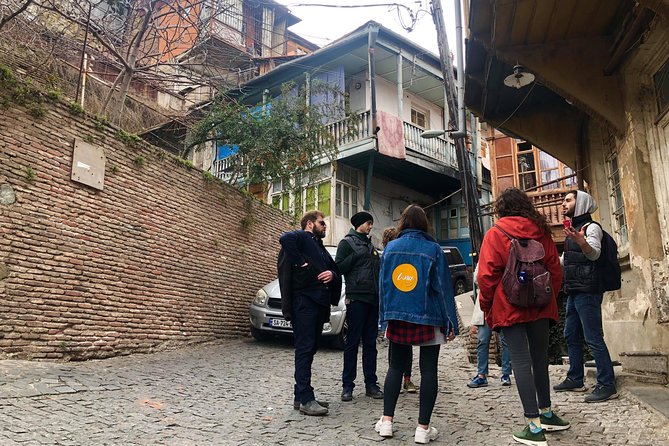
The Rezo Gabriadze Marionette Theater is a 10-minute stop. If timing works out, you may see Georgian marionettes come out from the theater’s tiny windows.
This is one of the tour’s most charming details. It gives you a chance to see a living piece of Georgian cultural life rather than only old stonework. The important phrase is if you get lucky. The appearance of the marionettes is not guaranteed, so you should enjoy the theater’s character even if the windows remain quiet during your visit.
The short stop is enough for an outside look and a quick explanation. It is not a theater performance, and the information does not include a ticket to a show. That distinction matters if you are hoping for a full marionette production.
I like this stop because it breaks up the historical material with something playful. A tour about old buildings can become solemn very quickly. A tiny theater window and the possibility of animated figures give the walk a lighter touch.
Anchiskhati Basilica, Tbilisi’s oldest basilica
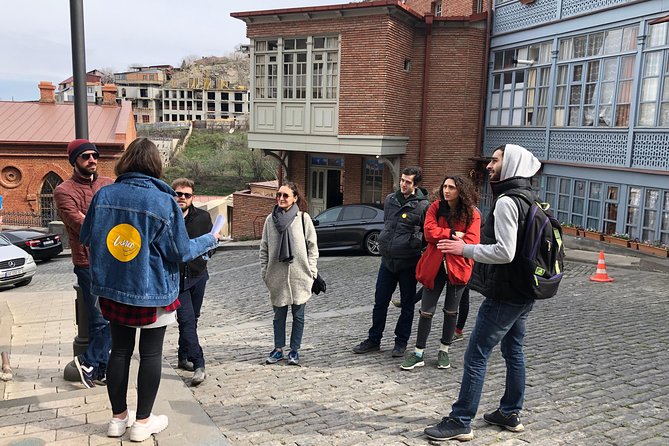
The route then reaches Anchiskhati Basilica for about 10 minutes. It is described as the oldest basilica in Tbilisi, making it one of the most important religious sites on this short circuit.
Ten minutes is brief, but a short visit can work well if the guide explains what makes the basilica significant. You can take in the exterior, enter if access is available, and hear the basic story without turning the tour into a long church-by-church survey.
I would dress and behave respectfully, as you should at any active religious site. The information supplied does not specify interior access, religious services, or photography rules, so your guide will be the best source for those details on the day.
This stop adds another layer to the city’s story. Narikala represents defense, the baths represent water and settlement, and Anchiskhati brings in Tbilisi’s religious tradition. The tour does not spend long at any one theme, but the sequence gives you a useful overview.
Fifth-century walls in the middle of modern Tbilisi
The final listed stop is the Tbilisi Wall Ruins, with about 10 minutes for the visit. These are identified as fifth-century wall ruins.
I appreciate the modest scale of this stop. You do not need a grand monument to understand that Tbilisi has been rebuilt, defended, and changed many times. A remaining section of wall can make the city’s age feel more immediate than a long lecture.
Again, ten minutes suggests a quick, focused explanation. The supplied information does not describe the exact length of the surviving walls or a museum display, so do not expect a large archaeological complex. The value is in seeing the ruins in context, within the living old town rather than isolated from it.
Ending the main sightseeing sequence with the walls also brings the route back to its central idea: Tbilisi is a city where different periods sit close together. You can pass from a church to a theater, from a fortress to a waterfall, and from modern streets to fifth-century remains within a few hours.
What $25 really buys you
At $25 per person, this is a reasonably priced private walking tour. You receive roughly four hours with an English-speaking guide, a route covering seven notable stops, and admission included at the listed locations.
The value is strongest if you want orientation and local explanation rather than a deep visit to one museum. A private activity normally gives you a more personal experience than a large group walk, and here it also helps connect the sights into one story.
The tour is less compelling if you prefer slow, unstructured sightseeing. The schedule moves through many places, with several stops lasting only 10 or 15 minutes. You may leave wishing you had more time at the fortress, basilica, or theater area.
Still, the price keeps that limitation in perspective. You are paying for a compact introduction to Tbilisi, not an all-day archaeological program. The route covers the major themes a first-time visitor needs: baths, defense, faith, urban streets, water, performance, and old walls.
Who will get the most from this walk
I would recommend this tour to first-time visitors who want to understand Tbilisi’s old town quickly. It also suits people who prefer a private guide and want to ask questions without competing with a large group.
It may be especially useful for Georgians and residents of Tbilisi who assume they already know the center. The strongest praise for the experience came from people familiar with the city who still found unexpected places along the route. That suggests the tour’s appeal is not limited to international visitors.
The route is also a good match for anyone who prefers authentic city texture over a polished sightseeing circuit. You will see major landmarks, but you will also spend an hour on old-town steps and pause at a small theater window. Those details give the experience its personality.
I would hesitate if you dislike stairs, have difficulty walking uphill and downhill, or want a relaxed tour with long breaks. The weather requirement is another factor. Poor weather can cancel the outing, although you will be offered another date or a full refund in that situation.
Service animals are allowed, and the activity is near public transportation. Most people can participate, but the stair-heavy route remains the key physical issue.
Booking, cancellation, and weather
Confirmation is sent within 48 hours, subject to availability. Because the tour is private, it is sensible to book ahead if you need a specific morning.
You can cancel for a full refund up to 24 hours before the 10:00 am start time. Cancellations or changes made less than 24 hours before the start are not refunded or accepted, and the cut-off uses local Tbilisi time.
The experience requires good weather. If poor conditions force cancellation, you receive the choice of another date or a full refund. I would avoid placing this walk on the final morning of a tightly planned trip unless you have a backup plan.
Should you book Tbilisi Dive into the Past?
I would book it if you want a friendly, private introduction to old Tbilisi for a modest price. The mix of sulphur baths, Narikala Fortress, Betlemi Street, the waterfall, marionette theater, basilica, and fifth-century walls gives you far more texture than a simple landmark checklist.
The best reason to choose it is the local angle. Even people raised in Tbilisi found corners they had not noticed before, and the private format lets you explore that character at your own group’s pace.
Skip it if stairs are a serious problem or if you want long visits at each site. For everyone else, this is a compact and well-priced way to get your bearings, understand the old town’s many layers, and see Tbilisi as a lived-in city rather than a set of isolated monuments.
FAQ
How long is the Tbilisi Dive into the Past tour?
The tour lasts approximately four hours.
What time does the tour begin?
The tour starts at 10:00 am.
Where does the tour meet and finish?
It meets at the Sayat Nova Sculpture in Tbilisi, listed at MRQ5+WHF, and returns to the same meeting point.
Is the tour private?
Yes. Only your group participates in the activity.
Is the tour available in English?
Yes. The experience is offered in English.
Does the tour include many stairs?
Yes. It is a walking tour with a lot of stairs, including a long walk up and down Betlemi Street.
Recently added around Tbilisi
- Northern Armenia Highlights Tour from Tbilisi★ 5.0 · 3 reviews
- Wild Georgia 4WD PACK Adventure through Kakheti and Kazbegi 2in1★ 5.0 · 3 reviews
- Kakheti wine region – Private Tour★ 5.0 · 3 reviews
- Private Full Day Trip to Kazbegi Mountains★ 5.0 · 3 reviews
- Kakheti With Top Destinations★ 5.0 · 3 reviews
- Jvari monastery & Mtskheta – Half day group tour from Tbilisi★ 5.0 · 3 reviews
- Private Effortless transfer from Tbilisi to Gudauri ski resort★ 5.0 · 3 reviews
- Borjomi – Rabati -Vardzia Private Full Day Tour from Tbilisi★ 5.0 · 3 reviews
Tbilisi Tours, compared.
Day Trip to Kakheti Wine Region Including 9 Wine Tastings
Read our review →
Highlights of Caucasus Mountains-Jinvali,Ananuri,Gudauri,Kazbegi(Group tour)
Read our review →
Tbilisi Walking Tour Including Cable Car and Traditional Bakery
Read our review →

Kakheti Wine Region: Signagi and Bodbe Tour with 10 Wine Tastings
Read our review →