Reviewed · TBILISI TOURS
Skip the Line: Experimentorium Ticket
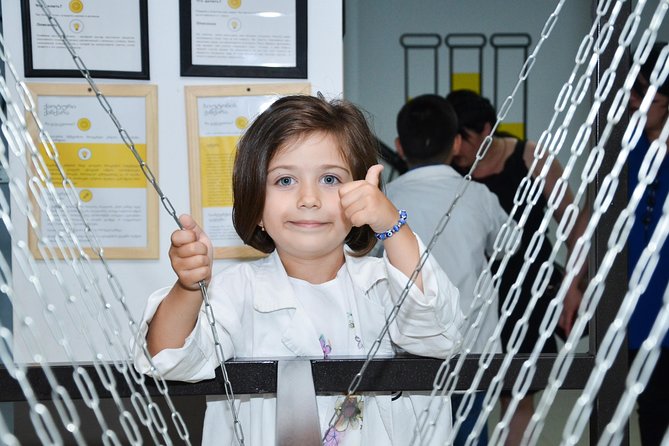
Science is better when you can touch it. Tbilisi’s Experimentorium turns basic physics into a playful hour or two, with about 80 interactive exhibits that invite you to press, pull, sit, lift, and experiment. I like the museum’s hands-on approach, and I especially like that the ticket includes an hourly excursion rather than leaving you to figure out every exhibit alone.
I also like the indoor setting, which makes this a useful choice on a rainy day or during a break from Tbilisi’s city streets. The main caution is practical: one booking report says a ticket bought through a third-party channel was not recognized by the museum, so I would check your mobile confirmation and booking details with Experimentorium before you go.
In This Review
- Key points to know before you go
- What the Experimentorium in Tbilisi is really like
- Starting with the hourly excursion
- The exhibits that make physics feel physical
- Why the chemical and nitrogen shows matter
- How long to stay and how to plan your visit
- Is the $46 ticket good value?
- Who will enjoy it most
- My practical verdict on the experience
- Should you book the Experimentorium?
- FAQ
- Where is the Experimentorium located?
- How long does the visit take?
- What time does the museum open?
- Is a guided excursion included in the ticket?
- How many exhibits are there?
- Are the exhibits hands-on?
- Is the Experimentorium suitable for children?
- Can I cancel the ticket for a refund?
Key points to know before you go

- Around 80 touchable exhibits: Physics becomes something you can test with your own hands, not just read about on a wall.
- Nitrogen and cold shows: These are the most praised parts of the visit, especially for children.
- Hourly excursions from 10:00 to 19:00: The guided portion is included in the admission price.
- A good rainy-day plan: You can spend roughly one to two hours indoors near public transportation.
- Useful for mixed-age groups: Children, parents, and adults who enjoy practical science can all find something to do.
- Check your voucher carefully: A mobile ticket is convenient, but confirmation and ticket recognition deserve attention before arrival.
What the Experimentorium in Tbilisi is really like
The Experimentorium is not a quiet museum built around glass cases. It is a place where you learn by trying things yourself. The central idea is simple: physics makes more sense when your body is part of the demonstration.
You might sit on a bed of nails, lift a friend into the air, catch what looks like a thunderbolt with your hands, or draw patterns in sand. A music room lets you play with sound and feel more like a performer than a museum visitor. The atmosphere is deliberately relaxed. You can speak loudly, laugh, and make a little noise while testing the displays.
That approach works best for families with children who need to move. It also helps adults who remember school science as formulas on a blackboard. The exhibits give you a reason to ask why something happens, then test the answer immediately.
The museum has around 80 exhibits, enough to fill an hour without feeling like an all-day institution. You should not expect a huge national museum or a highly specialized science center. The collection is compact, but the hands-on format gives each stop more value than a quick look at a static object.
Other Tbilisi trips people book when they are planning this one:
- Day Trip to Kakheti Wine Region Including 9 Wine Tastings
★ 5.0 · 2,774 reviews - Highlights of Caucasus Mountains-Jinvali,Ananuri,Gudauri,Kazbegi(Group tour)
★ 5.0 · 2,682 reviews - Day Trip to Kazbegi and Gudauri
★ 5.0 · 2,009 reviews
Starting with the hourly excursion

Excursions run daily from 10:00 to 19:00, beginning every hour. There is no lunch break, and the guided excursion is included in the ticket price.
This matters because you do not have to choose between a self-guided visit and a paid tour. You can arrive for a convenient hourly start, hear explanations, and then spend time returning to the exhibits that caught your attention.
The language information is useful but not perfectly predictable. Explanations are available in Georgian, Russian, and English, and the museum has staff who can make the displays accessible to an international audience. Still, one booking experience reported that a Russian-language group expected in advance was not available on arrival. If language is important to your family, confirm it directly before setting out.
The guide can also shape the mood of the visit. Positive staff members are repeatedly praised, with Helen, also referred to as Ellen, singled out for being kind and helpful during the tour and chemical room activities. That personal touch is valuable in a museum where a short explanation can turn a strange-looking machine into a memorable experiment.
The exhibits that make physics feel physical
The strongest part of the museum is its insistence that you participate. Instead of standing back while somebody else demonstrates a principle, you get a chance to become the test subject.
The bed of nails is an obvious crowd pleaser. It takes a familiar image and turns it into a question about pressure and distribution. Sitting on nails sounds alarming, which is exactly why it gets children curious. The point is not simply the stunt. It gives a physical example of how many points of contact can change the result.
The lifting exhibit has a similar effect. You can lift a friend into the air, making force and leverage feel less abstract. This sort of display works well for families because the activity itself becomes the lesson. You do not need a long lecture to remember what happened.
The electricity exhibit offers the chance to catch a thunder-like effect with your hands. It gives the museum a little drama without abandoning its science theme. You may find that the more theatrical displays hold a child’s attention long enough for the explanation to sink in.
The sand drawing station changes the pace. After the louder and more physical experiments, it offers a calmer way to look at patterns, movement, and texture. The music room adds another change of mood, letting you explore sound and act like a rock star for a moment.
I would approach the exhibits as a family activity, not as a race to see all 80. Let children choose a few displays, listen to the explanation, and try again. The museum is small enough that you can return to favorites instead of treating every exhibit as a one-minute photo stop.
One minor weakness is the placement of explanations. Some labels are not beside the exhibit they describe, but elsewhere in the room. You may need to look around or ask a staff member before deciding what a display is meant to show. That is a small issue, but it can interrupt the flow if you are trying to guide children through the science yourself.
Why the chemical and nitrogen shows matter
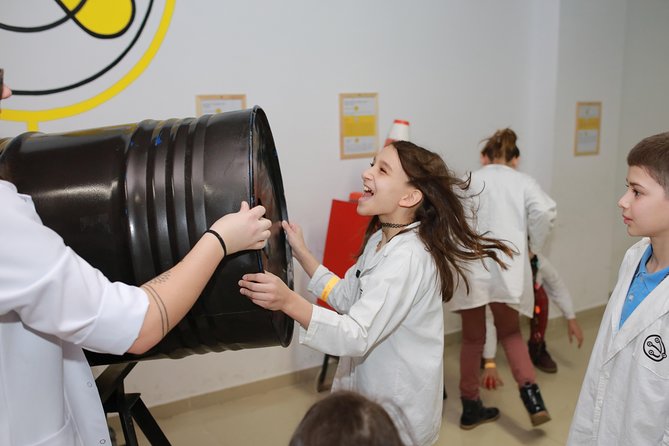
The museum’s special shows receive the strongest praise, especially the nitrogen experiment. If a show is available during your visit, I would make a point of including it rather than spending the entire time with the general exhibits.
The nitrogen presentation gives the museum a sense of occasion. It is more than another machine to push. The cold show and nitrogen demonstrations provide a shared moment for the whole group, and children tend to remember the visual effect long after they forget a label.
The chemical room is another highlight. The activities keep science light and entertaining, which suits younger children who may not yet have the patience for a formal lesson. Adults can still enjoy the surprise and pick up the basic idea behind the experiment.
There is an important safety point here. Liquid nitrogen should not be treated as a toy, and children need close supervision during any show involving chemicals or extreme cold. The museum is interactive, but interactive does not mean unsupervised. I would stay with young children, listen to the staff instructions, and avoid letting excitement turn into careless handling.
The nitrogen show may be the best reason to plan your timing rather than simply arriving whenever you happen to be nearby. The supplied information confirms the hourly excursion schedule, but it does not give a separate timetable for every show. Ask at arrival or confirm ahead of time if the nitrogen demonstration is a priority.
A few more ways to spend a day out of Tbilisi
- Day Trip to Mtskheta Gori and Uplistsikhe
★ 5.0 · 1,801 reviews - Tbilisi Walking Tour Including Cable Car and Traditional Bakery
★ 5.0 · 1,310 reviews - Day Trip to Armenia Including Homemade Lunch
★ 5.0 · 1,162 reviews - Kakheti Wine Region: Signagi and Bodbe Tour with 10 Wine Tastings
★ 5.0 · 1,019 reviews
How long to stay and how to plan your visit
The expected visit lasts about one to two hours. That is long enough for a proper family outing but short enough to fit between major Tbilisi sights.
I would allow at least an hour if you want to try the main exhibits and attend part of the guided activity. Plan closer to two hours if you have children who want to repeat the experiments, watch the chemical presentation, or spend time in the music room.
The museum is near public transportation, so you can add it to a day based around Rustaveli Street. It also works as a weather backup. Several family visits found the museum especially useful during rain, when an outdoor walk or sightseeing plan loses its appeal.
Parking is available according to one practical note, but the information does not provide details about spaces, cost, or availability. If you are driving, I would treat parking as a helpful possibility, not a guaranteed part of the plan.
The stated start time is 10:00 am, while excursions continue hourly through 19:00. Pick a time that fits your day, but remember that the museum’s best activities may follow their own schedule. Arriving with a little flexibility is wiser than building your entire day around one exact demonstration.
Is the $46 ticket good value?
At $46, the ticket is not a bargain if you are expecting a large museum with several floors and a full-day program. The Experimentorium is a smaller attraction, and the normal visit lasts about one to two hours.
The value improves if you are visiting as a family and will use the included excursion and show. You are paying for a guided activity, roughly 80 hands-on exhibits, and a reliable indoor break rather than only entrance to a room of displays. The nitrogen and chemical demonstrations add something that a basic self-guided museum ticket may not provide.
For a child who learns by touching and moving, the price can make sense. You are buying an experience that encourages participation, not just observation. Adults who enjoy science museums may find the collection modest, but families with children often gain more from the playful format.
I would compare the price with your group’s interests. If your children are eager to test machines, make noise, and repeat experiments, the ticket has a fair chance of earning its keep. If your group wants advanced scientific detail or a large collection of technical artifacts, you may find the museum too small for the cost.
Skip-the-line entry adds convenience, especially if the museum is busy. Still, the ticket channel deserves care. A reported problem involved a third-party ticket that the museum did not recognize. Use the mobile confirmation, check the date and time, and contact Experimentorium before arrival if anything looks unclear. A few minutes of checking can prevent a very frustrating start.
Who will enjoy it most

I would recommend the Experimentorium first to families with school-age children. The activities are physical, visual, and easy to understand. Younger children can enjoy the effects, while older children can ask more serious questions about force, sound, electricity, and chemical reactions.
Toddlers may enjoy the movement and bright demonstrations, but they need close supervision. Some exhibits involve physical interaction, and the nitrogen show requires particular care. The museum is family-friendly, not a substitute for an adult watching the children.
Adults can enjoy the visit too, especially if you like practical science or unusual technical displays. One exhibit may remind you of other science museums in Europe, while another may be new to you. The museum does not rely on a grand collection. Its appeal comes from letting you take part.
I would also consider it for a mixed-age group. Grandparents, parents, and children can each find a different level of interest. A child may focus on the stunt, an adult may think about the physics, and everyone can share the same experiment.
It is less suitable if you want a silent, carefully ordered museum experience. The room can be active and noisy by design. The labels may not always be exactly where you want them, and the exhibits are intended to be tried rather than admired from a distance.
My practical verdict on the experience
The Experimentorium gives Tbilisi a useful family attraction with a clear purpose. It takes physics out of the textbook and places it in your hands. The bed of nails, lifting experiment, electricity display, music room, chemical activities, and nitrogen show give the visit a good mix of comedy, surprise, and basic science.
Its limits are easy to see. The museum is compact, the explanations can be poorly placed, and the quality of the visit depends partly on the guide and the timing of the shows. You should also take the mobile-ticket warning seriously and confirm that your booking will be accepted.
Free cancellation is available if you cancel at least 24 hours before the local start time. Inside that 24-hour period, the ticket is nonrefundable and changes are not accepted.
Should you book the Experimentorium?
Book it if you want a one to two-hour indoor activity that gets children moving and gives adults something to enjoy too. I would make the nitrogen or cold show a priority, arrive ready to supervise young children, and confirm the booking with Experimentorium before you go.
Skip it if your main interest is a large, highly technical museum or if $46 feels high for a compact attraction. For most families, though, the chance to sit on nails, lift a friend, play with sound, and watch a nitrogen experiment makes this a lively and useful addition to a Tbilisi day.
FAQ
Where is the Experimentorium located?
The Experimentorium is in Tbilisi, Georgia, near Rustaveli Street and public transportation.
How long does the visit take?
The visit takes approximately one to two hours.
What time does the museum open?
Excursions begin at 10:00 am, and daily excursions run hourly until 19:00.
Is a guided excursion included in the ticket?
Yes. The excursion is included in the admission price.
How many exhibits are there?
The museum has about 80 interactive exhibits based on the laws of physics.
Are the exhibits hands-on?
Yes. The exhibits are designed to be touched and used, with activities involving lifting, sound, electricity, sand, and other physical effects.
Is the Experimentorium suitable for children?
Yes. It is designed for visitors of all ages and is especially suited to family visits. Children should be watched closely, particularly during the liquid nitrogen and chemical demonstrations.
Can I cancel the ticket for a refund?
Yes, if you cancel at least 24 hours before the experience start time. Cancellations made less than 24 hours in advance are not refunded, and changes are not accepted during that period.
Recently added around Tbilisi
- Northern Armenia Highlights Tour from Tbilisi★ 5.0 · 3 reviews
- Wild Georgia 4WD PACK Adventure through Kakheti and Kazbegi 2in1★ 5.0 · 3 reviews
- Kakheti wine region – Private Tour★ 5.0 · 3 reviews
- Private Full Day Trip to Kazbegi Mountains★ 5.0 · 3 reviews
- Kakheti With Top Destinations★ 5.0 · 3 reviews
- Jvari monastery & Mtskheta – Half day group tour from Tbilisi★ 5.0 · 3 reviews
- Borjomi – Rabati -Vardzia Private Full Day Tour from Tbilisi★ 5.0 · 3 reviews
- Private Effortless transfer from Tbilisi to Gudauri ski resort★ 5.0 · 3 reviews
Tbilisi Tours, compared.
Day Trip to Kakheti Wine Region Including 9 Wine Tastings
Read our review →
Highlights of Caucasus Mountains-Jinvali,Ananuri,Gudauri,Kazbegi(Group tour)
Read our review →


Tbilisi Walking Tour Including Cable Car and Traditional Bakery
Read our review →

Kakheti Wine Region: Signagi and Bodbe Tour with 10 Wine Tastings
Read our review →